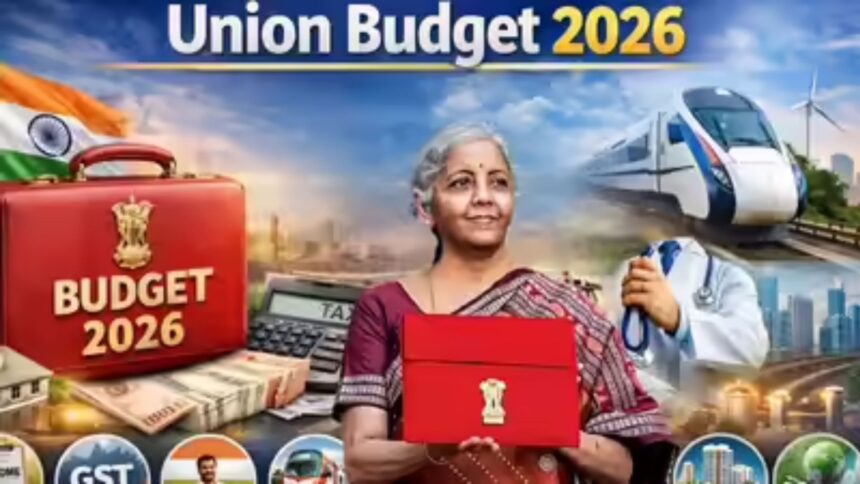
Noida/Greater Noida: The Union Budget 2026 has triggered a wide range of reactions at the local level, with builders, traders, social groups and leaders from different political parties expressing mixed opinions. While some sections have welcomed the budget as development-oriented and forward-looking, others have criticised it for failing to provide immediate relief to the common man, the middle class and small businesses. Overall, the budget’s impact at the grassroots level appears to be mixed, reflecting varied expectations and priorities.
Reaction from Builders and the Real Estate Sector
Representatives from the local real estate sector believe that provisions related to infrastructure development and the Infrastructure Risk Guarantee Fund will provide much-needed support to the industry. A local builder said that increased infrastructure spending and risk mitigation mechanisms for banks are likely to restore lender confidence and accelerate stalled projects.
“Higher infrastructure allocation and the risk guarantee fund can help revive stuck projects. Mid-sized developers will also get opportunities to participate in large-scale developments,” the builder said.
However, some builders also pointed out that the budget lacks direct incentives for homebuyers. They said that there were expectations of relief in stamp duty or home loan interest rates, which could have boosted residential demand in the short term. In the absence of such measures, they feel the immediate impact on housing sales may remain limited.
Traders and Small Business Owners React
Local traders and small business owners have responded cautiously to the budget. While they welcomed announcements related to infrastructure and MSME funding, they expressed disappointment over the lack of targeted relief for the retail sector.
A representative of a traders’ association said, “The budget includes positive steps like support for MSMEs and infrastructure growth, but retail traders were expecting tax relief or specific schemes. Rising costs and compliance burdens continue to be a challenge.”
Small shopkeepers also said that amid inflation and increasing operational expenses, they were hoping for concessions in taxation, electricity charges or digital services such as internet connectivity. According to them, the budget does not adequately address these ground-level concerns.
Ruling Party’s Local Leadership Backs the Budget
Leaders from the ruling party’s local unit have strongly defended the budget, calling it a roadmap for long-term development. According to them, the budget focuses on building a strong foundation for the future through investments in education, healthcare, infrastructure, employment generation and women empowerment.
A local ruling party office bearer said, “This is a visionary budget that strengthens the economy and supports inclusive growth. Improved connectivity, infrastructure projects and social sector focus will benefit regions like Noida and Greater Noida in the long run.”
They also said that enhanced infrastructure and investment-friendly policies would attract more businesses and generate employment opportunities in urban and semi-urban areas.
Opposition Parties Criticise Budget Direction
In contrast, leaders from opposition parties at the local level criticised the budget, calling it insensitive to the problems of ordinary citizens. An opposition leader alleged that the budget does not offer concrete solutions to issues such as inflation, unemployment and pressure on the middle class.
“There is a lot of emphasis on long-term growth, but people are struggling today. Farmers, workers, youth and the middle class were expecting direct relief, which is missing,” the leader said.
Opposition parties also claimed that the budget appears to favour big industries and select sections, while everyday issues like rising prices and shrinking purchasing power remain unresolved.
Views from Social Organisations and Citizens
Social organisations and residents have also shared varied responses. Some welcomed initiatives related to education, healthcare and women’s safety, saying these steps would have a positive impact over time. Others, however, felt that the budget does not provide immediate relief to households struggling with rising living costs.
A local resident said, “The budget may be good for the future, but the common man needed short-term relief. There is little to ease the pressure on household budgets.”
Several citizens echoed similar sentiments, saying that while long-term planning is important, policies should also address current economic stress.
Overall Local Impact
At the local level, the Union Budget 2026 has generated both optimism and dissatisfaction. Builders and infrastructure-linked sectors see new opportunities, while traders, small businesses and sections of the middle class feel their concerns have not been fully addressed. Political reactions also remain divided, with the ruling party highlighting development potential and the opposition focusing on gaps in public welfare.
As implementation unfolds, the real impact of the budget will become clearer. Much will depend on how effectively the announced provisions translate into on-ground benefits and whether they are able to address the diverse expectations of local stakeholders and the broader community.