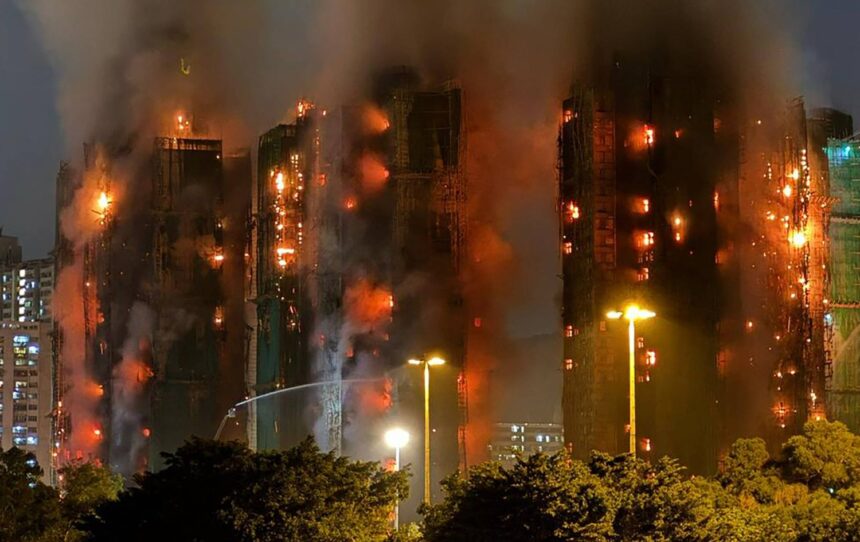
A devastating fire erupted in Hong Kong’s Tai Po district on Wednesday, consuming seven high-rise residential buildings and causing catastrophic loss of life. At least 44 people have been confirmed dead, with nearly 300 others reported missing, making it the deadliest fire in the city in three decades. The inferno, which originated on external bamboo scaffolding of a building undergoing renovation, spread rapidly across a cluster of towers due to strong winds and flammable construction materials. Emergency crews, including over 140 fire trucks and 60 ambulances, are battling the blaze while coordinating rescue operations for hundreds of trapped residents. The city is reeling from the tragedy, with authorities launching investigations and arrests being made in connection with the fire.
Fire Outbreak, Spread, and Immediate Emergency Response
The fire began in the mid-afternoon hours on the bamboo scaffolding of a 32-story building within an eight-tower housing complex undergoing large-scale renovations. Construction netting, combined with strong gusts of wind, allowed the flames to quickly engulf the building and leap to six adjoining towers. Smoke billowed thickly across the Tai Po district, creating a life-threatening environment for residents and emergency personnel alike. Hundreds of residents, particularly elderly citizens, were forced to evacuate as burning debris rained down from the buildings. Local authorities moved roughly 900 residents into temporary shelters as firefighters worked tirelessly to control the flames and prevent further destruction.
Firefighters faced extreme challenges due to soaring temperatures within the buildings and falling debris, which hindered rescue and firefighting efforts. Derek Armstrong Chan, deputy director of Fire Service operations, described the intensity of the blaze, noting that the high internal temperatures and collapsing scaffolding made entry to upper floors extraordinarily difficult. The fire was quickly elevated to a level 5 alarm, Hong Kong’s highest emergency classification, signaling the severity of the situation and the scale of resources required to combat the fire. Firefighters relied on ladder trucks to reach upper floors while police and paramedics secured streets crowded with evacuees and anxious relatives.
Hong Kong Chief Executive John Lee confirmed that early investigations into the cause of the fire were underway while emergency crews continued the search for missing residents. He emphasized that the fire was gradually coming under control shortly after midnight but acknowledged the enormous challenge posed by the ongoing rescue and containment operations. The fire claimed lives and injured dozens more, with at least 45 individuals hospitalized, some with critical injuries. The sheer scale of the emergency required coordinated efforts between the fire department, police, medical personnel, and civil defense units.
Investigation, Arrests, and Political Response
In response to the devastating blaze, police arrested three men on suspicion of manslaughter, linking them directly to the circumstances surrounding the fire. The arrests have intensified scrutiny over construction safety practices and the use of bamboo scaffolding, which is common in Hong Kong but highly flammable. Authorities are actively reviewing building codes, renovation procedures, and safety compliance in high-rise residential towers, acknowledging that lapses in safety measures may have contributed to the speed and intensity of the fire.
The housing estate affected by the fire was constructed in the 1980s and was undergoing a large-scale renovation at the time of the incident. Investigators noted that bamboo scaffolding wrapped around the buildings’ exteriors facilitated the rapid spread of flames, which were further accelerated by strong wind currents channeling between the closely spaced towers. Residents reported chaotic scenes as they evacuated, with many elderly citizens struggling to escape the inferno. Emergency responders faced immense difficulties reaching trapped individuals due to falling debris, intense heat, and structural hazards.
Chinese President Xi Jinping expressed condolences for the firefighters killed in the operation and offered sympathies to the families of victims, reflecting the national significance of the tragedy. Local authorities have established dedicated investigation teams, including members from the Fire Services Department and police, to determine the root causes of the blaze. The inquiry is expected to cover construction practices, fire safety compliance, and the sequence of events that allowed the fire to escalate so rapidly.
The magnitude of the fire has drawn comparisons to Hong Kong’s previous major fires, including the deadly 1996 blaze in Kowloon that killed 41 people in a commercial building. The city’s fire services face immense challenges given the prevalence of high-rise residential complexes, dense urban planning, and common use of flammable construction materials such as bamboo scaffolding and plastic netting. The ongoing rescue operations and investigations have highlighted the importance of stringent safety protocols, fire risk assessments, and rapid emergency response in densely populated urban areas.
The fire has not only caused a tragic loss of life but also raised pressing questions about urban safety, emergency preparedness, and enforcement of building regulations. Local news outlets reported widespread fear and confusion among residents, with thousands witnessing the inferno and evacuating under hazardous conditions. Many survivors have been temporarily housed in shelters while authorities continue to assess the structural integrity of the affected buildings and provide medical assistance to those injured.
The incident has also prompted public debate regarding construction practices in Hong Kong, particularly the reliance on bamboo scaffolding for high-rise renovations. Safety advocates are calling for stricter regulations and closer monitoring of renovation projects to prevent similar disasters in the future. Meanwhile, emergency services continue to operate under extreme conditions, navigating smoke-filled corridors and collapsed structures to ensure that all remaining residents are accounted for.
The fire has had profound social and psychological impacts, leaving many residents traumatized and mourning lost loved ones. The community has mobilized support efforts, with volunteers assisting in evacuation, medical care, and shelter management. Relief agencies and local organizations have coordinated to provide food, medical aid, and temporary accommodation for displaced residents. The combination of immediate emergency response and ongoing investigative efforts underscores the scale of the crisis and the multifaceted challenges involved in managing such a disaster.
Hong Kong authorities remain focused on ensuring the safety of remaining residents, preventing secondary incidents, and addressing public concerns about construction safety. The city has mobilized additional resources, including specialized firefighting units, medical teams, and law enforcement, to manage the aftermath of the blaze. As investigations proceed, officials aim to determine accountability, assess potential criminal liability, and implement long-term safety measures to prevent recurrence.
The blaze in Tai Po is a stark reminder of the vulnerability of high-rise urban living, especially in older buildings undergoing renovations. It has highlighted the critical importance of fire prevention measures, emergency evacuation planning, and public awareness about fire hazards. The tragedy has united the community and authorities in an unprecedented effort to manage both the immediate humanitarian needs and the long-term implications for urban safety in Hong Kong.
By addressing the causes of the fire, assisting affected residents, and reviewing urban safety protocols, Hong Kong officials aim to prevent future catastrophes and reinforce confidence in emergency services. The response to the fire illustrates the complex interplay of urban planning, construction safety, emergency response, and governmental oversight in a densely populated city.
The incident has drawn international attention, with governments and humanitarian organizations expressing concern and solidarity with Hong Kong. The coordinated response, ongoing investigations, and community mobilization reflect the city’s resilience in facing one of its deadliest fires in recent history.
The Tai Po fire remains a tragic and unfolding situation, with emergency responders, investigators, and authorities continuing to work tirelessly to save lives, secure the area, and prevent further casualties while addressing the causes and consequences of the disaster.