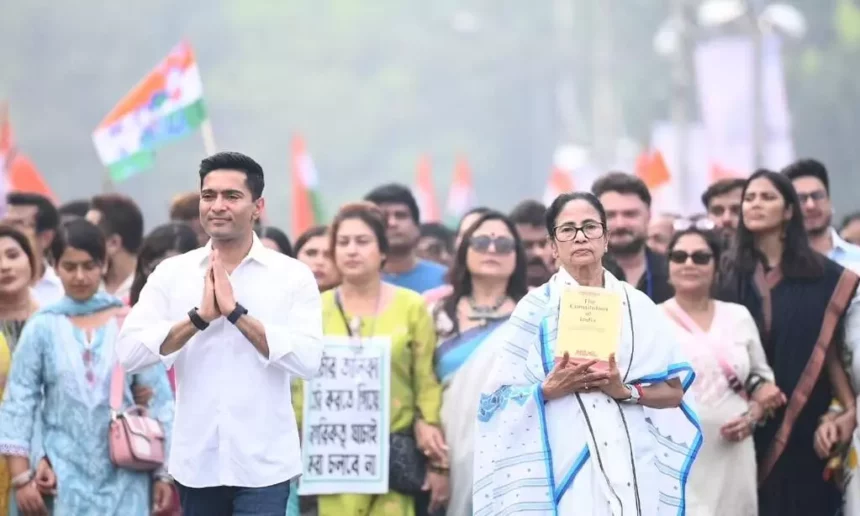
As the West Bengal Assembly Elections campaign gains momentum, Chief Minister Mamata Banerjee has officially begun her statewide outreach, starting from North Bengal. Her first stop was Chalsa, where she visited a church and interacted with local communities, including marginalized groups. The visit reflects her continued emphasis on grassroots engagement. It also signals the beginning of a broad campaign strategy aimed at connecting with diverse voter groups. The early outreach is seen as a calculated move.
According to party sources, Mamata Banerjee will intensify her campaign from Maynaguri, where full-scale rallies are scheduled to begin. Over the coming weeks, she is expected to travel extensively across North Bengal, South Bengal and central regions. The campaign is aimed at securing a fourth consecutive term for her party. Her schedule includes multiple public meetings and community interactions. The strategy focuses on both regional outreach and mass mobilization.
Abhishek Banerjee’s Campaign Push and Key Promises
Meanwhile, Abhishek Banerjee has launched the party’s campaign from Patharpratima in South Bengal, setting an aggressive tone for the الانتخابات. Addressing a large public rally, he outlined key promises and urged party workers to ensure a victory margin of over 40,000 votes. This target is significantly higher than previous benchmarks. It reflects confidence within the party. It also indicates a strong push for a decisive mandate.
During the rally, Abhishek Banerjee highlighted five major commitments that the party plans to prioritize if re-elected. These include the expansion of the Lakshmir Bhandar scheme, housing for all under government initiatives, doorstep healthcare services, piped drinking water supply to every household and enhanced old-age pension benefits. These promises are aimed at strengthening welfare measures. They also focus on addressing everyday needs of citizens. The announcement is expected to resonate with voters.
The campaign strategy emphasizes welfare-driven governance combined with organizational strength. Party leaders are focusing on booth-level mobilization and voter engagement. Abhishek Banerjee is expected to continue campaigning in key constituencies such as Nandigram and Medinipur. His schedule includes multiple rallies and public meetings. The aim is to maintain momentum throughout the campaign period.
North Bengal Focus and Political Significance
North Bengal remains a crucial region in the electoral landscape, despite not always delivering strong results for the ruling party. Mamata Banerjee has consistently prioritized the region in her campaign strategy. Her visit to Chalsa and subsequent plans to engage with local communities highlight this focus. The outreach includes meetings with religious leaders and residents. It reflects an inclusive approach to campaigning.
Sources indicate that Mamata Banerjee will visit the Dooars region, including stops at Meteli and other key locations. She is also scheduled to visit a Catholic church and interact with community representatives. Local party leaders believe that such engagements help build trust among diverse groups. The region’s political importance makes it a key battleground. The campaign efforts are aimed at improving electoral performance here.
The focus on North Bengal also underscores the party’s strategy to address regional concerns. Issues related to development, infrastructure and welfare are expected to dominate discussions. The leadership aims to connect with voters on local issues. This targeted approach is seen as essential for electoral success. The region’s outcome could significantly influence overall results.
Political Contest and Institutional Tensions
The election campaign is witnessing a multi-layered contest, with the ruling party facing strong opposition from the Bharatiya Janata Party. The political battle is intensifying as both sides ramp up their campaigns. In addition to electoral competition, tensions with the Election Commission of India have also emerged as a key issue. Disagreements between the Chief Minister and Chief Election Commissioner Gyanesh Kumar have escalated.
These differences have even reached the Supreme Court of India, highlighting the seriousness of the dispute. The situation adds another dimension to the political environment. It reflects the complexities of conducting elections in a highly competitive context. Observers are closely monitoring these developments. They could have implications for the electoral process.
The campaign narrative is therefore shaped by both political rivalry and institutional dynamics. Parties are using multiple platforms to communicate their messages. Public rallies, media engagement and grassroots outreach are key components. The coming weeks are expected to see intensified activity. The electoral atmosphere continues to evolve rapidly.
Polling Schedule and Campaign Outlook
The first phase of polling in West Bengal is scheduled for April 23, covering 152 constituencies across North Bengal and Junglemahal regions. This phase is considered crucial as it sets the tone for the rest of the election. Political parties are focusing their efforts on these constituencies. Campaign strategies are being tailored accordingly. Voter turnout and early trends will be closely watched.
Abhishek Banerjee is expected to expand his campaign to multiple regions, including North Bengal, after covering key constituencies in South Bengal. His outreach will complement Mamata Banerjee’s statewide campaign. Together, the leadership aims to maintain strong visibility across the state. Coordination between different levels of the party is being emphasized. This approach is intended to maximize impact.
The overall campaign is expected to remain highly competitive, with all major parties intensifying their efforts. Issues such as governance, welfare and development will dominate the discourse. The outcome will depend on how effectively each party connects with voters. The coming weeks will be critical in shaping electoral dynamics. The campaign has entered a decisive phase.