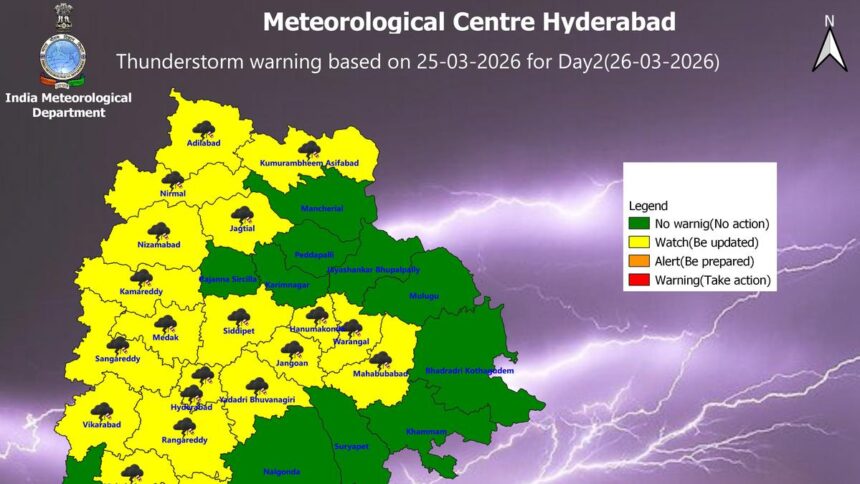
The latest bulletin from the India Meteorological Department highlights a developing weather system that is likely to trigger thunderstorms across 20 districts of Telangana. These districts include Adilabad, Kumaram Bheem Asifabad, Nirmal, Nizamabad, Jagtial, Mahabubabad, Warangal, Hanamkonda, Jangaon, Siddipet, Yadadri Bhuvangiri, Rangareddy, Hyderabad, Medchal Malkajgiri, Vikarabad, Sangareddy, Medak, Kamareddy, Mahabubnagar and Nagarkurnool districts. The forecast suggests that isolated areas within these districts will experience thunderstorms accompanied by lightning and gusty winds. This weather activity is part of a broader pattern being observed across several parts of India, where seasonal transitions are leading to unstable atmospheric conditions. The combination of moisture, temperature variation and wind interaction is contributing to the formation of storm systems. Authorities have advised residents in these regions to remain cautious, especially during peak thunderstorm hours, as lightning strikes and strong winds can pose risks to life and property.
Reason Behind Frequent Thunderstorms
Meteorological experts have pointed out that the primary reason behind the increasing frequency of thunderstorms in Telangana is the interaction of opposing wind systems. When warm, moisture-laden winds from one direction collide with cooler, dry winds from another, it creates instability in the atmosphere. This instability leads to the rapid formation of cumulonimbus clouds, which are responsible for thunderstorms, lightning and heavy rainfall. The current weather pattern indicates that such wind interactions are becoming more frequent during this period, leading to repeated thunderstorm events. Additionally, rising surface temperatures during the day contribute to the buildup of energy in the atmosphere, which is later released in the form of storms. This phenomenon is not unusual during seasonal transitions, but its intensity and frequency can vary depending on regional climatic factors. Experts suggest that climate variability may also be playing a role in altering traditional weather patterns, making such events more unpredictable.
Impact on Daily Life and Precautionary Measures
Thunderstorms can have a significant impact on daily life, particularly in urban areas like Hyderabad. Strong winds can lead to falling trees, damage to infrastructure and disruptions in power supply. Lightning poses a serious threat, especially in open areas, while sudden rainfall can cause waterlogging and traffic congestion. Residents are advised to stay indoors during thunderstorms and avoid taking shelter under trees or near electric poles. Farmers and people working in open fields should be particularly cautious, as lightning strikes are more common in such environments. It is also recommended to secure loose objects on rooftops and balconies to prevent them from being blown away by strong winds. Schools and offices may need to adjust schedules if weather conditions worsen, and local authorities are expected to remain on alert to respond to any emergencies. Public awareness plays a crucial role in minimising risks associated with such weather events.
Broader Weather Trends Across India
The thunderstorm activity in Telangana is part of a larger weather trend affecting multiple regions across the country. The India Meteorological Department has reported similar conditions in eastern, central and northeastern states, where thunderstorms, lightning and gusty winds are becoming more frequent. This pattern indicates a shift in seasonal weather dynamics, possibly influenced by changing climatic conditions. In many regions, these storms are accompanied by hail and intense rainfall, further increasing their impact. The interconnected nature of weather systems means that changes in one region can influence conditions in another. As a result, meteorologists are closely monitoring developments to provide timely updates and warnings. The current situation underscores the importance of accurate weather forecasting and effective communication to ensure public safety.
Government and IMD Preparedness
Authorities, along with the India Meteorological Department, are taking steps to monitor the situation and issue timely alerts. Disaster management teams are on standby to handle any emergencies that may arise due to severe weather conditions. The government has emphasised the need for coordination between various departments to ensure a swift response in case of incidents such as power outages, road blockages or structural damage. Local administrations are also working to spread awareness among residents about safety measures during thunderstorms. The use of digital platforms and mobile alerts has improved the reach of weather warnings, allowing people to stay informed in real time. Such preparedness is crucial in reducing the impact of natural events and ensuring that communities are better equipped to handle adverse conditions.
Long-Term Implications and Climate Concerns
The increasing frequency of thunderstorms and extreme weather events raises important questions about long-term climate trends. While seasonal variations are a natural part of weather systems, the intensity and unpredictability of recent events suggest a possible link to broader climatic changes. Scientists have been studying the impact of global warming on regional weather patterns, and findings indicate that rising temperatures can lead to more energetic and unstable atmospheric conditions. This, in turn, increases the likelihood of severe weather events such as thunderstorms, cyclones and heatwaves. For regions like Telangana, this could mean more frequent disruptions and a greater need for adaptive measures. Urban planning, infrastructure development and disaster management strategies will need to evolve to address these challenges. Public awareness and community participation will also play a key role in building resilience against climate-related risks.