An overwhelming majority of Palestinians have voiced strong opposition to the disarmament of Hamas and expressed deep scepticism over the success of U.S. President Donald Trump’s peace plan for Gaza, according to a recent poll by the Palestinian Centre for Policy and Survey Research (PCPSR). The findings highlight a growing sense of defiance against external political pressures and increasing disillusionment with the Palestinian Authority (PA) and its leadership, particularly President Mahmoud Abbas.
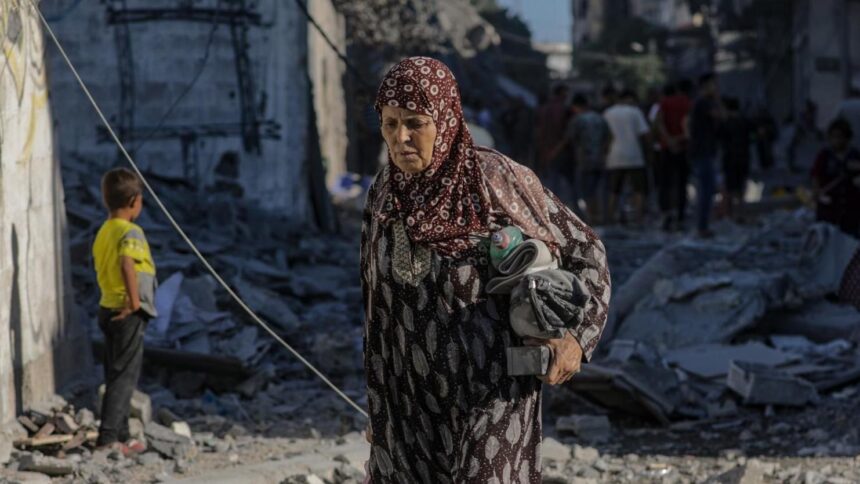
The survey, conducted between October 22 and 25 across the occupied West Bank and Gaza, underscores how Israel’s ongoing war and the resulting humanitarian devastation have reshaped Palestinian political sentiment. The data reveals that not only has Hamas retained substantial support among Palestinians, but the organisation’s popularity has also increased over the last two years—especially in areas governed by its political rival, Fatah.
Palestinians Strongly Oppose Hamas Disarmament
According to the poll, about 70 percent of Palestinians in both the West Bank and Gaza said they were firmly against the disarmament of Hamas, even if maintaining the group’s weapons risked renewed Israeli attacks. The opposition was most pronounced in the occupied West Bank, where around 80 percent of respondents said they wanted Hamas’s armed wing to keep its weapons. In Gaza, which has suffered relentless Israeli bombardments described by the United Nations and global human rights organisations as genocidal, 55 percent of respondents opposed disarmament.
The poll surveyed 1,200 individuals—760 from the West Bank and 440 from Gaza—with a margin of error of 3.5 percent. Conducted face-to-face, the poll sought to capture a nuanced picture of Palestinian public opinion following the ceasefire between Israel and Hamas. The results revealed not only widespread support for Hamas’s continued armament but also deep distrust toward American-led peace initiatives.
The poll found that 62 percent of Palestinians do not believe the Trump administration’s 20-point peace plan would achieve a lasting end to the war. This scepticism was higher in the West Bank, with 67 percent rejecting the proposal, compared to 54 percent in Gaza. The data suggests that most Palestinians perceive the U.S. plan as biased toward Israeli interests, especially as Washington continues to support Israel militarily despite mounting civilian casualties in Gaza.
The resistance to disarmament also reflects Palestinians’ fears of political vulnerability. Many believe that surrendering Hamas’s weapons would strip Gaza and the West Bank of their only deterrent against Israeli military dominance. For a population that has endured years of blockades, displacement, and violence, the preservation of armed resistance—symbolised by Hamas—remains closely tied to their sense of self-determination and security.
Rising Popularity of Hamas and Discontent with Abbas
The PCPSR findings also reveal that Hamas’s popularity continues to outpace that of Fatah and the Palestinian Authority. Overall, 35 percent of Palestinians support Hamas, compared to just 24 percent for Fatah. Another 32 percent of respondents said they either support neither group or have no opinion. In the West Bank, 32 percent of participants backed Hamas compared to 20 percent for Fatah, while in Gaza, support for Hamas rose to 41 percent versus 29 percent for its rival.
A majority of Palestinians—60 percent overall—expressed satisfaction with Hamas’s performance, with approval ratings reaching 66 percent in the West Bank and 51 percent in Gaza. This represents a significant shift in public opinion, especially considering the devastation Gaza has endured under Israeli attacks. The findings indicate that despite the hardships, Hamas’s image as a resilient resistance force has strengthened among Palestinians.
Conversely, the Palestinian Authority, led by President Mahmoud Abbas, continues to face widespread disapproval. The survey found that only 23 percent of Palestinians were satisfied with Abbas’s leadership, while a staggering 85 percent said they wanted him to resign. This deep frustration reflects the belief that Abbas and the PA have failed to advance Palestinian national aspirations or effectively challenge Israeli occupation policies.
The poll also revisited Palestinian attitudes toward the Hamas-led attack on southern Israel on October 7, 2023. With the ceasefire now in place, 53 percent of respondents said the attack was “correct,” showing a rebound in approval compared to previous polls conducted during the height of Israeli military operations. The sentiment was stronger in the West Bank, where 59 percent of respondents supported the operation, compared to 44 percent in Gaza.
When asked about leadership alternatives, imprisoned Palestinian leader Marwan Barghouti emerged as the most popular figure, surpassing both Abbas and senior Hamas officials like Khaled Meshaal. The findings suggest that Palestinians are yearning for a leader capable of uniting the factions and confronting both Israeli occupation and internal political stagnation.
The discontent with the current leadership and the growing support for Hamas reflect a broader crisis in Palestinian governance. Decades of failed peace negotiations, internal division between Hamas and Fatah, and the PA’s limited autonomy under Israeli occupation have eroded public confidence in traditional political structures.
Mixed Views on International Peacekeeping and Governance in Gaza
The Trump administration’s peace plan for Gaza envisions the establishment of a technocratic committee of Palestinians not affiliated with either Hamas or the PA to govern the enclave. The plan also calls for a “Board of Peace” chaired by President Trump and proposes deploying Arab and Muslim peacekeepers under a UN mandate to oversee stability in Gaza.
However, Palestinian opinion on these proposals remains deeply divided. The PCPSR poll found that 53 percent of Palestinians oppose the formation of a non-Hamas, non-PA technocratic committee to govern Gaza, while 45 percent support it. Interestingly, in Gaza itself, a slim majority of 51 percent support the idea, whereas opposition in the West Bank is significantly higher.
When the question was framed differently—linking the formation of such a committee to access to international reconstruction funds—67 percent of Palestinians said they would support the idea. This indicates that economic survival and rebuilding Gaza remain urgent priorities for many Palestinians, even as political trust remains fragile.
The proposal to deploy an Arab and Muslim peacekeeping force also drew mixed reactions. In the West Bank, 78 percent of respondents rejected the idea, fearing it could undermine Palestinian sovereignty or serve external interests. In Gaza, opposition dropped to 52 percent—within the survey’s margin of error—indicating greater openness to international involvement under certain conditions.
Support for the peacekeeping force increased substantially when respondents were told that the peacekeepers’ mandate would not include disarming Hamas but would focus solely on securing Gaza’s borders. Under these conditions, 53 percent of respondents in Gaza and 43 percent in the West Bank supported the plan.
The survey’s findings illustrate the complexity of Palestinian public opinion, shaped by years of political marginalisation, humanitarian crisis, and competing narratives of resistance and governance. For many Palestinians, Hamas’s continued armament represents both a symbol of resistance and a practical necessity in the face of perceived abandonment by global powers.
At the same time, the declining legitimacy of the Palestinian Authority and the enduring divisions between Hamas and Fatah have left the Palestinian national movement fractured. As international actors, including the United States, attempt to reshape Gaza’s political landscape through peace plans and reconstruction efforts, they face a population deeply sceptical of foreign motives yet desperate for stability and rebuilding.
The poll ultimately underscores a paradox at the heart of Palestinian politics: while many Palestinians reject disarmament and distrust U.S.-led initiatives, there remains a widespread longing for unity, effective governance, and an end to perpetual war. The challenge for any future peace process lies in reconciling these aspirations with the entrenched realities of occupation, political division, and external interference that continue to define life in Gaza and the West Bank.