Maharashtra has taken a landmark step toward improving cancer care accessibility for its residents with the launch of the “Maharashtra Cancer Care, Research and Education Foundation,” branded as Mahacare. This initiative aims to bridge the gap between patients and specialist oncology services, ensuring that quality care is available closer to home rather than forcing patients to travel long distances to urban centers. Approved under a comprehensive state cancer-care policy, Mahacare will implement a three-tiered hospital network across 18 facilities in the state, integrating advanced cancer diagnostics, treatment, rehabilitation, and research under a single umbrella. By combining government oversight, medical expertise, and strategic investment, the foundation seeks to revolutionize cancer care in Maharashtra, making treatment more accessible, affordable, and specialized while fostering local capacity through advanced training programs.
Cancer remains a growing public health concern in Maharashtra, as in many parts of India, with rising incidence rates and a substantial burden on patients, families, and healthcare systems. Long waiting times, the need to travel hundreds of kilometers for advanced treatment, and inadequate infrastructure in regional hospitals have historically hindered timely access to care. The Mahacare initiative, therefore, is designed not only as a treatment delivery system but as a comprehensive framework for strengthening the entire oncology ecosystem. From radiotherapy and chemotherapy to mental health support, palliative care, and physical rehabilitation, patients will receive integrated multidisciplinary care under the Mahacare model.
Three-tiered network of specialist cancer facilities
At the core of Mahacare’s operational strategy is the creation of a three-tiered network of hospitals designed to provide scalable and specialized care. Tata Memorial Hospital, widely recognized as India’s apex oncology center, has been designated the L-1 center. Serving as the national benchmark for cancer treatment, research, and training, Tata Memorial will act as the central hub for Mahacare, offering strategic oversight, specialized services, and advanced treatment protocols that regional hospitals can emulate.
The L-2 tier consists of eight hospitals linked to six government medical colleges and two public-health referral hospitals located in Nashik and Amravati. These centers are slated for upgrades to enhance their oncology capabilities, enabling them to provide a broader range of treatments including surgery, chemotherapy, and radiotherapy. Beyond clinical care, the L-2 hospitals will be focal points for postgraduate and super-specialty oncology training. MD, MAS, DM/MCh, DNB, and fellowship programs will be expanded at these facilities, ensuring that the state develops a strong pool of oncology specialists and reducing the need for patients to migrate to urban centers for advanced care. By building local capacity, the Mahacare model emphasizes sustainability and long-term impact on healthcare outcomes.
The L-3 tier encompasses nine hospitals including facilities attached to medical colleges in Ambajogai (Beed), Nanded, Yavatmal, Satara, Baramati, Jalgaon, and Ratnagiri, along with two major Mumbai hospitals and the Shirdi Sansthan hospital. These centers will form the broader network, providing essential cancer care services to patients in smaller cities and rural areas. Equipment procurement, staffing, and management for L-3 centers will employ a public–private partnership model where appropriate, ensuring cost-effective delivery of quality care. The Shirdi Sansthan will independently fund construction, staffing, and equipment for its dedicated cancer facility, reflecting the growing involvement of philanthropic and religious institutions in healthcare infrastructure development.
Central to this network is the creation of a command-and-control center that will coordinate activities across all tiers. This centralized oversight will facilitate efficient resource allocation, monitoring of patient outcomes, and standardization of treatment protocols. Alongside the command center, a specialist executive board will manage the day-to-day operations of Mahacare, ensuring that both administrative efficiency and clinical excellence are maintained. The board comprises high-level government officials, medical experts, and representatives from leading oncology institutions, reflecting a balance of governance and professional oversight.
The foundation’s seed capital is set at Rs 100 crore, with approved revenue provisions to ensure sustainability. Specifically, 20 percent of certain fees collected by cancer hospitals under the Mahatma Phule Jan Arogya Scheme will be routed to Mahacare to maintain operations. Additional revenue streams are expected from clinical trial participation, international grants, donations, and corporate social responsibility contributions. Capital investments for L-2 hospitals are projected at approximately Rs 1,529.38 crore, while recurring and infrastructure costs for L-3 centers are estimated at Rs 147.70 crore. Such detailed financial planning underscores the government’s commitment to creating a robust and resilient oncology network.
Enhancing patient care, research, and specialized training
Beyond expanding access to treatment, Mahacare is designed to offer comprehensive care that addresses the full spectrum of patient needs. Multidisciplinary diagnosis and treatment will be a cornerstone of the program, integrating oncology surgeons, medical oncologists, radiation specialists, pathologists, and supportive care teams. Patients will benefit from coordinated care plans, reducing delays between diagnosis and treatment. Mental health support, physical rehabilitation, palliative care, and access to essential medicines are integrated components, ensuring holistic management of both the disease and its broader impact on patient well-being.
The policy also prioritizes training and capacity building to create a sustainable workforce of oncology specialists. L-2 institutions will host an expanded range of postgraduate and super-specialty programs, including MD, MAS, DM/MCh, DNB, and fellowship courses. These programs aim to reduce dependence on metropolitan hospitals and ensure that skilled professionals are available across the state. By nurturing local talent, Mahacare aims to address both the short-term shortage of specialists and the long-term need for a self-sufficient healthcare ecosystem capable of managing cancer care demands independently.
Research and innovation are embedded in the foundation’s framework. Clinical trials will be coordinated across L-2 and L-3 centers, enabling collaborative studies on new therapies, treatment protocols, and patient outcomes. This structure provides a dual benefit: advancing medical knowledge while generating revenue to support foundation activities. Partnerships with national and international institutions, including Tata Memorial Hospital, ensure that Maharashtra remains aligned with global best practices in cancer care.
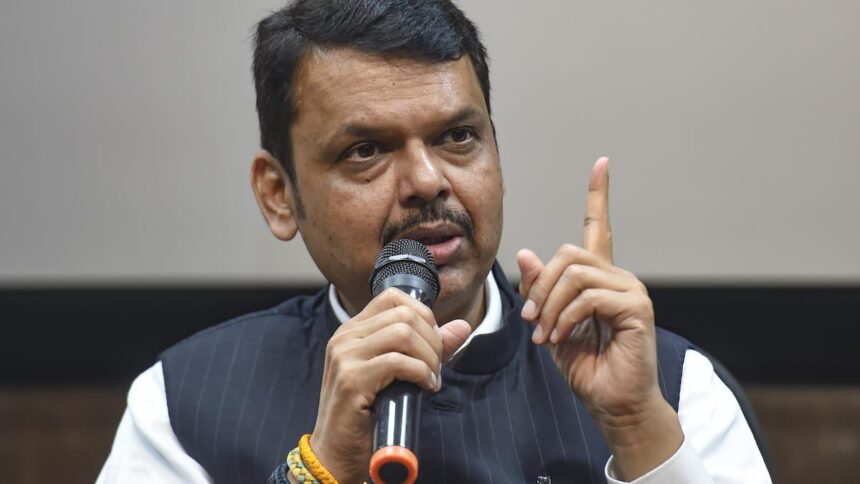
Leadership of the foundation reflects both government oversight and medical expertise. Chief Minister Devendra Fadnavis will serve as chair of Mahacare, with Deputy Chief Ministers Eknath Shinde and Ajit Pawar as vice-chairs. Key secretaries and commissioners from the health and medical education departments will participate, alongside nominated representatives from Tata Memorial and other oncology experts. A healthcare professional will be appointed as the CEO to ensure smooth operational management. This governance model balances policy direction with clinical and administrative expertise, providing a strong foundation for long-term success.
The integration of public, private, and philanthropic resources is another key feature of Mahacare. Public–private partnerships at L-3 centers will leverage private sector efficiency and innovation while maintaining affordability and accessibility for patients. Donations and CSR contributions from corporates will supplement government funding, providing additional resources for equipment, staffing, and program expansion. The Shirdi Sansthan’s commitment to fully fund its facility demonstrates the growing role of philanthropic institutions in supporting specialized healthcare infrastructure in India.
Mahacare’s approach also includes the development of centralized systems for data management and treatment tracking. By creating a coordinated database across all hospitals, the foundation will monitor patient outcomes, treatment efficacy, and operational performance. This data-driven approach ensures accountability, facilitates research, and helps refine protocols for improved patient care. Patients across Maharashtra will have access to standardized treatment regardless of whether they are treated in a metropolitan or regional hospital, reducing disparities in care quality.
The initiative is expected to transform the experience of cancer patients across the state. By reducing travel distances, providing multidisciplinary care under one roof, and expanding specialized training, Mahacare addresses the multiple barriers that patients face today. Long-term planning, including investment in infrastructure, personnel, and training, positions Maharashtra to become a national model for integrated cancer care.
By strategically combining treatment delivery, workforce development, research, and governance, Mahacare aims to not only expand access to high-quality cancer care but also create a sustainable system capable of responding to evolving public health challenges. This foundation represents a comprehensive approach that recognizes cancer care as more than clinical treatment—it encompasses social, economic, and psychological dimensions that influence patient outcomes and quality of life.
The rollout across 18 hospitals ensures that rural and semi-urban populations, often underserved in terms of specialist oncology services, can benefit from high-quality care without the burden of traveling to distant metropolitan centers. With L-1, L-2, and L-3 hospitals functioning as integrated nodes in a statewide network, Mahacare establishes a scalable, replicable model for other states to follow.
The financial planning and operational strategies of Mahacare reflect a long-term commitment to sustaining the network. By earmarking capital expenditure for infrastructure upgrades and recurring costs, and by creating revenue streams from existing government schemes, clinical trials, and philanthropic contributions, the foundation seeks to ensure that cancer care services remain uninterrupted and high-quality. Equipment procurement, staffing, and management strategies tailored to different hospital tiers provide operational flexibility while maintaining uniform standards of care.
With the launch of Mahacare, Maharashtra positions itself at the forefront of cancer care innovation in India. The initiative combines government leadership, clinical excellence, strategic funding, and regional access in a way that addresses longstanding gaps in cancer treatment. By integrating treatment, education, and research into a single coordinated framework, the foundation sets a new benchmark for comprehensive, patient-centered oncology services in the country.