The Lok Sabha is set to integrate cutting-edge Artificial Intelligence (AI) tools to enhance parliamentary operations, including live interpretation, transcription of debates, and seamless access to legislative records. This initiative aims to provide Members of Parliament (MPs) with real-time support in multiple languages while also streamlining administrative processes.
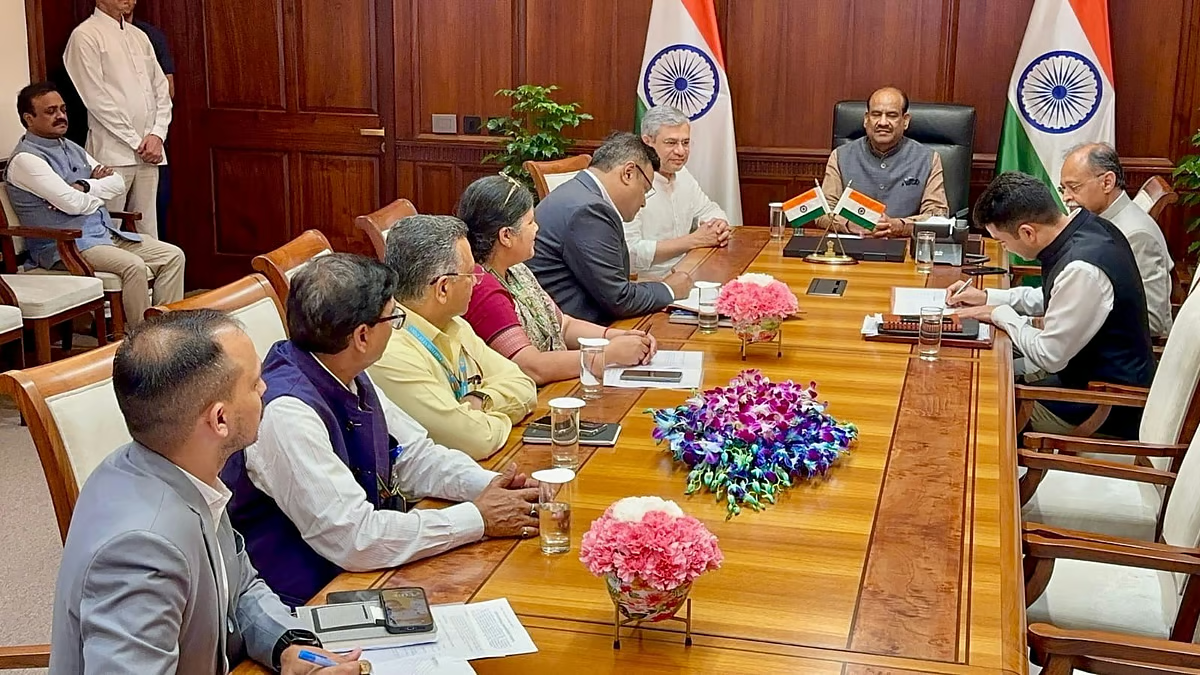
On Tuesday, the Lok Sabha Secretariat signed a Memorandum of Understanding (MoU) with the Ministry of Electronics and Information Technology (MEITY) for the development of the Sansad AI solution. The agreement, signed in the presence of Lok Sabha Speaker Om Birla and Union Minister Ashwini Vaishnaw, marks a significant step toward modernizing parliamentary functions through AI-driven solutions.
The Sansad Bhashini initiative is a key component of this modernization effort. It is designed to offer in-house AI solutions that facilitate multilingual communication, ensuring broader accessibility for both MPs and citizens. According to a statement from the Lok Sabha Secretariat, this initiative will leverage a vast repository of parliamentary data to improve efficiency and inclusivity.
A major focus of the initiative is the development of AI-based translation capabilities. The system will enable automatic translation of legacy debate documents, agenda files, committee meeting reports, and other parliamentary content into multiple regional languages. This will ensure linguistic diversity while making parliamentary proceedings more accessible to people across India.
Additionally, an AI-powered chatbot is being developed for the Parliament’s official website. This chatbot will assist MPs and officials in retrieving critical procedural rules and accessing relevant documents. By offering instant and accurate responses, it aims to reduce the time spent searching for parliamentary rules and practices. The chatbot will continuously learn from user interactions, improving its efficiency over time.
Another key feature of the initiative is speech-to-text conversion. This function will allow real-time transcription of spoken debates into text, making them easily searchable and accessible. The transcripts will be available in multiple Indian languages, ensuring comprehensive documentation and referenceability of parliamentary discussions.
Moreover, the AI system will generate automatic summaries of lengthy debates, aiding in quicker decision-making and improved record-keeping. This capability is expected to significantly enhance legislative efficiency by condensing complex discussions into concise and actionable insights.
Union Minister Ashwini Vaishnaw expressed confidence that the Sansad Bhashini initiative would revolutionize parliamentary processes through AI-driven innovations. He emphasized that the initiative will not only streamline legislative documentation but also strengthen India’s position in technology-driven governance.
The introduction of AI tools in the Lok Sabha is a step toward modernizing the Indian parliamentary system. By integrating AI for multilingual support, automated transcription, and real-time assistance, this initiative aims to create a more efficient, transparent, and accessible legislative framework for the future.