The Lok Sabha has approved a crucial new Pan Masala Cess Bill designed to generate additional revenue for India’s defence modernization and state-level public health initiatives. The government argues that this targeted cess on pan masala manufacturing units will not only compensate for the decline of earlier levies ending soon but will also create a long-term, reliable stream of funds dedicated to strengthening national security and public welfare. The move is positioned as essential to ensure fiscal preparedness in a geopolitical landscape that demands high military readiness, while simultaneously supporting the health infrastructure of states across the country.
Cess Designed to Strengthen Defence Preparedness and Reinforce Public Health Systems
The newly passed bill introduces a special cess on the manufacturing of pan masala and similar products, marking a significant restructuring in how the government intends to derive revenue from items considered harmful for public health. With the previous GST compensation cess on demerit goods scheduled to phase out, the government viewed this moment as an opportunity to implement a more structured and purpose-driven levy aimed at supporting crucial national objectives.
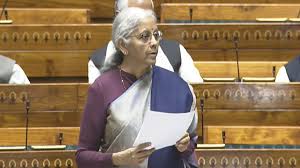
During the parliamentary session, the finance minister explained that the new cess is not intended to increase the financial burden on everyday consumers. Instead, it targets a specific industry with a long-standing profile of health risks. By imposing the cess directly on the manufacturing units rather than on final consumption, the government seeks to maintain tax predictability while discouraging the proliferation of a product associated with significant public health challenges. The structure of the levy is based on the production capacity of the manufacturing machines in use, ensuring that the cess aligns with the scale of industrial activity rather than subjective output disclosures.
A notable portion of the revenue will be allocated to modernizing India’s defence capabilities. The finance minister pointed out that historical audit reports revealed periods when the nation experienced dangerously low stockpiles of ammunition and essential equipment. With modern warfare increasingly shaped by cyber threats, remote attack technologies, complex borders, space-based systems, and precision-guided weapons, India’s military must remain equipped to respond at short notice. The revenue from the cess is expected to contribute directly toward procurement, infrastructure upgrades, and long-term strategic preparedness.
The government emphasized that defence modernization cannot rely on sporadic budget allocations; instead, it requires predictable funding sources that are insulated from economic fluctuations. The cess therefore serves as a stabilizing financial instrument that creates a continuous revenue stream supporting national security priorities.
On the public health front, the cess revenue earmarked for states is intended to reinforce healthcare systems, preventive health campaigns, disease surveillance programs, maternal and child health initiatives, and infrastructure development. Since health remains primarily a state responsibility under India’s constitutional framework, the central government framed the revenue-sharing arrangement as part of cooperative federalism. The goal is to ensure that every state has access to funds required to manage enduring and emerging health challenges, from chronic disease burdens to outbreaks requiring rapid response.
The finance minister also emphasized the symbolic dimension of the cess: by taxing an industry associated with adverse health effects, the policy reinforces India’s commitment to discourage harmful consumption patterns while mobilizing revenue for public good.
Legislative Debate, Federal Considerations and the Evolution of Targeted Cess Policies
The bill was passed by voice vote in the Lok Sabha after an extensive discussion reflecting both political viewpoints and federal concerns. Several members of Parliament debated the implications of creating a new cess in a GST framework designed to streamline taxation. The government clarified that GST will continue to apply to pan masala at its existing rate and that the new cess does not interfere with the GST structure or principles. It functions as an additional levy, but only on manufacturing units, ensuring that consumers are not directly targeted by increased taxation.
During the debate, ministers reiterated that the cess is necessary to maintain fiscal stability after the cessation of the earlier compensation cess regime. Without this new levy, products such as pan masala would experience an unintended drop in total tax burden, an outcome inconsistent with public health goals and fiscal needs. The new system prevents such a drop, ensuring that manufacturers continue to pay a level of tax that reflects the external health costs of the product.
The government also stressed that the Centre will not retain the entire cess revenue. A structured sharing mechanism ensures that states receive their due portion to support their health infrastructure. This approach underscores the Centre’s commitment to strengthening cooperative federal governance, where national and state-level priorities are jointly supported through equitable fiscal distribution.
The new cess represents a broader paradigm shift in India’s taxation strategy. Instead of universal taxation increases—which would affect households and businesses across sectors—the government is focusing on targeted cess instruments applied to products with negative social externalities or harmful consumption patterns. The logic is twofold: first, harmful products can justifiably bear additional taxes without affecting essential goods; second, revenue from these products can be used to fund areas that directly benefit public interest and national security.
With geopolitical tensions and domestic health burdens rising, policymakers argued that the country must proactively identify steady revenue sources rather than depending solely on conventional taxes. The Pan Masala Cess Bill therefore reflects an effort to create self-sustaining funding for areas requiring continuous investment, such as defence procurement cycles, military technology upgrades, and the expansion of health services.
Furthermore, the shift toward capacity-based taxation helps prevent underreporting and ensures transparency. By linking the cess to machinery capacity, the government aims to reduce tax evasion and ensure that revenues accurately reflect industrial activity. This design fosters compliance and simplifies enforcement, addressing long-standing issues in sectors where production is difficult to track precisely.
Economists and analysts view the bill as part of a global trend wherein governments adopt “sin taxes” or targeted levies on products with public health implications. Although India’s cess is tied not to general consumption but to manufacturing capacity, the principle remains aligned with international best practices aimed at both discouraging harmful product proliferation and securing funds for essential national programs.
In summary, the legislative passage of the Pan Masala Cess Bill signals a strategic recalibration of India’s fiscal approach—one that aligns taxation tools with national security imperatives, health priorities, and principles of cooperative federalism. It reflects a deeper understanding that certain economic instruments must evolve to meet emerging challenges in defence preparedness and public health management. While the bill does not alter GST provisions, it strengthens India’s ability to generate independent, sustainable revenue for pivotal sectors without overburdening average citizens or distorting the broader tax structure.