From Delhi and Chhattisgarh to Jharkhand and Tamil Nadu, liquor policy scams have emerged as a major source of corruption, benefiting politicians, bureaucrats, and business entities while leaving the public at a loss. The absence of a central policy or inclusion under Goods and Services Tax (GST) has allowed states to exercise full control over the liquor industry, resulting in a system plagued by rigged licensing, policy manipulations, and black money transactions.
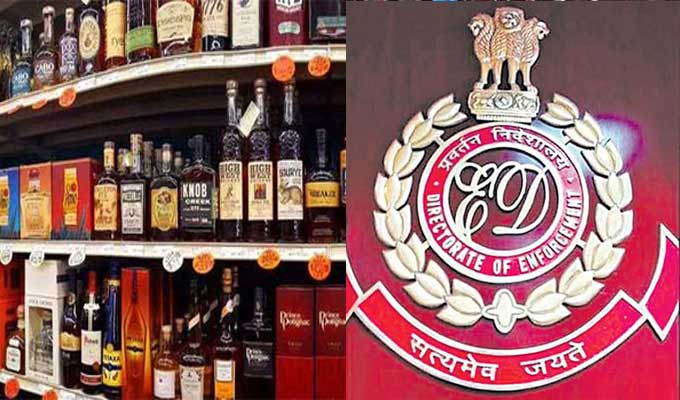
Excise scams have followed a predictable pattern: politicians tweak policies to serve their interests, bureaucrats facilitate the implementation, and liquor mafias and business magnates reap the rewards. Various central agencies, including the Enforcement Directorate (ED), are actively investigating multiple excise-related corruption cases across states. In Delhi, former Chief Minister Arvind Kejriwal and ex-Excise Minister Manish Sisodia were arrested in connection with the liquor scam, which allegedly involved kickbacks to benefit private liquor businesses under the Aam Aadmi Party (AAP) government’s excise policy. Similarly, in Chhattisgarh, the ED arrested former Excise Minister Kawase Lakma and is probing the alleged involvement of former Chief Minister Bhupesh Baghel and his family in a multi-crore liquor scam.
Tamil Nadu has also been a focal point of liquor-related corruption, with the ED conducting raids linked to the Tamil Nadu State Marketing Corporation (TASMAC). State Excise Minister Senthil Balaji remains under the ED’s scrutiny over his alleged role in irregularities within the liquor trade. Meanwhile, Jharkhand’s 2024 liquor scam highlighted how policy changes enabled a single private entity to monopolize the state’s liquor distribution, bypassing transparency norms and fair competition.
The state-wise control over liquor policies has led to frequent manipulations favoring select businesses, with changes often timed with shifts in political leadership. Licensing norms remain opaque, allowing artificial monopolies to thrive while bureaucrats grant selective access to key players. This not only fosters corruption but also makes liquor a significant revenue-generating tool, contributing 15-30% of a state’s total earnings. The lack of GST applicability enables direct revenue collection, increasing the scope for contract manipulation and revenue-sharing arrangements with private firms.
Election funding is another key factor in liquor scams, with policies often altered in exchange for financial backing. Political parties allegedly use the liquor industry as a cash reserve, with black money generated through illicit liquor trade funneled into election campaigns. In Chhattisgarh’s Rs 4,000-crore scam, officials and politicians were accused of running a parallel illegal liquor syndicate under state patronage, ensuring a steady flow of unaccounted money.
Corruption within state-controlled liquor enterprises, such as Tamil Nadu’s TASMAC, has further highlighted systemic issues. Despite government control, procurement and supply chain irregularities have led to revenue losses and extensive kickbacks. In Delhi, the ED uncovered evidence of funds being routed through shell companies to obscure illegal transactions, showcasing the complex web of financial mismanagement and corruption that plagues liquor policies across states.
As liquor policies remain under state control, corruption within the sector continues to thrive, necessitating urgent reforms and greater transparency to prevent further exploitation of excise systems for political and financial gains.