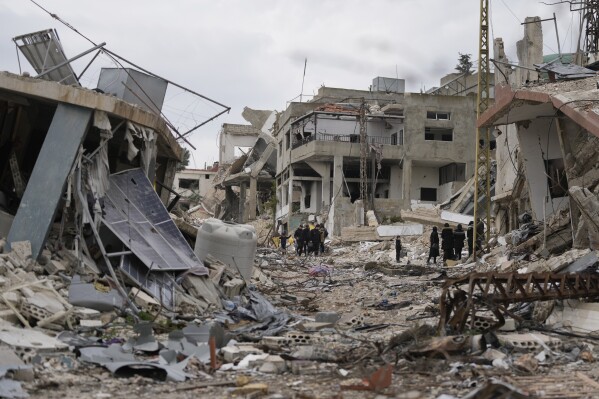
The ceasefire agreement between Israel and Lebanon, initially set to expire on Sunday, has been extended until mid-February, according to the US and Lebanese authorities. The deal, brokered by the US and France, had aimed to bring an end to 14 months of hostilities between Israel and the Lebanese militant group Hezbollah. The ceasefire plan, which was announced in late November, required Hezbollah to withdraw its forces from southern Lebanon, while Israeli forces were also expected to pull back from the region within a 60-day period.
Despite the initial deadline passing, Israel kept troops deployed in southern Lebanon, accusing the Lebanese government of not fully implementing its part of the agreement. Specifically, Israel insisted that Hezbollah had not been removed from the area as mandated by the ceasefire. In response to the situation, the Lebanese health ministry reported on Sunday that Israeli soldiers had killed 22 people and wounded 124 others, as they attempted to return to their homes in southern Lebanon. The Israeli military claimed that it had fired warning shots in several areas, and apprehended individuals it described as posing an “imminent threat.”
Lebanese Prime Minister Najib Mikati confirmed on Sunday that, following discussions with US officials, the truce would remain in effect until 18 February. The extension comes as both parties have been under pressure to adhere to the terms of the ceasefire. The United States has also indicated that negotiations will begin for the return of Lebanese prisoners who were captured after the outbreak of hostilities in October 2023.
The ceasefire deal, which marked a temporary halt in the Israel-Hezbollah conflict, was intended to pave the way for a permanent cessation of hostilities. In his announcement of the agreement, then-US President Joe Biden described the plan as “designed to be a permanent cessation of hostilities” between the two sides. However, with Israel’s decision to maintain a presence in the region beyond the initial deadline, tensions have continued to rise.
The longstanding conflict between Israel and Hezbollah escalated dramatically in September 2023, following the Hamas attacks on southern Israel on 7 October. Hezbollah, a militant group supported by Iran, claimed that its actions were in solidarity with Palestinians in Gaza. This escalation led to an intense Israeli air campaign across Lebanon, a ground invasion in the country’s south, and the assassination of several senior Hezbollah leaders. The Israeli offensive killed approximately 4,000 people, including many civilians, and displaced over 1.2 million Lebanese residents.
Israel’s primary goal in the conflict has been to facilitate the return of around 60,000 displaced residents from communities in southern Lebanon, which had been abandoned due to Hezbollah’s attacks. The country has also sought to remove Hezbollah from areas along the border. However, the situation remains volatile, and despite the ceasefire agreement, the region continues to be marked by instability.
Thousands of Lebanese residents have returned to towns and villages near the border since the ceasefire deal was brokered, although many remain wary of returning to areas they consider unsafe. The extended ceasefire until mid-February provides a fragile window for further negotiations, but with both Israel and Lebanon holding firm on their demands, the road to a permanent peace remains uncertain.