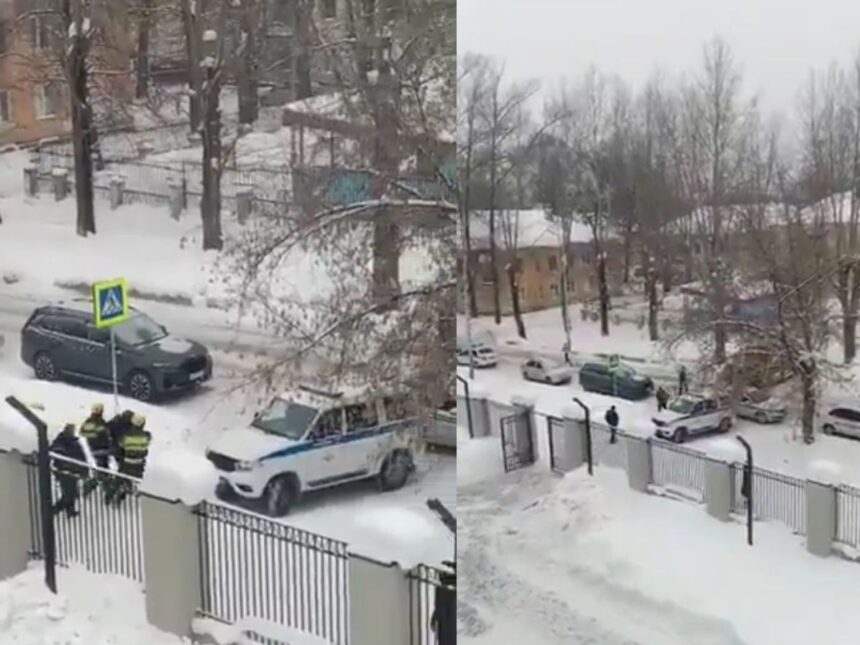
A violent knife attack inside a Russian university campus has left multiple people injured, including four Indian students, triggering serious concerns about the safety of foreign nationals studying in the country. The incident occurred in the city of Ufa, located in Russia’s Bashkortostan Republic, where a teenager armed with a knife entered an educational facility and carried out a sudden assault. The episode has drawn diplomatic attention and renewed scrutiny of campus security measures, particularly in institutions hosting large numbers of international students.
The attack unfolded within a confined academic setting, transforming what should have been a space of learning into a scene of chaos and fear. As details emerged, the scale of the violence, the vulnerability of foreign students, and the response of local authorities became central to public and diplomatic discourse.
Attack Inside University Campus Sparks Alarm Over Student Security
Preliminary information indicates that the attacker, identified as a teenage individual, entered the State Medical University premises in Ufa while armed with a knife. Several students were stabbed during the assault, which reportedly took place in or near facilities associated with student accommodation and recreational spaces. Among those injured were four Indian nationals, highlighting the disproportionate impact such incidents can have on international communities far from home.
The suddenness of the attack left little room for immediate escape or defence, underscoring the inherent risks posed by unsecured access points within academic institutions. Witness accounts and early reports suggest that panic spread rapidly as students attempted to flee or seek shelter, while emergency services moved in to contain the situation.
Law enforcement officials intervened swiftly, but the arrest operation itself turned violent. During the attempt to restrain the suspect, two police officers sustained knife injuries, further complicating the response. Authorities later confirmed that the attacker also inflicted injuries upon himself during the confrontation, suggesting a volatile and possibly premeditated act marked by extreme distress or radical behaviour.
There has been speculation within local information channels that more than one attacker may have been involved, although official confirmation remains pending. One suspect, reportedly a 15-year-old, was hospitalised in serious condition, raising legal and ethical questions regarding juvenile criminal responsibility and institutional preparedness for such scenarios.
The presence of foreign students among the injured has intensified concern, particularly as international enrolment continues to rise in Russian medical and technical universities. These institutions attract students from Asia, Africa, and the Middle East due to comparatively lower costs and accessible admission pathways, making campus safety a matter of international relevance.
Diplomatic Response and Broader Implications for Indian Students Overseas
Following the incident, Indian diplomatic authorities acknowledged the injuries sustained by Indian students and confirmed active coordination with Russian officials. Consular mechanisms were mobilised to provide assistance, medical support, and communication with affected individuals and their families. The response signalled the seriousness with which such incidents are treated when citizens are harmed abroad, particularly in violent crimes occurring within institutional environments.
The episode has revived longstanding concerns about the welfare of Indian students pursuing education overseas, especially in regions experiencing internal social stress, economic uncertainty, or security challenges. Parents and guardians in India have repeatedly voiced apprehensions regarding language barriers, cultural isolation, and limited access to immediate support systems during emergencies.
Russia has historically been a major destination for Indian students, particularly in the medical field. Thousands enrol annually, often living in shared hostels and relying heavily on campus infrastructure for safety and daily needs. Any breach of security in such environments resonates far beyond national borders, influencing perceptions, enrolment trends, and diplomatic engagement.
The knife attack also raises critical questions about mental health screening, campus surveillance, and crisis response protocols in educational institutions. The involvement of a minor as the alleged attacker complicates the narrative, pointing to deeper societal and psychological issues that transcend the immediate act of violence.
As investigations continue, attention remains focused on accountability, preventive measures, and assurances that similar incidents will not recur. The safety of international students, particularly those from India, has become a focal point of dialogue, blending concerns of law enforcement, diplomacy, and educational governance.