Kerala’s education department has initiated a comprehensive investigation following a video showing students from a private school allegedly singing the Rashtriya Swayamsevak Sangh (RSS) anthem aboard the Ernakulam–Bengaluru Vande Bharat Express. The incident, which occurred shortly after the virtual inauguration of the train by Prime Minister Narendra Modi, has ignited widespread debate across political, educational, and social circles. As the video went viral, it drew sharp criticism from several quarters, raising fundamental questions about the potential politicization of education, the use of students in ideological displays, and the broader implications for India’s secular and democratic values.
Students Singing RSS Anthem and the Public Reaction
The controversy began when Southern Railway shared a video featuring students performing what appeared to be the RSS “gana geetham” during the Vande Bharat Express event. Though the video was briefly removed following public outrage, it was later reinstated, further fueling the controversy. The footage triggered intense discussions over whether children should be involved in politically symbolic activities, and whether their participation was voluntary or influenced by adults with ideological motives.
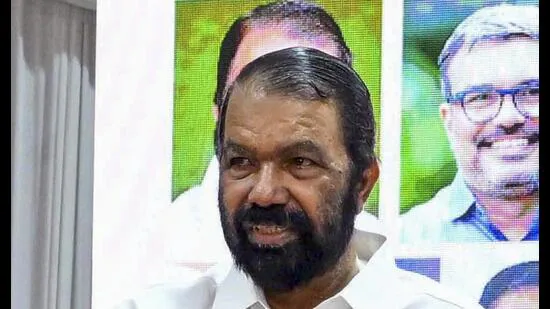
Kerala’s Education Minister V. Sivankutty described the issue as “extremely serious” and immediately ordered a detailed inquiry into the incident. In his public statement, he emphasized that using schoolchildren for political or communal purposes violates the principles enshrined in the Indian Constitution. He further criticized the alleged involvement of public institutions such as the Railways, asserting that these platforms should not be used to promote any particular ideology. The minister directed the General Education Director to investigate the matter thoroughly and submit a comprehensive report detailing the circumstances under which the event took place.
The investigation primarily seeks to determine whether the school’s actions breached Kerala’s educational guidelines or ethical standards. It also aims to understand whether the students’ performance was part of a planned political narrative. The Education Department’s probe underscores a growing concern that educational spaces must remain neutral, ensuring that children are protected from ideological manipulation.
Meanwhile, the school involved—Saraswathy Vidyanikethan Public School in Elamakkara—issued a clarification denying any wrongdoing. The management asserted that the students chose to sing a Malayalam patriotic song of their own accord and that neither teachers, railway officials, nor any external organization instructed them to perform it. However, the school’s affiliation with the Rashtra Dharma Parishad Trust, managed by Vidya Bharati, an organization connected to the RSS, has intensified suspicions that the event might have had ideological undertones.
This association has led to broader debates about whether institutions linked to ideological organizations can maintain neutrality in public settings. Supporters of the school argue that the performance was a spontaneous expression of patriotism and cultural pride, while critics claim it reflects an attempt to normalize political ideology within the educational space. The line between voluntary participation and indirect influence has thus become a central question in the ongoing controversy.
The public response to the event has been deeply polarized. Social media platforms were flooded with arguments from both sides. Critics accused the organizers of indoctrinating students under the guise of patriotism, while supporters insisted that the song reflected national unity rather than partisanship. The debate soon transcended the boundaries of the classroom, evolving into a reflection of India’s larger ideological divide and the ongoing tension between secular education and cultural nationalism.
The controversy has also sparked legal and ethical discussions about the use of children in politically charged performances. Legal experts have pointed out that involving minors in political displays could potentially violate child protection and education policies. They emphasize that educational institutions bear a moral and constitutional responsibility to shield students from political influence, while simultaneously nurturing a sense of civic awareness and social responsibility.
Political Debate and Reactions from Leaders
The incident quickly transformed into a major political flashpoint in Kerala, with leaders from across the political spectrum offering conflicting interpretations. The opposition, led by Congress leader V. D. Satheesan, demanded immediate punitive action against the school management for allegedly compelling students to perform an RSS-associated song at a government event. Satheesan argued that official events should remain ideologically neutral and that the use of the RSS anthem violated the spirit of secularism. He further asserted that the song could not be considered a national or patriotic piece, insisting that it should be reserved exclusively for members of the organization, not schoolchildren.
Leaders from the ruling Left Democratic Front (LDF) echoed similar sentiments, warning that any attempt to introduce ideological bias into schools could have long-term consequences for the country’s education system. They contended that such incidents erode the foundational secular fabric of the Indian state and create an environment of exclusion within educational institutions. According to them, the government must ensure that schools remain safe spaces for learning and not arenas for political expression.
In contrast, leaders from the Bharatiya Janata Party (BJP) and the central government defended the students’ right to sing the song. Union Minister of State Suresh Gopi dismissed the criticism, saying the group song was neither divisive nor violent but an expression of youthful enthusiasm. He urged the public to view the performance in the context of cultural pride rather than political propaganda. Similarly, Union Minister George Kurian defended the lyrics of the song, which he claimed referenced respected reformers such as Sree Narayana Guru and Maharshi Aravindan, portraying it as a symbol of inclusivity and spiritual unity.
These contrasting viewpoints reflect the ideological polarization that often characterizes political discourse in Kerala. While the Left and Congress emphasize constitutional secularism and the separation of politics from education, the BJP and its affiliates argue for a cultural interpretation of patriotism that encompasses traditional and spiritual elements. This ideological rift has deepened the controversy, turning a seemingly isolated school event into a debate over the very nature of Indian nationalism and its place in education.
The debate has also reignited long-standing discussions about the influence of organizations like Vidya Bharati and their role in shaping the cultural narratives within schools. Critics allege that such organizations aim to subtly integrate ideological values into the curriculum under the pretext of moral and cultural education. Supporters, however, argue that their initiatives are rooted in a vision of national pride and social harmony. The Kerala incident has therefore come to symbolize the broader national question of how far ideological influence should extend within educational spaces.
The involvement of Indian Railways, a state-owned enterprise, in sharing and promoting the video has also raised questions about the neutrality of government institutions. Observers argue that government platforms must not be used to amplify politically sensitive or ideologically charged content. The controversy has prompted calls for stricter regulations governing how public institutions handle events involving private schools and students, particularly when such events intersect with political narratives.
As the education department’s inquiry continues, it has become clear that the controversy transcends the boundaries of a single event. It highlights the growing tension between freedom of expression and the need to safeguard young minds from undue influence. The case has also brought renewed attention to the role of educators and administrators in ensuring that students’ participation in cultural or public events remains free from coercion and political intent.
Ultimately, the issue underscores the urgent need for well-defined policies that delineate acceptable forms of student participation in public or political activities. It also calls for a renewed understanding of patriotism—one that celebrates unity and respect for diversity without compromising the principles of neutrality and fairness in education. The Kerala RSS anthem controversy serves as a reminder of the delicate balance between cultural pride and ideological neutrality in India’s complex socio-political landscape.
Highlights: