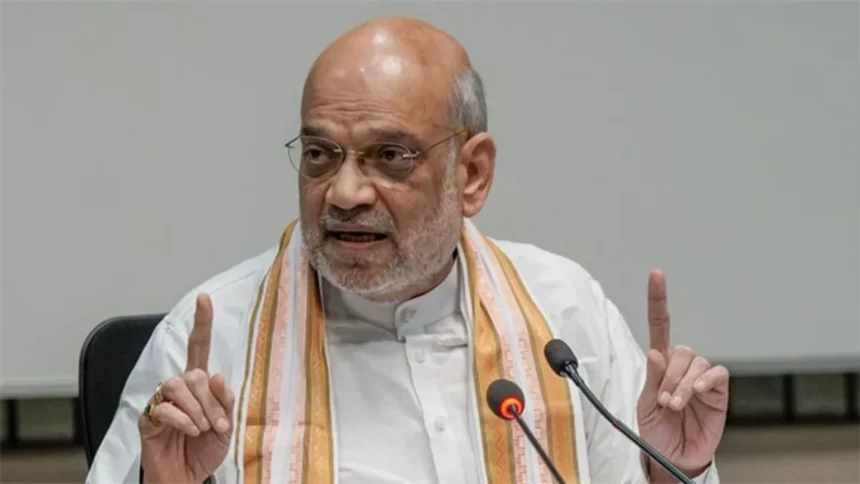
As Union Home Minister Amit Shah visited Jammu and Kashmir this week, three more separatist organisations announced their departure from the Hurriyat Conference, signalling a further erosion of the separatist base in the Valley. Shah hailed these moves as proof of the region’s increasing trust in the Indian Constitution. Since the removal of Article 370 in 2019, the separatist alliance has been steadily weakening, with more groups publicly severing ties with Hurriyat.
During his visit, Shah posted on X that the Jammu Kashmir Islamic Political Party, Jammu and Kashmir Muslim Democratic League, and Kashmir Freedom Front had disassociated from the Hurriyat. He described it as a reflection of the Valley’s growing confidence in constitutional governance. These additions bring the total number of organisations that have distanced themselves from Hurriyat to eleven.
Each of the three groups issued similar statements over the last three days, declaring that they no longer identify with Hurriyat or its separatist ideology, and instead stand by the Constitution of India. Notably, the Muslim Democratic League was once part of the hardline Hurriyat faction led by the late Syed Ali Shah Geelani. Despite having minimal ground presence, its chief Hakim Abdul Rashid was appointed Hurriyat spokesperson by Geelani in 2019, just before the abrogation of Article 370. The other two outfits—Islamic Political Party and Kashmir Freedom Front—are led by Mohammad Yousuf Naqash and Bashir Ahmad Andrabi, respectively.
These recent announcements follow a series of similar moves by lesser-known groups, many of which exist largely on paper. The timing of these declarations aligns with intensified action by the J&K Police, who have launched a fresh crackdown on separatist networks. Investigations into old cases are underway, and raids have been conducted on homes of former separatist leaders. Many of them have remained imprisoned since 2019.
The Hurriyat Conference has been largely inactive since the constitutional changes, with no major political statement issued in nearly six years. Most leaders of the hardline faction led by Masarat Alam are in jail, while the moderate faction headed by Mirwaiz Umar Farooq has seen its key constituents, including his own Awami Action Committee and Ittehad-ul-Muslimeen, banned by the Centre. Despite being released from house arrest in 2023, Mirwaiz still faces restrictions and is often barred from addressing Friday prayers at Srinagar’s Jamia Masjid.