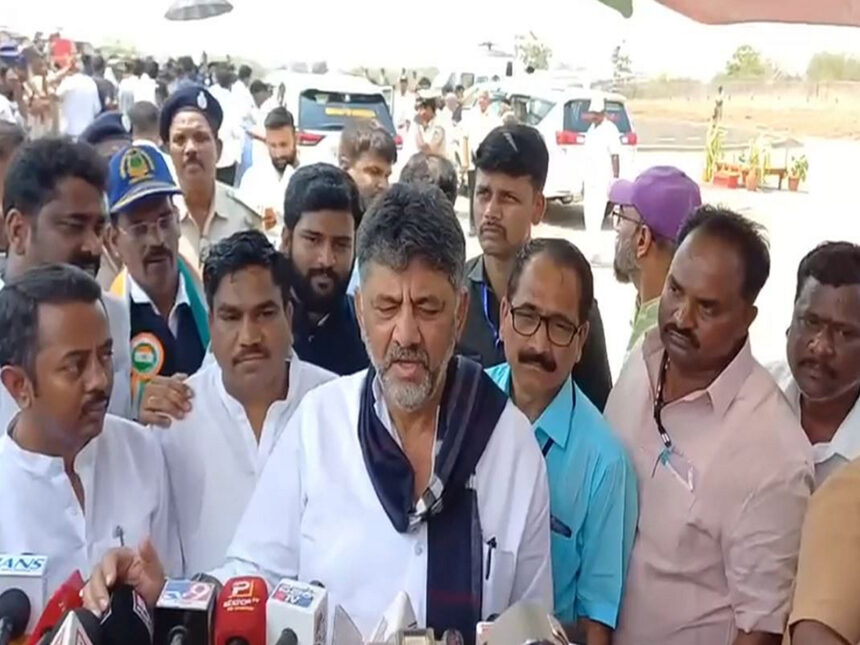
The Karnataka government has intensified its efforts to resolve the long-pending issues surrounding the Upper Krishna Project Phase-3 by calling for a meeting of Members of Parliament from the state in New Delhi. Deputy Chief Minister D K Shivakumar said the meeting aims to create a unified political strategy to address the dispute and accelerate the implementation of the project. The Upper Krishna Project is one of the most important irrigation initiatives in Karnataka, particularly for the drought-prone regions of northern Karnataka where water scarcity has long affected agricultural productivity and rural livelihoods. The project has been under discussion for years, and its third phase is expected to expand irrigation coverage significantly and improve water availability for farmers in several districts. However, regulatory clearances, administrative delays and disagreements related to water allocation have slowed the progress of the project. Shivakumar emphasised that a coordinated effort involving MPs from different political parties is essential to ensure that Karnataka’s concerns are effectively presented before the central government and other relevant authorities responsible for approving and supporting the project.
Importance of Upper Krishna Project Phase-3 for farmers and regional development
The Upper Krishna Project was initially conceived to address water shortages in the northern parts of Karnataka, where agriculture largely depends on unpredictable monsoon rainfall and limited groundwater resources. Over the years, the project has played an important role in expanding irrigation infrastructure and providing water to several districts that previously faced severe drought conditions. Phase-3 of the project is expected to further expand irrigation coverage, enabling more farmland to receive a reliable supply of water. This expansion is particularly important for farmers who depend heavily on agriculture as their primary source of income. By ensuring improved irrigation facilities, the project could significantly enhance crop yields and reduce the risk of crop failure caused by erratic rainfall patterns. Agricultural experts have noted that better irrigation systems can also encourage farmers to diversify crops and adopt more sustainable agricultural practices. In addition to agricultural benefits, the project is expected to contribute to broader regional development. Improved irrigation infrastructure can stimulate economic growth in rural areas by supporting allied sectors such as food processing, transportation and agricultural trade. Local communities could also benefit from increased employment opportunities and improved rural infrastructure. For these reasons, the successful completion of Phase-3 of the Upper Krishna Project has been widely viewed as a critical step toward strengthening the economic stability of northern Karnataka. However, despite its importance, the project has faced numerous challenges that have slowed its implementation. State officials have repeatedly highlighted the need for timely approvals and adequate financial support from the central government in order to move the project forward.
Political coordination and the upcoming meeting in Delhi
Deputy Chief Minister D K Shivakumar has stressed that political unity among Karnataka’s representatives is crucial for resolving the issues affecting the project. According to him, the meeting of Members of Parliament in New Delhi will focus on building consensus across party lines and developing a coordinated strategy to advocate for the project. Shivakumar said the state government wants MPs from all political parties to present a united demand before the central government so that necessary approvals can be granted without further delay. The meeting is expected to involve detailed discussions about the legal, administrative and financial aspects of the project. Political leaders believe that presenting a unified stance will strengthen Karnataka’s position during negotiations with central authorities. Water resource management and irrigation development are highly sensitive issues in many parts of India, particularly in regions where agricultural communities depend heavily on irrigation projects for their livelihoods. In such circumstances, political collaboration becomes essential to ensure that development initiatives are not delayed due to administrative hurdles or intergovernmental disagreements. Shivakumar also emphasised that issues related to water supply and irrigation should not be politicised because they directly affect farmers and rural communities. Instead, he called for collective efforts to safeguard the interests of people who depend on agriculture for their livelihood.
Challenges related to water allocation and regulatory approvals
Despite the state government’s commitment to advancing the Upper Krishna Project Phase-3, several challenges remain unresolved. One of the primary concerns involves water allocation and regulatory approvals required for the expansion of irrigation infrastructure. Large irrigation projects typically require clearance from multiple authorities, including environmental agencies and central government institutions responsible for water resource management. In the case of the Upper Krishna Project, delays in obtaining approvals have slowed the implementation of Phase-3. State leaders have repeatedly raised the issue with the central government, arguing that farmers in drought-prone areas cannot afford further delays in irrigation development. The Karnataka government believes that the upcoming meeting of MPs will help strengthen the state’s representation during discussions with central authorities and ensure that the project receives the necessary attention. Officials hope that coordinated political action will help overcome administrative obstacles and accelerate the approval process. Farmers’ organisations and agricultural groups in northern Karnataka have also expressed their support for the project and urged policymakers to prioritise irrigation infrastructure. They argue that reliable water supply is essential for ensuring long-term agricultural sustainability and improving rural livelihoods. The success of Phase-3 of the Upper Krishna Project could transform the agricultural landscape of several districts by providing stable irrigation facilities and reducing dependence on unpredictable rainfall. As the state government prepares for the meeting in New Delhi, expectations remain high among farmers and local communities that the long-delayed project will finally move forward. The Karnataka government has indicated that it will continue engaging with central authorities and political representatives to ensure that the benefits of the project reach the people who need them most.