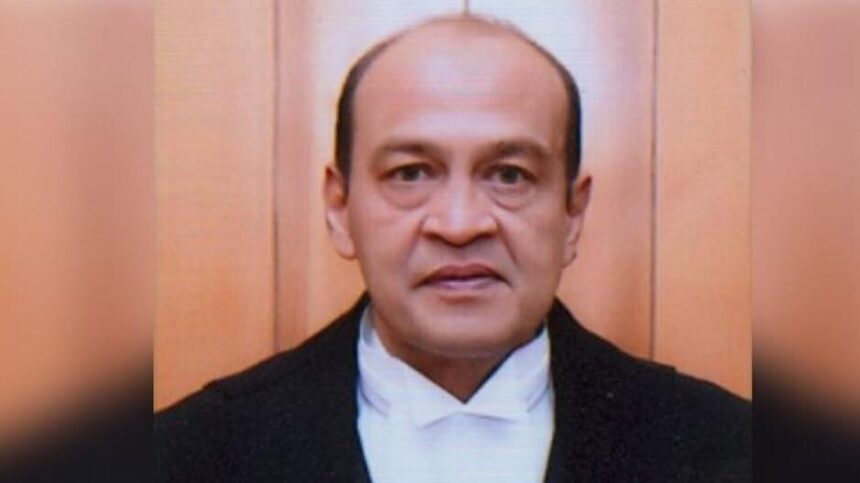
Justice Yashwant Varma of the Allahabad High Court has resigned from his position following a prolonged controversy involving allegations of unaccounted cash discovered at his official residence. The resignation, submitted to the President of India, marks a significant development in one of the most debated judicial controversies in recent times. The case has drawn widespread public attention, raising serious concerns about transparency, accountability, and ethical standards within the higher judiciary.
The controversy dates back to March 2025, when a fire broke out at Justice Varma’s official residence in New Delhi during his tenure as a judge of the Delhi High Court. During firefighting operations, authorities reportedly discovered large amounts of burnt and partially burnt currency notes stored in an outhouse on the premises. The incident triggered immediate scrutiny and led to the initiation of an internal inquiry by the Supreme Court.
Following the discovery, a three-member in-house committee was constituted to investigate the matter. The panel examined evidence including witness statements, electronic records, and site inspections. Its findings suggested that there was substantial evidence indicating control over the area where the cash was found, and it concluded that the allegations were serious enough to warrant further action, including the possibility of removal proceedings.
Justice Varma, however, consistently denied the allegations. He maintained that neither he nor his family had any knowledge of the cash and described the claims as baseless and implausible. He argued that the location where the money was found was not directly connected to his living quarters and was accessible to others, thereby questioning the assumptions made during the investigation.
Inquiry, Impeachment Pressure, and Institutional Response
As the controversy escalated, the matter moved beyond internal judicial processes and entered the political domain. A significant number of Members of Parliament supported a motion seeking Justice Varma’s removal, prompting the formation of a formal inquiry committee under the Judges (Inquiry) Act, 1968. This marked a rare and serious step, reflecting the gravity of the allegations and the level of concern among lawmakers.
The initiation of impeachment proceedings placed immense pressure on Justice Varma, even as he continued to challenge the findings and questioned the fairness of the inquiry process. Over time, the case became a focal point for discussions on judicial accountability, with legal experts, politicians, and civil society raising questions about the mechanisms in place to address alleged misconduct within the judiciary.
The situation also highlighted the complexities involved in dealing with allegations against sitting judges. While the judiciary operates independently, ensuring accountability without undermining institutional integrity remains a delicate balance. The Varma case brought these challenges into sharp focus, exposing gaps in existing procedures and the need for greater clarity and transparency.
Eventually, amid mounting pressure and ongoing proceedings, Justice Varma chose to resign from his position. His resignation effectively brings an end to the impeachment process, as such proceedings typically apply only to sitting judges. However, the broader questions raised by the case remain unresolved and continue to resonate across legal and political circles.
Broader Implications for Judicial Accountability and Public Trust
The resignation of Justice Varma has far-reaching implications for the Indian judiciary. It underscores the importance of maintaining high ethical standards and the need for robust mechanisms to address allegations of misconduct. The case has also reignited debates on judicial reforms, particularly regarding transparency in appointments, transfers, and disciplinary actions.
Public trust in the judiciary is a cornerstone of democratic governance, and incidents such as this have the potential to erode that trust if not addressed effectively. The Varma controversy has therefore become a critical moment for introspection within the judicial system, prompting calls for reforms that can enhance accountability while preserving judicial independence.
At the same time, the case reflects the increasing role of public scrutiny and media attention in shaping institutional responses. The widespread coverage of the controversy ensured that it remained in the public domain, creating pressure for action and accountability. This dynamic highlights the evolving relationship between the judiciary, the media, and the public in a democratic society.
The resignation also raises important questions about the effectiveness of existing safeguards and whether additional measures are required to prevent similar controversies in the future. As discussions continue, the case is likely to serve as a reference point for future debates on judicial conduct and reform.
Ultimately, the Justice Varma episode represents more than just an individual case; it is a reflection of the broader challenges facing the judicial system in maintaining credibility, transparency, and public confidence in an increasingly complex and scrutinized environment.