In the wake of a hard-won ceasefire between Iran and Israel, U.S. Vice President JD Vance issued a stern warning to Tehran: any attempt to revive its nuclear weapons program would be met with overwhelming American military force. The comment came shortly after President Donald Trump publicly declared the ceasefire and claimed credit for brokering the deal through direct talks with Israeli and Iranian officials. While the guns have momentarily fallen silent, the rhetoric remains heated, especially from Washington, which sees the truce as only a partial step toward regional stability.
JD Vance reinforces military deterrence
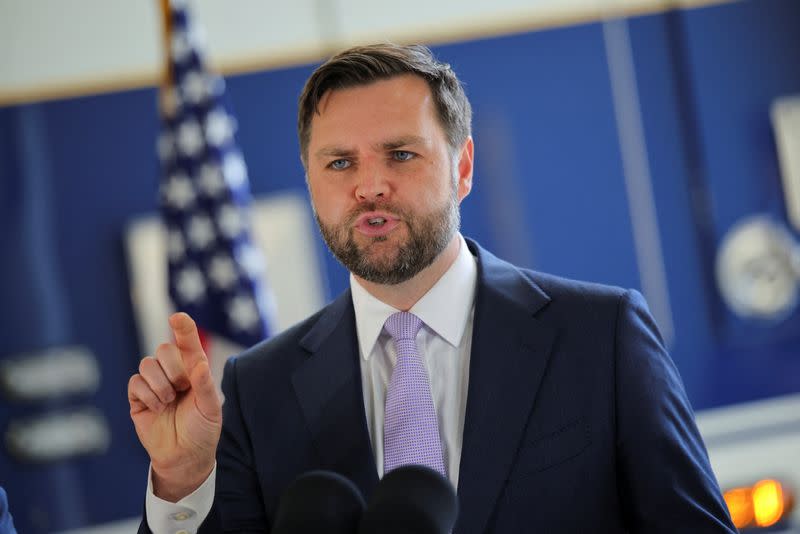
Speaking on Fox News Channel’s Special Report, JD Vance, recently appointed Vice President, made it clear that the current U.S. administration is closely watching Tehran’s next moves. “If they want to build a nuclear weapon in the future, they’re going to have to deal with a very, very powerful American military again,” JD Vance stated in a televised interview shortly after the ceasefire announcement.
His remarks signaled the administration’s zero-tolerance stance on nuclear proliferation, even as diplomatic efforts temporarily diffused the volatile situation. JD Vance emphasized that the United States would not hesitate to respond militarily should Iran resume its nuclear ambitions, echoing broader U.S. concerns that the ceasefire might be temporary if not backed by long-term compliance.
Donald Trump claims credit for ceasefire as fallout continues
The ceasefire, according to Donald Trump, officially began with Iran halting hostilities first, followed by Israel, ending what he labeled the “12 Day War.” Donald Trump announced the development on his Truth Social platform, claiming that both countries would completely cease military action within 24 hours, after which the conflict would be officially considered over.
Donald Trump’s team played a central role in the behind-the-scenes diplomacy that led to the ceasefire. According to Reuters, the former president personally contacted Israeli Prime Minister Benjamin Netanyahu to finalize the terms. Simultaneously, Secretary of State Marco Rubio and Special Envoy Steve Witkoff were reportedly engaged in discreet negotiations with Iranian representatives to help iron out the details.
The deal followed two days of high-stakes military escalation. In a surprise move, U.S. forces struck Iranian nuclear facilities in Fordow, Natanz, and Isfahan, which Donald Trump later described as “completely and totally obliterated.” However, intelligence sources indicate that full damage assessments are still ongoing, and there’s uncertainty about the status of Iran’s stockpile of enriched uranium.
Iran’s response was swift but measured. Missiles were fired at U.S. bases in Qatar and Iraq, though the impact was largely symbolic. Most of the projectiles were intercepted, and there were no reported casualties. Qatari authorities confirmed that U.S. troops at Al-Udeid Air Base were evacuated ahead of time, and that the country had temporarily closed its airspace in anticipation of the attacks.
Analysts like Bloomberg’s Ziad Daoud noted that the number of Iranian missiles launched matched the count of U.S. strikes, suggesting the act was more performative than escalatory. Iranian state media framed it as a show of strength and parity rather than a push for further conflict.
While the ceasefire may have brought a pause to the physical fighting, the political temperature remains high. JD JD Vance’s warning adds to the growing list of conditions that Washington will likely use to hold Iran accountable in the days ahead.