Less than forty-eight hours after the United Nations Security Council adopted a US-drafted resolution outlining a new political and security framework for Gaza, Israeli airstrikes once again devastated the enclave, killing dozens of Palestinians and injuring many more. The attacks, which struck displacement tents in Khan Younis and homes in Gaza City, triggered widespread alarm among humanitarian observers and provoked strong condemnation from Palestinian groups, who warned that the events represented a dangerous escalation following weeks of tenuous ceasefire conditions. With the region still emerging from months of catastrophic violence, the renewed military operations have intensified concerns that the fragile truce may be on the brink of collapse.
Escalation Amid Ceasefire Violations: Israeli Strikes Kill Dozens as Tensions Surge Following UN Resolution
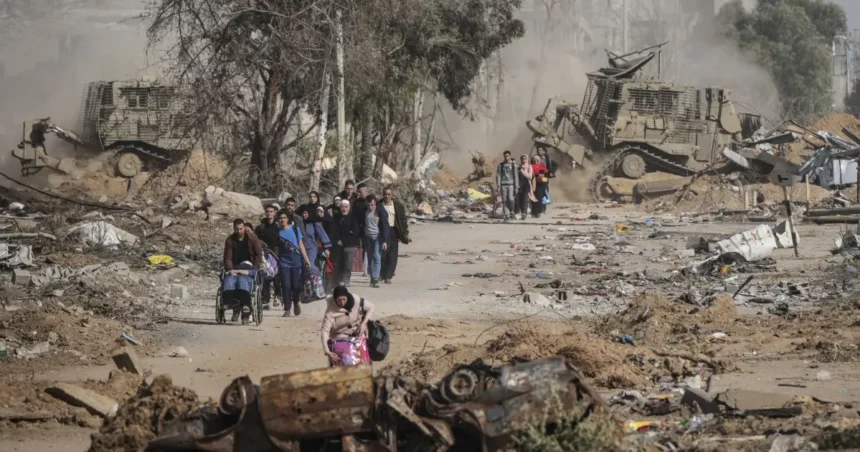
The latest wave of airstrikes, carried out on Wednesday, resulted in the deaths of at least thirty-three Palestinians, including twenty women and children, according to local medical sources. More than seventy others were injured. The strikes targeted tents sheltering displaced families in Khan Younis and residential structures in Gaza City, areas that have already endured extraordinary hardship since mass displacement began in 2023. Local media outlets reported that shelling continued into Thursday morning, with the majority of casualties concentrated in southern Gaza.
The attacks occurred only two days after the UN Security Council approved a resolution drafted by the United States that establishes a twenty-point plan for Gaza’s immediate and longer-term governance. The resolution authorised the formation of a transitional authority led by former US President Donald Trump to oversee demilitarisation efforts, manage reconstruction, and coordinate international security forces tasked with stabilising the territory. While Washington described the plan as a mechanism for facilitating long-term peace and rebuilding, many Palestinian legal experts criticised the resolution as imposing a new form of external trusteeship without local consent.
The armed group Hamas condemned the airstrikes, referring to them as a “massacre” and a “dangerous escalation.” The group accused Israel of using allegations of militant fire to justify renewed operations and warned that Israel’s actions represented an attempt to resume what it described as ongoing large-scale harm against the civilian population. The Israeli military maintained that its forces were targeted by gunfire earlier in the day in Khan Younis, prompting a rapid retaliatory response. However, no Palestinian groups claimed responsibility for any attacks, and local media did not report clashes of the kind described by the Israeli military.
Furthermore, Israeli authorities did not present material evidence of militant fire preceding the strikes. Hamas asserted that the allegations were an attempt to rationalise aggressive action, a charge that has surfaced repeatedly during the conflict. Independent verification of battlefield claims remained difficult due to restricted access and communication disruptions across the enclave.
Rising Civilian Harm and Ceasefire Violations Amid Humanitarian Crisis
Since the ceasefire took effect on 11 October, violations have been frequent and deadly. Gaza’s government media office documented approximately four hundred breaches by Israeli forces, including direct gunfire, artillery shelling, airstrikes, demolitions and incursions into residential or agricultural areas. Humanitarian agencies have repeatedly warned that the ongoing instability has hampered relief efforts and endangered vulnerable populations who rely heavily on international aid.
Data compiled since the start of the major escalation in October 2023 indicate staggering levels of loss. Nearly seventy thousand Palestinians have been killed and more than 170,000 wounded, according to leaked figures attributed to the Israeli army. Thousands more remain missing beneath rubble or in areas rendered inaccessible. Reports indicate that around eighty percent of casualties were civilians, underscoring the extensive toll on non-combatants.
Direct gunfire incidents recorded since the latest ceasefire began include more than one hundred targeted attacks affecting civilians, residential areas, and displacement tents. Aerial and artillery shelling incidents have surpassed one hundred and seventy, often striking regions where displaced families had relocated in search of safety. Military vehicles reportedly entered civilian zones at least seventeen times, crossing what has been termed the temporary “Yellow Line,” a boundary meant to delineate areas of reduced military activity.
Israeli forces also demolished at least eighty-five homes and civilian structures during this period, further worsening the shelter crisis. Arbitrary arrests, numbering at least thirty-five, have contributed to growing concerns about due process and detainee rights.
In addition to military actions, restrictions on essential goods have compounded the humanitarian emergency. Despite the ceasefire provision allowing six hundred aid trucks per day, an average of only about one hundred and fifty trucks has been permitted to enter Gaza. The Rafah crossing has remained closed, preventing thousands of injured residents from receiving treatment abroad and blocking the flow of medical supplies, fuel, and other critical resources.
The cumulative effect of these challenges has created conditions in which many international organisations argue that civilian life remains untenable. With limited access to food, clean water, medicine, and stable shelter, the population continues to face significant risks even during periods officially designated as calm.
Political Fallout and Regional Repercussions Following the UN-Backed Transitional Plan for Gaza
The airstrikes took place against the backdrop of a major political shift introduced by the UN’s adoption of the US plan. The twenty-point framework, supported by several Security Council members, calls for the establishment of an interim governing authority with sweeping administrative and security powers. The transitional administration, to be led by former US President Donald Trump, is tasked with overseeing Gaza’s reconstruction, enforcing demilitarisation, and coordinating with international forces to maintain order.
The plan has sparked debate both within Gaza and among international policy analysts. Critics argue that the resolution sidesteps the principle of Palestinian self-determination and sets a precedent for imposing external trusteeship on a territory already suffering decades of political instability and humanitarian crisis. Legal scholars raised concerns about the mandate granted to foreign military forces and the potential for long-term governance structures that lack local accountability.
Some Palestinian figures have expressed apprehension that the plan may entrench external control rather than facilitate meaningful reconstruction or political reform. Concerns also extend to whether the transitional authority would have the legitimacy required to make binding decisions affecting millions of residents.
Supporters of the resolution, meanwhile, argue that unified international coordination is essential to stabilising Gaza and preventing further violence. Proponents contend that existing governing structures have been unable to maintain peace or facilitate reconstruction and that an internationally backed authority could provide administrative continuity and security during a critical transition period.
However, the renewed violence following the resolution’s adoption has heightened fears that conditions on the ground may deteriorate before the transitional plan can be implemented. The timing of the airstrikes, combined with the persistent violations of the ceasefire, has raised questions about whether the agreement’s provisions will be enforceable in the current climate.
Humanitarian and Political Uncertainty as Gaza Faces Ongoing Instability
A month into the ceasefire, many Palestinian civilians report that day-to-day life has changed little despite diplomatic efforts to establish calm. Airstrikes, shelling, and ground incursions have continued, leading some observers to comment that the ceasefire exists “only in media statements” rather than in practice. The gap between official agreements and lived experience has undermined public confidence in the sustainability of any negotiated resolution.
Humanitarian workers describe extreme challenges in delivering aid, citing delayed clearances, restricted border access and unpredictable security conditions. International agencies have warned that Gaza’s civilian infrastructure—already severely damaged—may not be able to withstand continued strikes. Food insecurity, overcrowding in displacement camps, and medical shortages remain acute.
The political ramifications of the transitional plan extend beyond Gaza. Regional actors are closely monitoring the situation to evaluate how the new governance model might affect broader geopolitical dynamics. Many governments in the Middle East have refrained from publicly endorsing the resolution, while others await clarity on the operational details of the proposed international force.
As debates over legitimacy, autonomy, and security continue, the renewed airstrikes have underscored the volatility of the situation and the fragile nature of peace efforts. With both humanitarian needs and political tensions worsening, the coming weeks will be critical in determining whether the ceasefire can hold and whether the transitional plan can be implemented without further escalating violence.