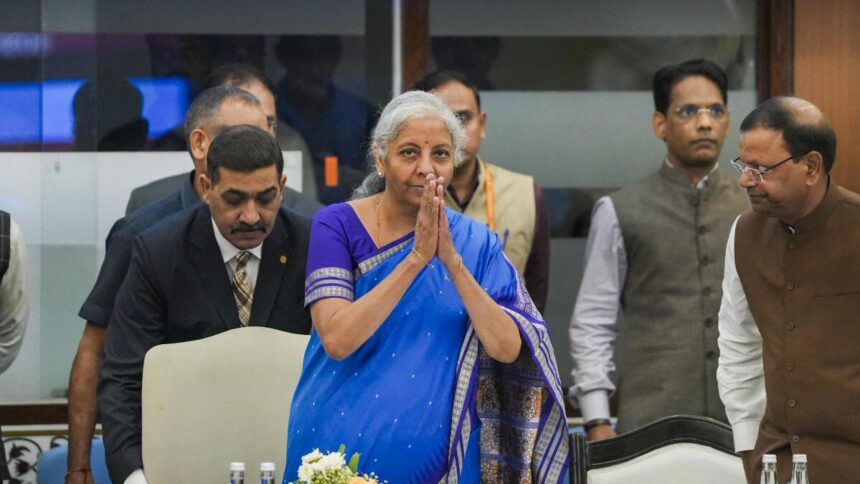
In what promises to be a landmark move for India’s indirect tax regime, the 58th GST Council meeting, chaired by Union Finance Minister Nirmala Sitharaman, is set to decide on sweeping reforms aimed at rate cuts, simplification, and rationalisation of the Goods and Services Tax structure. The council is expected to discuss rate reductions for over 175 items, ranging from essential household goods to automobiles and air-conditioners, while also considering the transition from a four-tier slab system to an effectively two-tier framework, with a special higher slab for luxury and sin goods. These measures are being closely watched by businesses, consumers, and policymakers alike, as they carry implications for consumption, retail inflation, industry profitability, and government revenues.
GST Rate Cuts and Rationalisation: What to Expect Across Consumer Goods and Automobiles
The GST Council, which brings together Union and state finance ministers, has convened to address Prime Minister Narendra Modi’s call for a comprehensive overhaul of the indirect tax framework. The central agenda includes rationalisation of slabs, simplification of compliance, and potential adjustments to compensation mechanisms for states. Ahead of the council meeting, an officers’ meeting laid the groundwork for discussions on fitment, thresholds, and impact on various sectors.
A key proposal under consideration is the move from the current four-tier GST structure—5%, 12%, 18%, and 28%—to a streamlined system consisting primarily of two slabs: 5% for essential goods and 18% for non-essential goods. A higher slab of 40% is also proposed for sin and luxury items, including high-end cars priced over ₹50 lakh and tobacco products. The GST fitment panel has reportedly approved this two-tier structure, which, if implemented, would constitute one of the most significant simplifications since the tax was introduced in 2017.
Among the items poised for rate reduction are household essentials such as toothpaste, shampoo, talcum powder, and soaps, which may see GST fall to 5% from the current 18% slab. Butter, cheese, and ready-to-eat packaged foods such as pickles, snacks, and chutneys are also expected to move to the 5% slab from either 12% or 18% previously. This would represent a substantial relief for consumers and boost sales for FMCG giants such as Hindustan Unilever Ltd., Godrej Consumer Products Ltd., and Nestlé India Ltd.
White goods, including televisions, air-conditioners, refrigerators, and washing machines, are likely to be included in the new 18% slab, down from the current 28%, while cement is also set to see its GST rate reduced to 18%. Small petrol cars with engines up to 1,200 cc are expected to benefit from a cut from 28% to 18%, with hybrid vehicles also likely to be included. However, the proposal may impose higher GST on electric vehicles priced between ₹20 lakh and ₹40 lakh, while luxury electric cars from manufacturers such as Tesla and BYD could fall under the 40% slab, creating a mixed impact for the automotive sector.
Two-wheelers may also see rate rationalisation, with GST expected to drop to 18% from 28% for commuter motorcycles, providing relief to companies like Hero MotoCorp Ltd. However, the council may define luxury two-wheelers as those with engine capacities exceeding 350 cc, potentially subjecting manufacturers like Bajaj Auto and Royal Enfield to a 40% rate. This nuanced approach seeks to balance industry demands with revenue considerations.
The broader impact of the proposed rationalisation would include structural simplification, moving from four slabs to effectively two, alongside a special 40% category for high-value or sin items. Simplified slabs are expected to enhance ease of compliance for businesses, reduce litigation, and streamline administration, aligning with government objectives to improve the ease of doing business. The 40% slab is intended to offset revenue losses from lower slabs while ensuring that consumption of high-value goods contributes proportionally to government revenues.
Additional measures under consideration include utilising the projected GST Compensation Cess surplus, estimated at ₹40,000–50,000 crore, to compensate states for potential revenue losses. Discussions on mitigating inverted duty structures, where input services are taxed higher than final outputs, are also expected, as policymakers aim to ensure that consumers benefit from the reforms.
Economic Implications: Boost to Consumption, Inflation, and Industry
GST reforms, as announced by Prime Minister Narendra Modi during his Independence Day speech, are being positioned as India’s largest indirect tax overhaul since the introduction of GST in July 2017. The reforms are particularly timely given recent challenges to India’s economic growth, including the impact of U.S. tariffs on Indian goods following New Delhi’s Russian oil purchases. Analysts suggest that these reforms could partially offset external pressures on the economy, providing relief to consumers and boosting domestic demand.
SBI Research has projected that a broad migration from higher slabs to lower ones, coupled with the new rationalised split, could add up to 60 basis points to India’s GDP over the next 12 months. By comparison, U.S. tariffs could dampen growth by up to 1 percentage point over time. A reduction in the weighted average GST rate to 9.5% could ease retail inflation by 20–25 basis points and spur consumption, which would in turn support higher monthly GST collections.
Revenue projections under the proposed reforms vary. While IDFC First Bank estimates a revenue loss of ₹1.65–1.70 lakh crore, SBI Research predicts a more moderate impact of ₹60,000 crore to ₹1.1 lakh crore if the two-tier system, including the 40% luxury/sin slab, is implemented. Of this, approximately ₹45,000 crore could potentially be offset by the existing GST Compensation Cess surplus, cushioning the revenue impact. Analysts suggest that increased consumption from lower GST rates could further recoup government revenues, highlighting the balancing act between stimulating economic activity and maintaining fiscal stability.
The proposed reforms are expected to benefit both households and businesses. Lower GST on essential goods will reduce household expenditure on daily necessities, while the rationalisation of rates for automobiles, electronics, and white goods will support industries impacted by prior high rates. Companies like Maruti Suzuki, Toyota India, Hero MotoCorp, and various FMCG firms stand to gain from increased demand and simpler compliance procedures. For the consumer electronics sector, the move from 28% to 18% GST on items such as TVs and refrigerators will significantly improve affordability, potentially driving sales volumes.
The automobile sector may experience mixed outcomes. While small petrol and hybrid cars gain from rate reductions, high-end electric vehicles may face higher taxes, influencing pricing strategies and consumer choices. Similarly, the two-wheeler segment may benefit from lower GST on commuter motorcycles, but middleweight and luxury models could face elevated rates. These adjustments reflect a targeted approach by the GST Council, aiming to balance industry competitiveness, consumer welfare, and fiscal requirements.
Overall, the reforms are expected to reduce complexity in the GST regime, improve compliance, and align rates with economic priorities. Simplified slabs will reduce litigation and administrative burden, while rate cuts are likely to provide a short-term boost to consumption. Compensation mechanisms for states, coupled with rationalisation of inverted duty structures, aim to ensure that both state and central governments maintain revenue neutrality while delivering tangible benefits to consumers and businesses.
The GST Council’s decisions are also viewed through the lens of global economic developments. Amid trade tensions and inflationary pressures worldwide, the Indian government is seeking to enhance domestic demand, ensure affordability of essential goods, and support industry investment. Lower GST rates on daily necessities, food items, and consumer products are expected to increase disposable incomes for middle- and lower-income households, translating into higher spending power and economic activity.
Furthermore, the reforms are seen as a strategic move to mitigate external shocks, including tariffs and global supply chain disruptions. By rationalising rates, simplifying compliance, and easing the tax burden on essential goods, India aims to sustain growth momentum while ensuring that domestic industries remain competitive. Analysts suggest that over the medium term, these reforms could help broaden the tax base, reduce informal market activity, and encourage better reporting of transactions, contributing to the government’s revenue collection goals.
In the broader context, the GST reforms reflect India’s focus on structural economic adjustments that enhance efficiency and fairness in taxation. By consolidating multiple slabs into a simpler system, the government aims to create a predictable and transparent tax environment for businesses. At the same time, targeted higher rates on sin and luxury goods ensure that fiscal stability is maintained. The balancing act of protecting revenue while supporting economic growth underpins the council’s deliberations, highlighting the nuanced approach required for successful implementation of large-scale tax reforms.
The GST Council meeting, scheduled over two days, is expected to finalise decisions on rate cuts, slab rationalisation, and related mechanisms. The outcomes are anticipated to provide immediate relief to consumers, promote business investment, and enhance overall economic activity. With potential implications for inflation, consumption, and fiscal health, the council’s resolutions will be closely monitored by policymakers, economists, and industry stakeholders across the country.