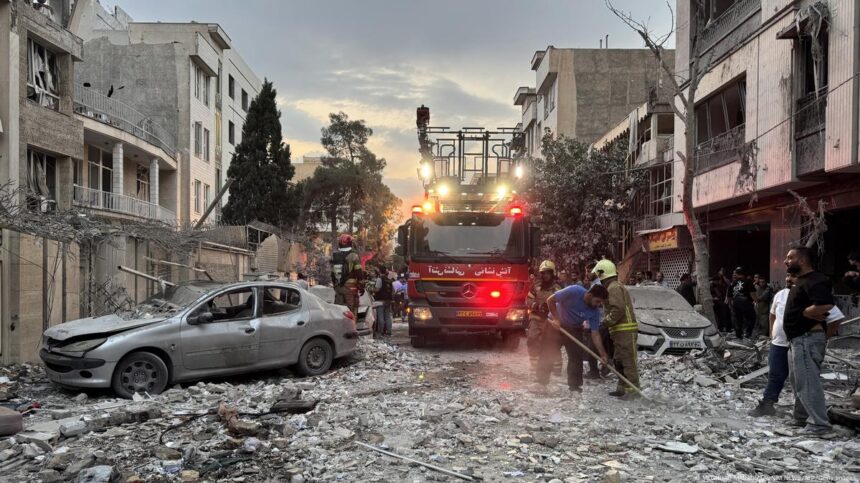
As missiles rain down and rescue crews dig through rubble in both Tel Aviv and Tehran, the Israel-Iran conflict has erupted into a brutal and all-consuming war—one that both sides have long prepared for, but hoped to avoid. What was once shadow warfare has now become an open and destructive exchange, with Israel aiming to dismantle Iran’s nuclear and missile capabilities within weeks. Yet as the violence intensifies, the stakes are rising, and questions loom over how long either side can sustain the fight—and whether outside powers like the United States will intervene before it’s over.
Israel’s goal: degrade nuclear infrastructure quickly
According to Israeli officials, the immediate objective is to severely degrade Iran’s nuclear program and its missile systems within a two-week timeframe. The challenge is immense, as many of Iran’s nuclear sites are deeply fortified underground. Despite Israel’s advanced intelligence and military preparedness, fully neutralising these targets may require external support—particularly from the United States, which holds the capabilities to strike at the most hardened facilities.
The pressure on Israel is not just military but also political. To maintain momentum and public support, Israeli leaders are aiming to project an image of success. Swift, visible damage to Iran’s strategic infrastructure could help persuade President Donald Trump—who has so far remained on the sidelines—to lend active American support. Such involvement could prove decisive, especially if Israel’s operations fall short of completely crippling Iran’s nuclear ambitions.
Risks of prolonged conflict and premature ceasefire
However, if the pace of Israeli strikes slows or if civilian casualties mount dramatically, the situation could shift rapidly. International pressure may grow for a ceasefire, especially from Washington. President Trump could decide that the cost of escalation outweighs the benefits, particularly if the conflict begins to destabilise the broader region or impact American interests.
A premature ceasefire, though, poses its own dangers. Should Iran retain portions of its nuclear infrastructure, it may emerge from the conflict more determined than ever to rebuild and expand its capabilities. That scenario would mean not just a military loss for Israel but a long-term strategic setback, one that could reignite the conflict down the line under even more dangerous conditions.
With cities under fire and geopolitical stakes at their peak, the war between Israel and Iran is shaping into a defining moment for both nations and the balance of power in the Middle East.