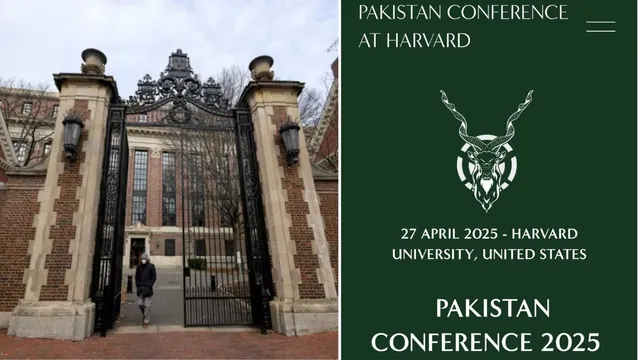
Harvard University is under scrutiny following a student-organized ‘Pakistan Conference 2025’ held on April 27, just days after the Pahalgam terror attack in Jammu and Kashmir that claimed 26 lives. The event, featuring Pakistani officials, has drawn criticism from Indian students and others who view its timing and content as insensitive and potentially legitimizing state-supported terrorism.
The ‘Pakistan Conference 2025’ was organized by students from Harvard’s South Asia Institute (SAI), which is funded by Indian industrialist Lakshmi Mittal. The university clarified that the event was independently organized by students and their faculty advisor, without consultation with donors or the administration. Despite this, the participation of high-ranking Pakistani officials, including Finance Minister Muhammad Aurangzeb and Ambassador Rizwan Saeed Sheikh, has intensified the controversy.
Student Protests and Demands
Indian students Surabhi Tomar and Abhishek Chaudhuri expressed their disapproval by sending a letter to the university administration, urging Harvard to condemn the Pahalgam attack and reconsider the participation of Pakistani officials in university events. They argued that hosting representatives from a country accused of supporting terrorism could tarnish Harvard’s reputation and make it complicit in legitimizing such actions. The students also reached out to U.S. Secretary of State Marco Rubio, requesting visa denials for officials who support terror-linked ideologies.
The Daily Guardian
University’s Response and Further Actions
In response to the backlash, Harvard’s South Asia Institute emphasized that the conference was student-led and not endorsed by the university or its donors. However, the involvement of SAI’s Executive Director Hitesh Hathi, who moderated a panel during the conference, has raised questions about the institute’s role. Following the controversy, references to the conference were removed from the institute’s website, and Lakshmi Mittal reportedly distanced himself from the event.
The Daily Guardian
The incident has sparked a broader debate about academic freedom, the responsibilities of educational institutions in addressing global terrorism, and the sensitivities involved in hosting events related to contentious geopolitical issues. As the university community grapples with these concerns, the need for clear policies and guidelines on such matters becomes increasingly evident.