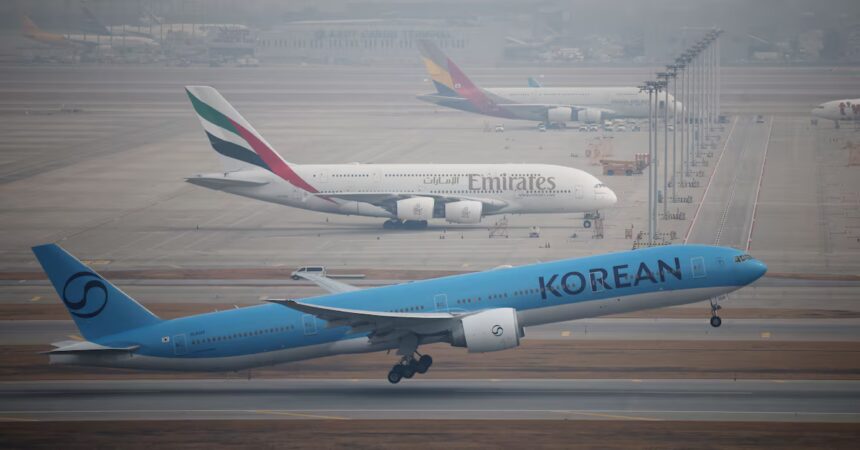
Indian airlines increase international flight fares by 15% as jet fuel prices double amid Iran war and rising crude oil costs affecting global aviation industry
The ongoing conflict involving Iran and rising tensions in the Middle East are now having a direct impact on the global aviation industry, including India. Indian airlines have increased international flight fares by around 15 percent as operational costs surge due to rising crude oil and jet fuel prices. Reports indicate that disruptions to oil supply routes, particularly the strategic Strait of Hormuz, have pushed energy prices higher, forcing airlines worldwide to adjust ticket prices in order to manage increasing expenses.
The Strait of Hormuz is one of the most critical maritime routes for global oil transportation, with nearly twenty percent of the world’s oil supply passing through this narrow passage each year. Since the escalation of conflict between Iran and the United States and Israel, the route has been affected, leading to disruptions in the global oil supply chain. As a result, crude oil prices have climbed sharply in recent weeks, putting significant pressure on industries that depend heavily on fuel, including aviation.
According to industry reports, jet fuel prices have nearly doubled since the conflict began. Before the escalation of hostilities, jet fuel was priced between approximately 85 and 90 dollars per barrel. However, prices have now surged to between 150 and 200 dollars per barrel in many global markets. At the same time, Brent crude oil prices have also risen significantly, reaching around 93 dollars per barrel after earlier touching levels close to 120 dollars during the peak of market volatility.
Jet fuel, also known as aviation turbine fuel, is the largest single expense for airlines and typically accounts for around thirty to forty percent of total operating costs. Because fuel expenses represent such a large portion of airline budgets, even small fluctuations in fuel prices can have a major impact on profitability. The sudden spike in fuel prices has therefore forced airlines to increase ticket prices in order to maintain financial stability.
Indian airlines are not alone in facing these challenges. Airlines across Asia, Europe and other regions have also raised fares as they attempt to offset rising operational costs. Many carriers have warned that ticket prices may increase further if oil prices continue to rise. Aviation analysts suggest that the current situation could develop into the most serious oil-related challenge for the airline industry since the global energy crisis of the 1970s.
In addition to raising ticket prices, some airlines are reconsidering their financial projections and operational plans. Several companies have withdrawn their earnings forecasts due to uncertainty in fuel markets and volatile global conditions. Airlines are also reviewing their route networks and considering adjustments to flight schedules in order to manage rising costs.
The global aviation industry has already begun experiencing significant disruptions. Reports indicate that more than forty thousand flights worldwide have been cancelled since tensions in the Middle East escalated. Airlines are increasingly concerned that prolonged instability in oil markets could lead to further disruptions and reduced flight capacity.
Vietnam provides a striking example of how the crisis is affecting airline operations. Vietnam Airlines has reported that its operating costs have increased by nearly seventy percent due to rising fuel prices. As a result, the airline is considering increasing ticket prices by a similar margin in order to maintain financial viability. The company has also requested the Vietnamese government to temporarily remove environmental taxes on jet fuel in order to reduce the financial burden on airlines.
The situation highlights the vulnerability of airlines that depend heavily on imported fuel supplies. Many Asian carriers operate in markets where jet fuel must be imported, making them particularly sensitive to fluctuations in global oil prices. When fuel costs rise sharply, airlines often have limited options other than increasing ticket prices or reducing flight operations.
Several major international airlines have already announced fare increases and fuel surcharges. Air New Zealand recently announced a rise in ticket prices for both domestic and international flights. The airline has increased one-way domestic fares by ten New Zealand dollars, while short-haul international fares have risen by twenty dollars and long-haul fares by ninety dollars. The company has also withdrawn its financial outlook for 2026 due to ongoing market volatility.
Hong Kong Airlines has also announced plans to increase its fuel surcharge by more than thirty-five percent. Routes connecting Hong Kong with destinations such as Maldives, Bangladesh and Nepal will see a surcharge increase from 284 Hong Kong dollars to 384 Hong Kong dollars. Meanwhile, Cathay Pacific has responded to changing travel patterns by adding additional flights to destinations such as London and Zurich in order to accommodate passengers affected by disruptions on certain routes.
Australia’s national carrier Qantas has also raised fares on several international routes as fuel costs continue to climb. Despite the higher ticket prices, the airline has reported strong passenger demand on long-haul flights to Europe, where occupancy levels remain above ninety percent. Qantas is now considering increasing capacity on some routes to meet travel demand.
In Europe, Scandinavian Airlines has also introduced temporary price adjustments to compensate for rising fuel costs. These changes reflect a broader trend across the global aviation industry, where airlines are attempting to balance passenger demand with increasing operational expenses.
Experts say that airlines with weaker fuel hedging strategies are facing the greatest difficulties. Fuel hedging allows airlines to lock in fuel prices in advance, protecting them from sudden spikes in market prices. Carriers that did not secure hedging agreements earlier are now forced to purchase fuel at significantly higher prices.
Some low-cost airlines are reportedly considering grounding parts of their fleets because operating flights at current fuel prices may lead to financial losses. Industry analysts warn that if the crisis continues for an extended period, thousands of aircraft worldwide could be grounded. Smaller airlines with limited financial resources may even face the risk of shutting down operations.
However, the crisis may also create opportunities for airlines that previously hedged fuel costs. Lufthansa, for example, has indicated that its fuel hedging strategy could give it a competitive advantage during the current market turbulence. The airline’s leadership has suggested that the company may increase flight capacity on routes to Asia and Africa as some Middle Eastern airlines face operational difficulties.
The evolving situation illustrates how geopolitical conflicts can rapidly disrupt global industries and supply chains. For airlines, fuel costs remain one of the most critical factors influencing operations and profitability. If tensions in the Middle East persist and oil prices continue to rise, passengers around the world may face higher ticket prices and fewer flight options in the coming months.