As nuclear negotiations between Iran and the United States continue to falter, Tehran finds itself at a crossroads with no viable alternative strategy if talks collapse. With tensions escalating over uranium enrichment and both sides clashing over non-negotiable red lines, Iranian officials admit there is no clear fallback plan. While leaders in Tehran hope to turn toward allies like China and Russia, both nations face their own geopolitical challenges, making Iran’s so-called “Plan B” uncertain and fragile.
No Clear Exit Strategy
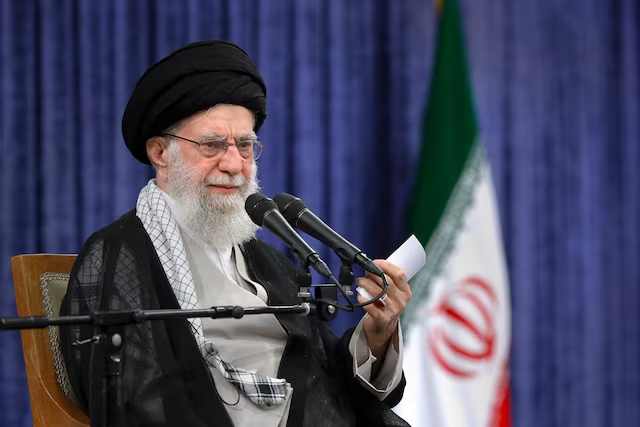
Despite the urgency of securing a resolution, Iran’s leadership remains firm on continuing its enrichment program, a stance the U.S. deems unacceptable. Supreme Leader Ayatollah Ali Khamenei recently dismissed American demands as “excessive,” dimming hopes for a breakthrough. Meanwhile, the talks—intended to lift economic sanctions in exchange for nuclear curbs—remain stalled after four rounds of negotiations.
Iran refuses to export its highly enriched uranium stockpile or discuss its ballistic missile program, key sticking points for the U.S. and European negotiators. Deep mistrust, particularly following former President Donald Trump’s withdrawal from the 2015 nuclear deal, continues to hamper progress. Iranian officials insist on guarantees that any future agreement will not be abandoned by a subsequent U.S. administration, a demand Washington is reluctant to meet.
Domestic Crises Compounding the Pressure
Tehran’s internal troubles are worsening the urgency of a deal. The country is grappling with energy and water shortages, economic instability, and a plummeting currency. Protests against economic hardship and social repression have been met with crackdowns, drawing global condemnation and new rounds of Western human rights sanctions.
The reimposition of U.S. sanctions and renewed threats of military action under Trump’s “maximum pressure” policy have pushed Iran’s economy to the brink. While leaders in Tehran point to closer ties with China and Russia as part of their strategy, analysts warn that such alliances come with limitations. China continues to buy Iranian oil but demands heavy discounts, and its support may dwindle as global oil demand softens. Russia, preoccupied with its war in Ukraine, has limited bandwidth to assist.
If talks collapse, European countries including France, Britain, and Germany may reimpose U.N. sanctions through the “snapback mechanism,” with an August deadline looming. Diplomats say that even if a political framework is agreed upon, a comprehensive deal could take months—if not longer—to finalize amid today’s far more complicated global dynamics.