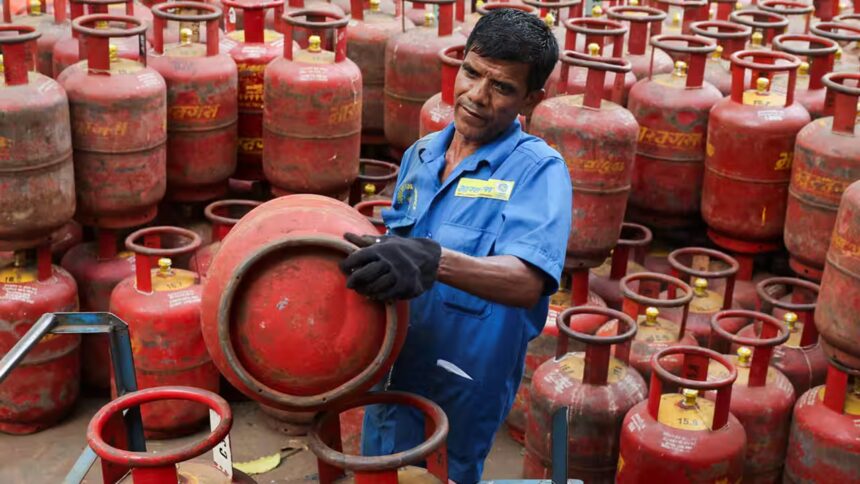
The escalating Iran conflict and disruption in the Hormuz Strait have begun affecting India’s energy supply chain, leading to a sharp decline in LPG demand and reduced jet fuel consumption across the country.
The ongoing geopolitical tensions involving Iran, the United States, and Israel are now beginning to impact everyday life in India, particularly household cooking fuel supply and aviation fuel consumption. The disruption in global energy logistics caused by instability around the strategically vital Hormuz Strait has created ripple effects across India’s petroleum and gas sector, triggering a significant contraction in cooking gas demand and a decline in aviation fuel usage during April 2026.
According to official government data released by the Petroleum Planning and Analysis Cell, India’s consumption of Liquefied Petroleum Gas declined sharply in April. LPG demand fell by approximately 16.16 percent to 2.2 million tonnes compared to 2.62 million tonnes recorded during the same period last year.
The figures also reveal a noticeable decline compared to March 2026, when LPG consumption stood at 2.379 million tonnes. The sharp drop reflects growing supply stress in the Indian domestic gas market following severe disruptions in maritime trade routes linked to the Gulf region crisis.
India depends heavily on imports to meet its domestic LPG requirements. Nearly 60 percent of the country’s cooking gas demand is fulfilled through overseas shipments, with a substantial volume transported through the Hormuz Strait, one of the world’s most strategically important energy corridors.
The Strait of Hormuz connects the Persian Gulf with global shipping routes and handles a major share of international crude oil and LPG transportation. However, rising tensions between Iran, Israel, and the United States, along with fears of military escalation in the Gulf, have severely disrupted shipping movement in the region.
Following intensified military activity and maritime security concerns, shipping operations through the Hormuz route have reportedly slowed dramatically, creating supply shortages and logistical bottlenecks for energy-importing nations such as India.
The impact has now become visible inside Indian households and businesses.
To prevent shortages of domestic cooking gas for households, authorities have reportedly reduced commercial LPG supplies allocated to hotels, restaurants, industries, and other business establishments. Government agencies have prioritised household consumption amid fears of further supply disruptions.
As supply pressure increased, authorities also tightened refill booking regulations.
Earlier this year, the government implemented a mandatory lock-in period for domestic LPG cylinder bookings, requiring consumers to wait approximately 21 to 25 days before ordering a second refill. In several rural regions, the refill waiting period was reportedly extended to 45 days in order to manage inventory pressure and ensure wider distribution coverage.
The crisis has also significantly increased the financial burden on commercial consumers.
On May 1, prices of commercial LPG cylinders were increased sharply by as much as ₹994 in certain categories. In Delhi, the cost of commercial cylinders reportedly climbed to ₹3,071.50, placing additional pressure on restaurants, catering businesses, small food establishments, and commercial kitchens already struggling with rising operational costs.
Smaller Free Trade LPG cylinders, commonly known as “Chhotu” cylinders and widely used by small vendors and low-income consumers, also became more expensive. The price of 5-kilogram Free Trade LPG cylinders increased by ₹261, taking refill prices to approximately ₹813.50.
Energy analysts believe the rise in LPG prices and reduced availability could have broader economic consequences, particularly for lower-income households and small businesses that rely heavily on subsidised or affordable cooking gas access.
The aviation sector has also begun feeling the effects of the Gulf crisis.
According to Petroleum Planning and Analysis Cell data, demand for Air Turbine Fuel, commonly known as jet fuel, declined during April as international air traffic patterns were disrupted by the deteriorating security environment in the Middle East.
Several Gulf nations temporarily restricted or closed portions of their airspace following military tensions and security alerts linked to the Iran conflict. As a result, multiple international airlines either cancelled flights or rerouted aircraft to avoid sensitive zones.
These operational disruptions directly reduced aviation fuel consumption across Indian airports.
Jet fuel demand during April reportedly fell by 1.37 percent to approximately 761,000 tonnes compared to 807,000 tonnes in March. Aviation industry observers say the decline reflects not only reduced flight activity but also longer route diversions that increased operational uncertainty for airlines operating through Gulf-linked corridors.
India’s aviation sector remains particularly sensitive to Middle Eastern instability because Gulf airspace serves as a crucial transit region connecting India with Europe, North America, and parts of Africa.
Although LPG and aviation fuel sectors experienced contraction, petroleum demand trends showed mixed patterns across other fuel categories.
Diesel demand recorded only marginal growth during April. Sales increased by approximately 0.25 percent to 8.282 million tonnes. However, this growth rate remained significantly lower than March, when diesel demand had expanded by more than 8 percent.
Petrol consumption, meanwhile, continued to grow but at a slower pace. Petrol sales rose by approximately 6.36 percent during April, compared to nearly 7.6 percent growth in March.
Analysts say slower growth in transportation fuel demand may indicate broader caution within the economy amid rising energy prices, geopolitical uncertainty, and concerns over supply disruptions.
The larger issue now confronting India is energy security.
India is one of the world’s largest energy importers and remains heavily dependent on foreign oil and gas supplies, particularly from the Gulf region. Any instability affecting Gulf shipping routes immediately impacts domestic pricing, supply logistics, and inflationary pressures.
The Hormuz Strait alone handles a significant share of global crude oil and LPG movement. Even temporary disruptions can create severe ripple effects across international markets.
The ongoing tensions involving Iran have already triggered concerns among policymakers, shipping companies, and energy traders worldwide. Rising insurance costs for vessels operating near conflict zones, rerouting expenses, delayed deliveries, and fears of broader military escalation have collectively contributed to uncertainty in global energy supply chains.
Indian authorities are reportedly monitoring the situation closely and working with oil marketing companies to ensure adequate strategic reserves and uninterrupted household supply.
However, experts warn that prolonged instability could worsen supply constraints and place additional upward pressure on domestic fuel prices.
The cooking gas situation carries especially strong political and social sensitivity in India because LPG remains the primary cooking fuel for millions of households. Government welfare schemes over the past decade significantly expanded LPG access across rural and urban India, making uninterrupted supply politically important.
Any prolonged shortage or sustained price increase could affect household budgets and consumer sentiment, especially among middle-class and low-income families already facing broader inflationary pressures.
Commercial sectors dependent on LPG are also becoming increasingly vulnerable.
Hotels, roadside eateries, catering businesses, bakeries, and food-processing units rely heavily on commercial LPG cylinders for daily operations. Rising cylinder costs could eventually translate into higher food prices for consumers, adding to inflationary concerns.
The aviation sector may also face further challenges if Gulf tensions continue escalating.
Airlines operating long-haul international routes could experience higher operational costs due to rerouting, increased fuel consumption, and elevated insurance premiums. These factors may eventually impact ticket prices and airline profitability.
Global energy markets remain highly volatile amid uncertainty surrounding future developments in the Iran crisis. Analysts note that even perceptions of risk in the Hormuz region can significantly influence oil and gas prices because of the strategic importance of Gulf exports to world energy supply.
For India, the current situation once again highlights the importance of diversifying energy sources, strengthening strategic reserves, and reducing excessive dependence on vulnerable maritime corridors.
In recent years, India has attempted to expand procurement partnerships with multiple energy-exporting countries while also increasing investments in renewable energy infrastructure. However, the country’s immediate dependence on imported hydrocarbons remains substantial.
As geopolitical tensions continue to shape global markets, the impact is increasingly being felt not only in financial systems and international diplomacy but also inside ordinary Indian households through rising fuel costs, refill restrictions, and growing uncertainty over energy supplies.
The coming months may prove crucial in determining whether the present disruption remains temporary or evolves into a prolonged energy challenge affecting broader economic stability across the region.