The investigation into the Red Fort car blast has taken a dramatic turn as agencies uncover deep ideological radicalisation behind the attack, with evidence pointing to Dr Umar Un Nabi, a young medical professional from Al Falah University, as the most hardened extremist within the white-collar terror module. His transformation from a trained doctor to an alleged suicide bomber has prompted investigators to examine the growing influence of radical propaganda on educated professionals in Kashmir and beyond.
As authorities review digital evidence, witness accounts and forensic findings, a startling picture has emerged—one that suggests the Red Fort attack may have been part of a larger and far more organised attempt to revive vehicle-borne suicide missions similar to the 2019 Pulwama attack. The ongoing probe by the National Investigation Agency (NIA), Delhi Police Special Cell and local teams in Kashmir has exposed multiple layers of planning, indoctrination and cooperation among medical students and doctors, raising difficult questions about how extremist networks recruit and manipulate young professionals.
Radicalisation Trail Emerges as Investigators Trace Recovered Phone and Video Evidence
Investigators first identified the ideological posture of Umar Un Nabi after recovering a severely damaged mobile phone from a water body near his home in Koil, Pulwama. The discovery was accidental, made possible only after his brother, Zahoor Ilahi, informed police during questioning that Umar had asked him to dispose of the phone if “anything ever happened to him.” Zahoor had received the device during Umar’s September–October visit and had been holding on to it without fully understanding its importance. Once detained, he revealed its location, enabling authorities to retrieve it despite significant water damage.
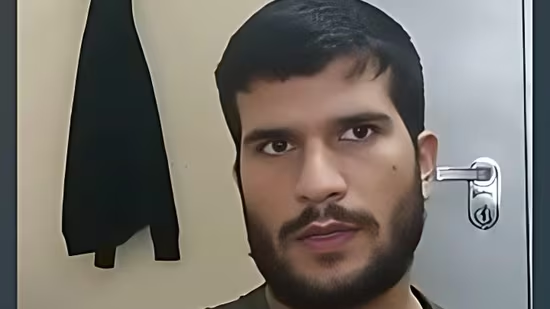
Forensic specialists managed to reconstruct portions of the internal storage, uncovering a one-minute and twenty-second video clip that has since become central to the investigation. The clip, believed to have been recorded in April, shows Umar seated alone in a quiet room, speaking in English about the legitimacy of suicide bombings and comparing such acts to “martyrdom.” While no government agency has formally confirmed the retrieval of this footage, individuals aware of the investigation have acknowledged that the clip is now being analysed as part of the broader terror-conspiracy probe.
The video is being examined to determine whether it was meant to be shared, whether it was created for personal reinforcement, or whether it served as a tool to radicalise other members of the white-collar module. Senior officials noted that the language Umar used in the clip closely mirrors extremist narratives spread by online propaganda channels, suggesting he may have been deeply influenced by digital radicalisation.
The NIA later confirmed that Umar Un Nabi was indeed the suicide bomber who detonated the vehicle-borne improvised explosive device (VBIED) near Red Fort on November 10, killing at least 12 people. His identification was cemented after DNA collected from the blast site matched samples provided by his mother. Within hours of this confirmation, his mother and two brothers were detained for questioning as part of the expanding investigation.
Authorities say Umar was using at least two mobile phones on the day of the blast, and the probe now aims to determine how many devices he had used over the last several months, along with the number of SIM cards procured, potentially under false identities. This line of inquiry is expected to reveal additional communication channels and possible handlers, both local and foreign.
Forensic teams have emphasised that the recovered device was not the phone he was carrying at the time of the explosion, leading investigators to believe that the damaged phone contained sensitive material Umar wanted destroyed. With digital recovery ongoing, teams are exploring whether more deleted videos, drafts of statements or contacts linked to overseas networks can be restored.
White-Collar Terror Module Under Scrutiny as Multiple Doctors Face Arrest and Interrogation
As the investigation widened, authorities discovered that the Red Fort blast was not the work of an isolated individual but part of a network of young doctors and medical students allegedly driven by extremist ideology. Three doctors—Dr Muzammil Ganaie, Dr Shaheen Shahid and Dr Adeel Rather—have already been arrested, while several others have been questioned across different states.
The case has taken investigators to Al Falah University in Faridabad, where many members of the alleged module had studied or worked together. Umar’s close professional and personal proximity to several arrested doctors is now being examined to determine whether the group radicalised collectively or whether an external recruiter influenced them.
A crucial figure still missing is Dr Nissar ul-Hassan, who worked alongside Umar, Ganaie and Shaheen at the university. Officers believe he may hold critical information about how the module was formed, how responsibilities were assigned and whether any foreign organisations were involved in funding or directing the group.
Another key suspect, Dr Muzaffar Rather—brother of the arrested Adeel Rather—is believed to be in Afghanistan, raising the possibility of international linkages. Indian intelligence agencies are coordinating with external partners to trace his movements and online activity.
Meanwhile, Delhi Police Special Cell teams are investigating whether the group had intended to replicate the modus operandi used in the 2019 Pulwama attack, which involved detonating a car packed with explosives beside a security convoy. The similarity in methods has raised concerns about a deliberate attempt to revive large-scale suicide missions on Indian soil.
Investigators also believe the module included more individuals who may have assisted in logistics such as procurement of chemicals, fabrication of the explosive device, and sourcing the Hyundai i20 car used in the attack. Searches and arrests have been carried out across Jammu and Kashmir, Haryana, Delhi and Uttar Pradesh, with more operations expected in coming weeks.
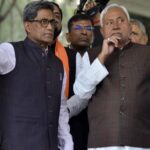
Former Jammu and Kashmir police chief S.P. Vaid said that the recovered video suggests deliberate ideological conditioning aimed at young professionals. He warned that the willingness of educated individuals—especially doctors—to embrace suicide missions presents a deeply troubling trend. According to him, extremist organisations have, in recent years, increasingly targeted educated youth as they are perceived to have stronger social influence and greater ability to operate covertly within mainstream institutions.
Vaid emphasised that videos like the one linked to Umar are typically used to brainwash vulnerable youth, reinforcing narratives around martyrdom and sacrifice. He urged Kashmiri community leaders, teachers, religious scholars and parents to play an active role in countering such indoctrination, highlighting the urgent need for deeper engagement at the social level to prevent radical propaganda from taking root.
In Srinagar, local investigators have also expressed concerns that the module’s combination of professional expertise, mobility across states and access to educational institutions could indicate attempts to infiltrate larger urban areas to facilitate terror operations. Officers from the Special Cell are examining whether the module was receiving instructions remotely, and whether handlers abroad had scanned for medical students as ideal recruits due to their training, precision and ability to evade suspicion.
Questions are also being raised about the security vulnerabilities posed by online radicalisation, especially through encrypted channels and private digital forums where extremist content can be circulated without detection. Cyber teams are attempting to reconstruct Umar’s online footprint, including encrypted chats, cloud accounts and deleted social-media profiles, to identify potential recruiters.
As the investigation continues across multiple states, the Red Fort blast has become a focal point in understanding the evolving nature of extremist threats—particularly those involving highly educated individuals who blend seamlessly into modern institutions. Authorities believe this case may influence future counterterror strategies, especially those related to monitoring high-risk digital spaces and preventing radicalisation within professional communities.