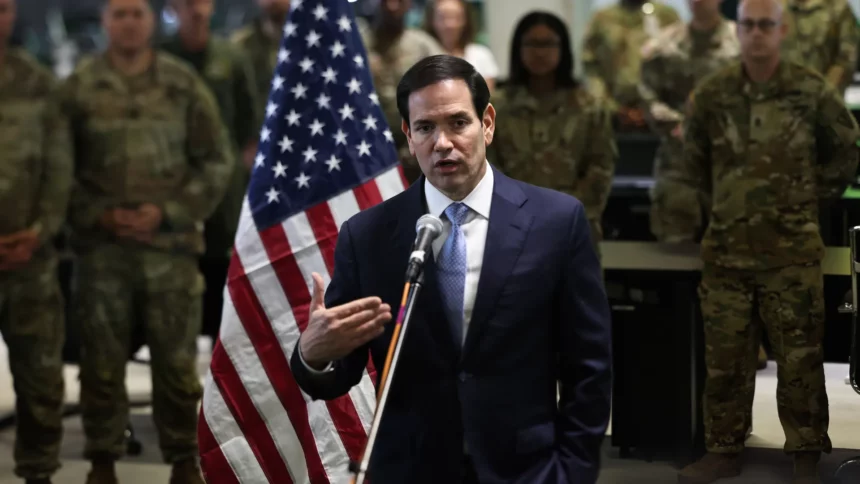
The ongoing conflict and humanitarian crisis in Gaza have prompted international attention toward establishing a security framework that ensures lasting peace and stability in the region. As discussions continue on implementing a ceasefire agreement, U.S. Secretary of State Marco Rubio, during his recent visit to Israel, emphasized the critical role of international collaboration while underscoring Israel’s security concerns. According to Marco Rubio, any international security force deployed in Gaza must comprise countries that Israel considers reliable and trustworthy, reflecting both the geopolitical sensitivities of the region and the necessity for Israel to feel secure under any new arrangements. While the concept of an international force has been part of broader ceasefire negotiations, Marco Rubio highlighted that the details of governance, oversight, and the composition of participating countries remain fluid and require extensive consultation among all stakeholders, including Israel and potential partner nations. Moreover, he clarified that Hamas would not be included in any future governance structure, leaving open the question of the Palestinian Authority’s role in shaping Gaza’s administrative future. Marco Rubio’s remarks underscore the delicate balance that international actors must achieve between upholding humanitarian objectives, respecting Israel’s security imperatives, and navigating the complex political landscape within Gaza and the broader Palestinian territories.
Israel’s Security and Acceptable Countries for the International Force
The establishment of an international security force in Gaza is widely regarded as essential to stabilizing the region and enforcing a ceasefire that prevents renewed violence. According to Marco Rubio, Israel’s approval of participating countries is paramount to ensuring the legitimacy and effectiveness of any such force. The countries chosen must be viewed as neutral, trustworthy, and capable of executing peacekeeping duties without bias or risk to Israeli security interests. This approach reflects Israel’s broader concern for maintaining control over its borders, safeguarding its citizens, and ensuring that any foreign presence within Gaza does not inadvertently empower hostile groups or undermine its strategic objectives. Marco Rubio emphasized that consultations with Israel would dictate which nations could contribute to the force, ensuring alignment with Israel’s defense priorities. While specific countries have not yet been publicly named, the principle of Israeli comfort and security forms the cornerstone of the operational planning for the international mission. The discussion also highlights the broader diplomatic challenge of assembling a coalition that balances regional sensitivities, international law, and effective enforcement capabilities while remaining acceptable to all involved parties, particularly Israel, whose approval is non-negotiable for operational success.
Beyond the immediate question of which countries will participate, Marco Rubio stressed the importance of clearly defined rules of engagement, operational oversight, and accountability mechanisms to ensure that the international force can fulfill its mandate effectively. He noted that such mechanisms would need to be transparent and coordinated with both Israeli authorities and international bodies to prevent misunderstandings or conflicts that could escalate tensions. The operational mandate may include monitoring ceasefire compliance, preventing smuggling of arms or materials that could reignite conflict, and protecting civilians from ongoing violence. Marco Rubio also highlighted that the international force could serve as a stabilizing presence to rebuild trust among communities within Gaza while providing Israel with assurances that the ceasefire is being actively monitored and enforced. These arrangements underscore the necessity of strategic diplomacy in balancing Israel’s security interests with international peacekeeping goals, creating a framework that facilitates both immediate conflict mitigation and long-term stability in the region.
Governance Challenges and the Role of Palestinian Authorities
While the international security force is a central aspect of ceasefire implementation, Marco Rubio indicated that the broader issue of governance in Gaza remains unresolved and is subject to negotiations among Israel, international partners, and Palestinian representatives. Any governance framework will need to establish mechanisms for maintaining law and order, facilitating humanitarian assistance, and promoting economic recovery while ensuring that no extremist group, including Hamas, retains political or military control. Marco Rubio explicitly ruled out Hamas as a participant in future governance arrangements, reflecting ongoing concerns about the organization’s historical role in conflict and its designation by multiple countries as a terrorist entity. This exclusion underscores the complexity of constructing a governance model that balances local representation, international oversight, and security considerations.
The potential involvement of the Palestinian Authority (PA) remains an open question, as Marco Rubio indicated that discussions are ongoing regarding its capacity to administer or support governance in Gaza. Integrating the PA into the administrative framework could offer a measure of political legitimacy and continuity, while also providing a partner familiar with local conditions and needs. However, questions about the PA’s effectiveness, acceptance among Gaza’s population, and capacity to operate under the oversight of an international security force remain unresolved. Marco Rubio emphasized that the future governance structure would need to be carefully designed to avoid exacerbating existing political tensions, ensure compliance with international law, and maintain a balance between humanitarian objectives and security imperatives. The process will require coordination between Israel, potential partner nations, and Palestinian representatives to develop a framework capable of fostering stability, rebuilding trust, and facilitating the long-term recovery of Gaza after years of conflict and humanitarian strain.
The statements made by Marco Rubio also point to the broader diplomatic challenges facing the international community in Gaza. Any international intervention, whether military, administrative, or humanitarian, must navigate the intricate interplay of local political dynamics, historical grievances, and regional power considerations. The ceasefire agreement and the international force are intended not only to halt immediate violence but also to lay the groundwork for a sustainable political and social environment. Marco Rubio’s remarks highlight that achieving these objectives requires careful selection of partner countries, robust governance structures, and a nuanced understanding of the local context. Ensuring Israel’s comfort and approval, excluding groups deemed hostile, and potentially incorporating recognized Palestinian authorities are all integral components of a strategy that aims to stabilize Gaza while maintaining regional security.
Overall, Marco Rubio’s visit and statements underscore the international community’s cautious approach to resolving the Gaza conflict. By emphasizing Israel’s security requirements, the composition of the international force, and unresolved governance issues, Marco Rubio presented a framework that prioritizes stability, accountability, and practical solutions over political symbolism. The discussions reflect the complex realities on the ground, where peacekeeping, governance, and diplomacy must operate in concert to address immediate humanitarian needs while preparing for longer-term recovery. As negotiations continue, the role of international actors, including Israel and potential partner nations, will remain central to shaping the future of Gaza, ensuring that any ceasefire or security deployment is sustainable, credible, and aligned with both local and regional interests.
Marco Rubio’s comments signal that while significant progress has been made toward conceptualizing a security framework, substantial work remains in finalizing the operational, diplomatic, and governance details. International cooperation, adherence to legal frameworks, and alignment with Israel’s security expectations are critical for the success of any mission. The process will require meticulous planning, transparent communication, and ongoing dialogue among all stakeholders to ensure that the envisioned security arrangements in Gaza not only prevent further conflict but also foster conditions conducive to long-term peace, political stability, and humanitarian recovery.