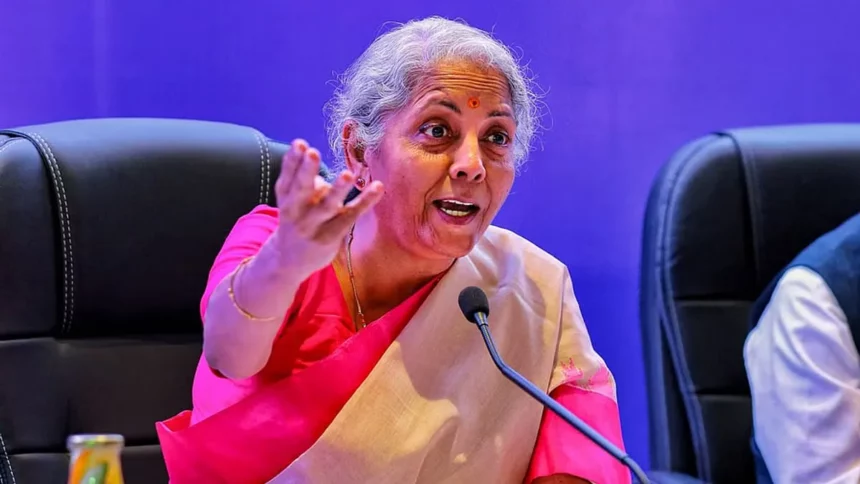
India’s growth over the next two decades depends on bold reforms, strengthening domestic capabilities, and strategic institutional collaborations, said Finance Minister Nirmala Sitharaman at the Hoover Institution in California. These initiatives aim to drive the nation towards a sustainable growth path, positioning it as a developed country by 2047, the centenary year of independence. The Finance Minister emphasized that the last two Union Budgets have laid the foundation for this transformation, which focuses on multi-sectoral policies to address the evolving global economic landscape.
Structural Reforms and Infrastructure Development
Nirmala Sitharaman highlighted the significant strides made over the past decade, focusing on structural reforms such as the rationalization of over 20,000 compliances, decriminalization of business laws, and the digitization of public services. These reforms have played a crucial role in reducing friction in business operations. Furthermore, she pointed to the government’s substantial increase in capital expenditure, which has boosted investor confidence and laid a strong foundation for manufacturing-led growth. With a more than four-fold increase in capital expenditure between 2017-18 and the 2025-26 budget, India is fostering an environment conducive to industrial growth. The Finance Minister also mentioned how deregulation has been a catalyst for industrial development, citing the positive outcomes of the Business Reform Action Plan implemented by state governments.
Focus on Small and Medium Enterprises (SMEs) and Women’s Empowerment
Nirmala Sitharaman underscored the importance of small and medium enterprises (SMEs) in driving domestic manufacturing growth. The government has launched numerous initiatives to support SMEs, including improving access to credit, redefining size thresholds, facilitating payments from large buyers, and reducing compliance burdens. Additionally, the Open Network for Digital Commerce, launched in April 2022, has onboarded over 764,000 vendors across 616 cities, helping digitize commerce. In terms of women’s empowerment, the Finance Minister discussed various schemes aimed at increasing women’s participation in the workforce. Maternity leave has been extended to six months, and the government has also introduced policies to encourage women to save by offering higher interest rates on deposits.
By pursuing these bold reforms and adaptive strategies, India aims to accelerate its growth trajectory while ensuring a more inclusive and innovation-led economy. The country’s progress, despite challenges such as the pandemic and banking crises, showcases the resilience and potential of its economic framework.