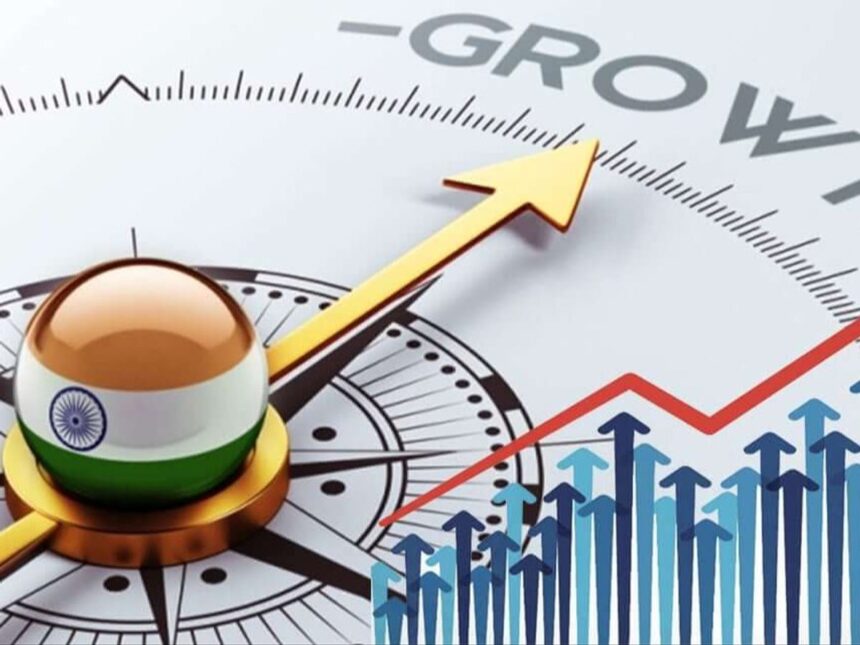
India is set to emerge as the fastest-growing economy among G20 nations in fiscal year 2026–27, according to Moody’s Ratings, which projects a 6.4% expansion. The growth is expected to be fueled by resilient domestic consumption, ongoing policy reforms, and a stable banking system capable of supporting further economic development. This projection highlights India’s continuing momentum in the global economy, even as advanced economies face uneven growth due to geopolitical tensions, financial market volatility, and tighter credit conditions. With reforms in taxation, increased consumer affordability, and strategic government support, the country is positioned to sustain robust demand-led growth. Analysts note that a combination of policy measures, household consumption, and banking sector stability will underpin India’s economic trajectory, ensuring that momentum remains strong even as challenges emerge in global and domestic contexts. Moody’s latest assessment reinforces India’s role as a key driver of global growth, emphasizing the interplay of structural reforms, macroeconomic fundamentals, and the strategic functioning of the banking system.
Domestic Consumption and Policy Reforms Driving Economic Growth
Moody’s projection of 6.4% GDP growth in FY27 reflects strong domestic consumption and government-led policy initiatives aimed at improving affordability and sustaining demand. Key measures include the rationalization of the goods and services tax (GST) in September 2025 and the earlier increase in personal income tax thresholds. These steps have enhanced consumer spending capacity and strengthened the demand-led growth engine. While Moody’s forecast trails the Finance Ministry’s Economic Survey estimate of 6.8%–7.2%, official data indicate that India is on track to record 7.4% growth in FY26, up from 6.5% in FY25. The robust consumer base, rising household incomes, and favorable policy environment are expected to sustain momentum in the coming fiscal year. Structural reforms, including rationalization of indirect taxes and adjustments in personal taxation, have increased disposable income for households, stimulating spending across retail and service sectors. Analysts suggest that continued attention to tax policy, infrastructure development, and regulatory efficiency will remain critical to maintaining the high growth trajectory.
Fiscal consolidation, coupled with enhanced investment incentives, has strengthened confidence among private and institutional investors. Government initiatives to promote digital payments, financial inclusion, and formalization of small businesses have also contributed to the broader economic resilience. These measures, together with targeted infrastructure investments and rising urban consumption, create a conducive environment for sustained growth. The interaction between household consumption, investment demand, and policy-driven stimulus is expected to be a central driver of GDP expansion, ensuring that the domestic economy continues to outperform many of its global peers.
Banking Sector Outlook: Resilient Assets and Strong Operating Environment
Moody’s outlook for India’s banking sector indicates a stable and supportive operating environment through FY27, backed by robust macroeconomic fundamentals and strengthened capital buffers. Asset quality is expected to remain resilient, though some stress may persist in micro, small, and medium enterprises (MSME) lending. Banks are well-positioned to absorb potential loan losses, with adequate internal capital generation supporting growth in assets. System-wide loan growth is projected to rise to 11%–13% in FY27, compared with 10.6% in FY26 year-to-date, driven by steady demand across retail and corporate lending. Corporate loan quality is anticipated to remain healthy, supported by stronger balance sheets and improved profitability among large firms, while recoveries from stressed assets are expected to taper as banks have largely resolved legacy problem loans in the corporate segment.
The banking sector’s stability is further reinforced by favorable funding and liquidity conditions. Credit expansion is broadly aligned with deposit growth, ensuring that financial institutions maintain strong capitalization while supporting lending activity. Moody’s also highlighted that government support during periods of stress underpins confidence in the system’s overall stability. Banks entering FY27 with stronger balance sheets, improved profitability, and enhanced capital buffers are well-placed to support India’s next phase of economic expansion. Analysts note that this resilience allows banks to continue lending across critical sectors, facilitating investment, employment generation, and consumption-led growth.
Monetary policy is also expected to support economic activity, with the Reserve Bank of India likely to maintain rates unless clear signs of a slowdown emerge. The RBI has already reduced its policy rate by 125 basis points to 5.25% in 2025, stimulating credit demand and investment activity. Combined with structural reforms, strong domestic consumption, and increased capital flows, this creates a favorable environment for both economic growth and financial sector stability. Moody’s assessment underscores the importance of continued prudential oversight, effective regulation, and government support to sustain the positive trajectory of India’s banking and overall economy.
The interaction between a stable macroeconomic environment, robust banking sector performance, and continued policy support is critical for sustaining growth in FY27. With reforms in taxation, enhanced consumer affordability, and stronger corporate balance sheets, the Indian economy is expected to maintain resilience in the face of potential global and domestic challenges. Structural initiatives, regulatory reforms, and government-backed incentives will play a central role in ensuring that banks can continue lending efficiently, supporting consumption, investment, and overall economic activity. This alignment of macroeconomic fundamentals, banking stability, and policy measures positions India as a leading growth economy among G20 nations, reflecting the country’s long-term potential and strategic economic planning.