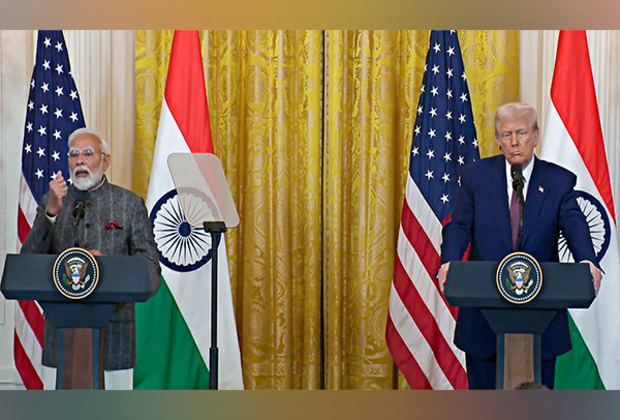
Indian students in the United States are playing a crucial role in bolstering the American economy, with over 300,000 students contributing more than $8 billion annually. Their presence has not only enhanced the academic and research landscape but has also created numerous direct and indirect employment opportunities. Recognizing this impact, Prime Minister Narendra Modi and then-US President Donald Trump reiterated their commitment to streamlining legal avenues for the mobility of students and professionals between the two nations. The leaders also discussed measures to facilitate short-term travel for tourism and business, reflecting their broader vision of strengthening bilateral ties.
A joint statement issued after a high-level bilateral meeting between the two leaders underscored the significance of fostering strong people-to-people ties. They acknowledged the mutual benefits arising from the movement of talent, students, researchers, and employees, which has been instrumental in driving innovation and economic growth in both countries. The discussion also extended to international academic collaborations, with both sides agreeing to enhance cooperation between higher education institutions. Plans were outlined for initiatives such as joint and dual degree programs, twinning programs, and the establishment of offshore campuses of premier US educational institutions in India. Additionally, the two nations explored the possibility of setting up joint Centers of Excellence to advance academic and research endeavors.
In a significant move to ensure security and curb illegal immigration, both leaders pledged to take decisive action against criminal networks facilitating unauthorized movement across borders. They emphasized the need to dismantle organized crime syndicates, including those involved in human and arms trafficking, narco-terrorism, and other activities that threaten public safety, diplomatic security, and national sovereignty. Their discussions reflected a shared understanding that strong law enforcement cooperation is vital to tackling these transnational challenges effectively.
The leaders also highlighted the need to adapt to the evolving nature of the global workforce by developing innovative, mutually beneficial, and secure mobility frameworks. In this context, they expressed a commitment to facilitating smoother legal migration channels while addressing concerns related to illegal immigration and human trafficking. Measures to ensure robust enforcement against criminal facilitators and illicit immigration networks were a key focus area, underscoring their intent to promote secure and structured mobility between the two nations.
Reaffirming their commitment to strengthening the India-US strategic partnership, Modi and Trump pledged to sustain high-level engagement across government, industry, and academia. They underscored their ambition to build an enduring bilateral relationship that not only benefits the people of both nations but also contributes to global stability and prosperity. Their discussions reflected a shared vision for advancing cooperation in key sectors, reinforcing democratic values, and ensuring a free and open Indo-Pacific region. With a strong emphasis on fostering innovation, education, security, and economic collaboration, the meeting reinforced the foundation for a dynamic and forward-looking India-US partnership.