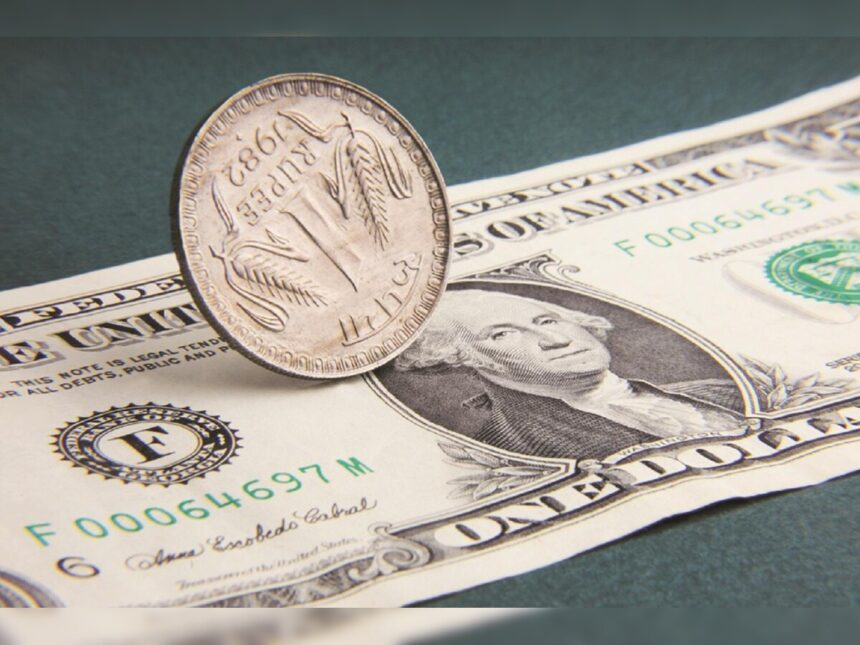
The Indian rupee has experienced a notable decline in value against the United States dollar, sliding to unprecedented depths near ₹92 in recent trading sessions, a development that underscores the mounting pressures on the nation’s currency due to a combination of factors including foreign fund outflows, strong demand for dollars, and broader global market uncertainties that have collectively influenced exchange rate dynamics and investor sentiment.
Rupee depreciation reflects mounting economic and market pressures
In recent weeks, the Indian rupee’s value against the United States dollar weakened significantly, bringing it perilously close to the ₹92 per dollar threshold — a level that market participants consider a psychological and financial milestone. The rupee’s slide to this depth has not been an isolated overnight shift but rather the culmination of sustained downward pressure that has played out over trading sessions in early 2026. Analysts point to the convergence of multiple influences on the foreign exchange market, with some of the most prominent being persistent foreign institutional investor (FII) outflows, elevated demand for the US currency from importers and corporate hedging activities, and a broader global risk-off mood that has favoured the dollar’s strength over emerging market currencies.
Throughout January, the rupee’s downward trajectory has been particularly pronounced. In intraday trading, the currency briefly dipped to record lows near ₹92 before recovering marginally to levels such as ₹91.88 or thereabouts by the end of trading sessions — markers that represent historic weakness for the Indian unit. This slump adds to a cumulative erosion in rupee value of roughly 200 paise, or over two per cent, this month alone, and when looked at against the backdrop of ongoing volatility in 2025 and 2026, it paints a picture of sustained currency pressure that has spanned across fiscal cycles.
Several contributing factors have converged to weigh on the rupee. Persistent selling by foreign investors out of Indian equities and debt markets has placed capital account strain on the financial system, stripping upward support from the rupee and leaving it more vulnerable to external shocks. Dollar demand from importers, including those looking to hedge future currency exposure or pay for essential imports priced in US dollars, has further increased the demand for dollars, intensifying downward pressure on the rupee. At the same time, global market sentiment has tended toward “risk off” dynamics, where investors flock to perceived safe havens like the US dollar amid global uncertainties such as geopolitical tensions, shifts in interest rate expectations, and economic growth concerns.
The weak performance in domestic equity markets has further exacerbated the rupee’s slide. As stock prices falter, international portfolio investors often exit positions in search of safer returns elsewhere, and the resulting capital outflows increase demand for foreign currency conversions. This pattern accelerates rupee depreciation as more dollars are bought to repatriate investment profits or reposition capital externally.
The depreciation has been exacerbated by movements in related financial instruments. Rising yields on US Treasury bonds have strengthened the dollar’s appeal relative to riskier assets like emerging market currencies. Simultaneously, crude oil prices — a significant import cost for one of the world’s largest energy importers — have remained elevated, broadening the trade deficit and placing further strain on the rupee as dollars flow out to settle import bills.
Compounding these domestic pressures, broader macroeconomic and geopolitical conditions have played into currency markets. Global markets have shown bouts of volatility tied to international economic data, central bank policy expectations, and shifting trade dynamics. Fluctuations in these areas often drive currency traders toward the dollar for its perceived stability and liquidity, resulting in added depreciation pressure on currencies like the rupee.
The significance of the rupee’s decline to near ₹92 per dollar lies not merely in the headline number itself, but in how it reflects layered stresses across multiple facets of economic and financial life. Importers, exporters, businesses with external debt exposure, and consumers all feel the ripple effects when a currency weakens sharply. For import-dependent industries, the cost of imported goods rises; for exporters, a weaker rupee can provide a competitive edge by making Indian goods cheaper abroad, but this benefit may be offset by increased costs for inputs priced in foreign currencies.
Financial markets also interpret sharp currency moves as signals of underlying economic sentiment. When the rupee weakens rapidly, it can reflect investor caution and prompt central bank responses. In India’s case, the Reserve Bank of India has previously engaged in interventions — both direct and indirect — to smooth volatility in currency markets, including using foreign exchange reserves or liquidity support mechanisms to cushion sudden moves. Indeed, past interventions have included purchasing dollars to stem extreme depreciation or using tools like foreign exchange swap arrangements to balance liquidity impacts. These measures aim not to fix the exchange rate but to reduce disruptive volatility and maintain orderly market conditions.
Impact on economy, central bank strategies and future outlook
The rupee’s slide has reverberated across economic discussions in India, prompting market participants, economists, and policymakers to consider the implications for inflation, trade balances, investment flows, and monetary policy. A sustained depreciation might influence inflationary pressures by increasing the cost of imported goods and commodities, potentially complicating efforts to stabilise prices and manage consumer costs. At the same time, it could affect the broader trade balance by making exports more price competitive while worsening the cost of imports.
The central bank’s strategy in this period has been to balance multiple objectives: supporting currency stability where possible, maintaining sufficient liquidity in the banking system, and aligning overall monetary policy with broader economic goals such as growth and inflation control. Actions by the central bank often involve careful calibration of interventions in foreign exchange markets while simultaneously managing domestic interest rates and ensuring that liquidity conditions align with banking sector requirements.
For example, the central bank has previously undertaken operations such as bond purchases, foreign exchange swaps and liquidity injections into the banking system in attempts to temper excessive currency volatility and support broader financial stability. These tools are designed to ease the impact on borrowing costs and ensure that financial institutions have adequate liquidity, even as foreign exchange market pressures persist.
Looking ahead, analysts suggest that the rupee may continue to trade within a range influenced by ongoing global and domestic factors. Some economists predict that without swift improvements in capital account conditions or stronger inflows from foreign investors, the rupee may remain under pressure, potentially lingering near current levels unless countervailing factors such as improved domestic economic data, renewed investor confidence, or stabilisation in global markets emerge. Others argue that structural factors such as trade deficits and external funding dynamics will continue to shape exchange rate trends in 2026 and beyond.
Importantly, currency markets are forward-looking, and traders often react not only to current conditions but to expectations about future interest rates, geopolitical developments, and central bank actions. This means that even small shifts in global economic narratives — for example, changes in interest rate expectations from major central banks or improvements in global risk appetite — can quickly influence currency flows and valuations.
The rupee’s movement also highlights the importance of broader economic policy and investor confidence. Sustained foreign investment, confidence in domestic economic reforms, and robust export performance can help balance currency pressures over the medium term. Conversely, ongoing capital outflows or heightened global risk aversion can amplify depreciation dynamics.
As the rupee’s value continues to draw attention, its interaction with inflation, trade flows, corporate financing and consumer confidence will shape broader economic discourse. Whether the currency stabilises near current levels, rebounds modestly with improved investor sentiment, or extends its slide in response to persistent global headwinds remains a central topic among economists, traders and policymakers alike.