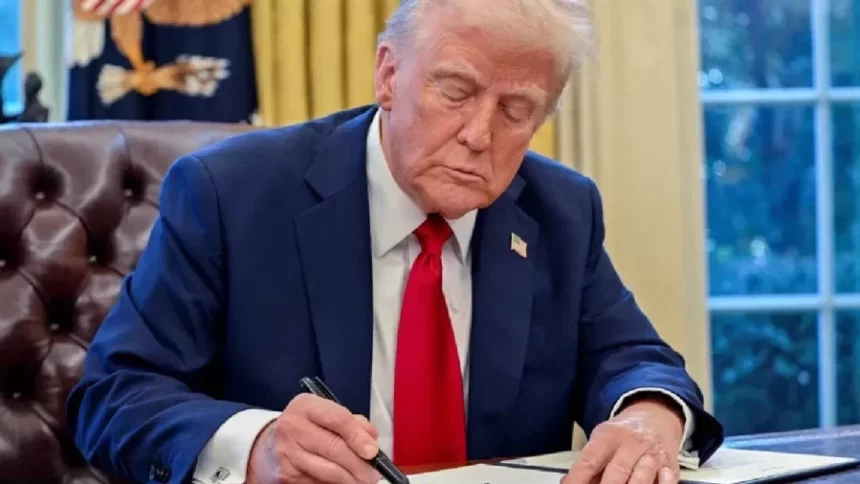
India’s auto sector is facing a significant challenge following US President Donald Trump’s decision to impose a 25% tariff on overseas auto imports. This move is expected to have a substantial impact on Indian companies like Tata Motors, Eicher Motors, Sona BLW, and Samvardhana Motherson, who have a strong presence in the US market.
The increased tariff could lead to higher costs for American consumers and force Indian exporters to reconsider their global market strategies. As the US remains a key market for India’s automotive exports, this decision could potentially disrupt business operations and reshape strategies for manufacturers.
Indian Companies in the Spotlight
Tata Motors, one of India’s largest automotive manufacturers, could experience increased challenges due to higher import costs, potentially affecting sales of its Jaguar Land Rover (JLR) brand in the US. The additional tariff could also lead to price hikes, making JLR vehicles less competitive in an already price-sensitive market.
Eicher Motors, the company behind Royal Enfield motorcycles, is another major player that could feel the pressure. The US remains a crucial market for its high-performance 650cc models, and increased import costs may force the company to adjust its pricing or explore local manufacturing opportunities.
Component Manufacturers at Risk
Samvardhana Motherson International Ltd, a key supplier to major American automakers such as Tesla and Ford, has a strong presence in both Europe and the US. However, the company operates manufacturing units within these regions, providing some insulation from the new tariffs. This operational advantage makes it less vulnerable compared to firms that rely entirely on exports.
Sona Comstar, another leading auto component manufacturer, produces essential automotive systems like differential gears and starter motors. With nearly 66% of its revenue coming from the US and European markets, the company faces considerable risks. In response, it has been actively expanding into China, Japan, and South Korea, aiming to shift more than 50% of its revenue to these Eastern markets within five years.
Broad Impact on the Auto Industry
Apart from these major players, several other Indian firms with significant export exposure, including Bharat Forge, Sansera Engineering Ltd, Suprajit Engineering, and Balkrishna Industries, are also likely to face challenges. Higher tariffs mean increased costs for American automakers sourcing Indian components, potentially leading to a decline in demand.
As the global trade landscape shifts, Indian auto manufacturers and suppliers must adapt quickly. Whether through diversification, localized manufacturing, or strategic partnerships, companies will need to navigate these changes effectively to sustain their market presence in the US amid rising trade barriers.