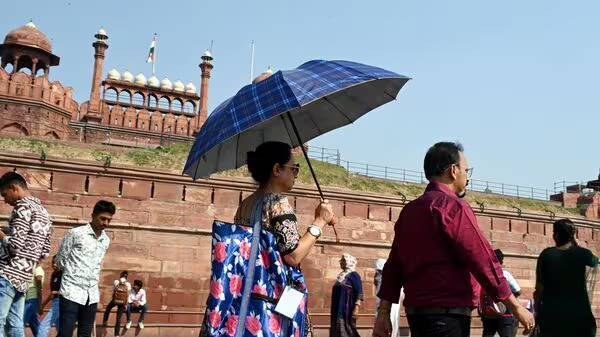
Delhi witnessed an early summer surge as the mercury soared to 40.5 degrees Celsius on March 26, making it the hottest day of 2025 so far. The India Meteorological Department (IMD) has warned of an extended heatwave across northern India, predicting nearly double the usual number of extreme temperature days this season. The rise in temperature has sparked concerns over harsher summer conditions in the coming months.
According to IMD data, Delhi’s Ridge observatory recorded a maximum temperature of 40 degrees Celsius on Wednesday, which was 6.3 degrees above normal. This new high surpassed the previous record of the year, 37.1 degrees Celsius, set just a day earlier on March 25. In comparison, the highest temperature recorded in March last year was 37.8 degrees Celsius on March 29, while in 2023, the hottest March day stood at 34.3 degrees Celsius. The last time Delhi experienced such an intense March heatwave was in 2022, when temperatures peaked at 39.1 degrees Celsius on March 29.
Throughout the day, humidity levels fluctuated between 19 percent and 52 percent, while the minimum temperature settled at 17.7 degrees Celsius. The sharp spike in temperature has already begun to affect daily life, with residents struggling to cope with the unexpected heatwave conditions so early in the year.
IMD has sounded an alert for a significant increase in heatwave days across northwest India. Generally, the region experiences around five to six heatwave days per season, but this year, forecasts indicate that number could rise to 10 to 12 days. IMD scientist Soma Sen Roy explained that while the heatwave conditions are expected to be above normal, this does not imply that every day of the season will be hotter than usual.
The IMD, however, refrained from making direct comparisons with 2024, which was officially recorded as India’s hottest year. In 2024, the country witnessed a staggering 554 heatwave days, highlighting the escalating trend of extreme weather patterns. Although no confirmation has been made regarding whether 2025 will surpass last year’s temperatures, early indicators suggest a scorching summer ahead.
With rising temperatures and an increased frequency of heatwaves, health experts and authorities are advising residents to take precautions such as staying hydrated, avoiding prolonged outdoor exposure, and using cooling measures to mitigate the effects of the extreme heat. The IMD continues to monitor the situation, with further updates expected as summer progresses.