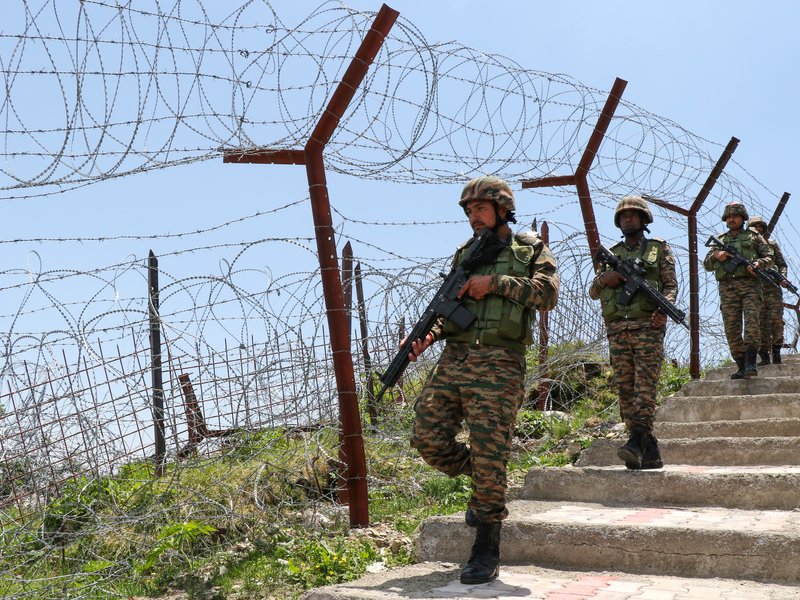
In a significant counter-infiltration operation near the Line of Control (LoC) in Jammu and Kashmir’s Poonch district, the Indian Army successfully neutralized two terrorists attempting to cross over from Pakistan. The encounter, which began late Tuesday night in the Degwar sector’s Kalsian-Gulpur area, is part of an ongoing anti-infiltration effort named Operation Shivshakti. The swift and coordinated response from Indian security forces prevented the terrorists from entering Indian territory and eliminated a potential threat to regional security.
The gunfight broke out after Indian troops observed suspicious movement along the LoC, believed to be a group of two to three terrorists trying to infiltrate the border under cover of darkness. Alert Indian soldiers swiftly engaged the intruders, leading to a fierce exchange of gunfire in the densely forested terrain. By Wednesday, officials confirmed the elimination of two terrorists, while search operations and combing efforts continued in the area.
Operation Shivshakti Thwarts Infiltration in Degwar Sector
The Indian Army’s 16 Corps, also known as the White Knight Corps, provided detailed updates throughout the day on the progress of the anti-terror operation. According to their statement, the terrorists were intercepted based on precise intelligence inputs, resulting in a well-coordinated operation executed by Indian Army units in synergy with the Jammu and Kashmir Police.
“Operation Shivshakti: In a successful anti-infiltration operation, alert troops of the Indian Army eliminated two terrorists attempting to infiltrate across the Line of Control,” the Army’s official statement read. The post further emphasized the high state of alertness among troops and the efficient coordination between intelligence and ground forces.
Officials noted that the infiltration attempt was planned with the aim of disturbing peace in the region. However, timely action and strategic use of firepower by Indian soldiers foiled the plan. The area where the encounter took place is known for its difficult terrain and thick vegetation, often exploited by terrorists to cross over from Pakistan-occupied territories.
The operation, carried out under challenging conditions, demonstrated the preparedness of Indian forces in securing the border and responding swiftly to threats. Three weapons were recovered from the site of the encounter, suggesting that the group may have been equipped for a prolonged engagement or potential sabotage.
High Vigilance and Coordinated Intelligence Prove Crucial
The successful outcome of the encounter is being credited to the high level of coordination between various security agencies. The intelligence inputs were reportedly shared by multiple sources and validated by ground-level surveillance before the operation was launched.
The first official indication of the developing situation came via a social media post from the 16 Corps, which read: “#WhiteKnightCorps Contact with #Terrorists. Suspected movement of two individuals was observed by own troops along the fence in general area of #Poonch Sector. Gunfire exchanged. Operation under progress.”
The encounter is the latest in a series of operations conducted by Indian forces along the LoC to curb cross-border terrorism and infiltration attempts. In recent months, there has been a noticeable uptick in such incidents, often coinciding with increased activity across the border. Indian forces have remained on heightened alert to thwart any such attempts that may pose a risk to civilian areas or strategic installations.
While the search for potential accomplices or additional infiltrators continues, officials have not yet confirmed whether the neutralized terrorists belonged to a specific outfit. However, the recovered arms and the manner of infiltration suggest a planned operation involving trained operatives. Security forces are combing the area thoroughly to ensure there are no lingering threats.
Operation Shivshakti underscores the persistent challenges India faces along the LoC, where frequent attempts are made by armed militants to exploit the terrain and breach security. It also highlights the importance of maintaining high alertness and technological surveillance along sensitive zones.
The Indian Army continues to monitor the region, with reinforcements deployed as needed to cover possible escape routes and prevent further infiltration. As part of standard protocol, the recovered weapons and other materials will be subjected to forensic analysis to trace their origin and understand the nature of the planned infiltration.
Security analysts believe that such operations serve a dual purpose—neutralizing immediate threats and sending a strong message to terror outfits and their handlers across the border. The Army’s swift action in this case reflects the proactive stance of Indian security forces in maintaining the sanctity of its borders and ensuring peace in the region.