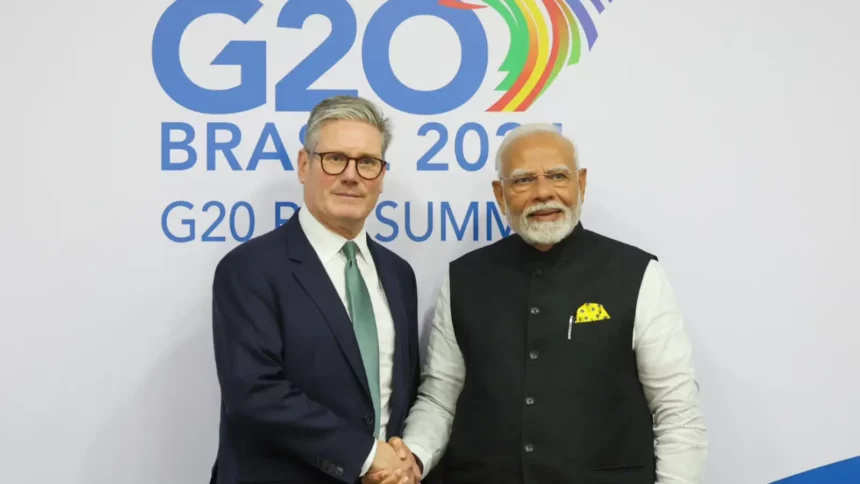
In a landmark development, India has finalized a trade pact with the UK after years of negotiations. This deal comes at a time when global trade faces uncertainty, but it underscores the political will and compromise required for economic integration. Despite hurdles in negotiations, such as disagreements over labor migration and tariffs, both countries managed to finalize the agreement, showcasing the ability of nations to push forward even amid challenges.
The deal emphasizes the importance of trade beyond traditional manufacturing sectors. Both India and the UK, with their robust service industries, found common ground on areas like food trade and consumer goods. The agreement promises to benefit both countries, with India set to enjoy cheaper Scotch whisky and Jaguars, while the UK stands to gain from more affordable shrimp exports. Notably, the pact’s focus on food trade, which has traditionally been a sensitive area in such deals, marks a positive shift towards more consumer-friendly agreements.
India’s decision to ease tariffs on certain goods and relax demands on labor migration was seen as a strategic move to ensure smoother negotiations. While India had previously insisted on more visas for Indian workers and students, the political climate in the UK made such provisions less feasible. This shift, however, did not diminish the significance of the deal, which promises to boost both nations’ economies. The UK government, for instance, anticipates a £4.8 billion increase in GDP and a slight rise in real wages.
India’s success in finalizing this agreement with the UK is particularly noteworthy given the context of global trade dynamics. While the Trump administration’s approach to tariffs might raise questions about global trade practices, countries like India and the UK continue to forge ahead with economic integration. India is also pursuing more ambitious trade agreements, including a long-awaited deal with the European Union. This progress is indicative of India’s broader strategy to strengthen its global trade partnerships, despite the complexities of international negotiations.
As the global trade landscape evolves, the India-UK deal could serve as a model for future agreements, emphasizing the need for flexibility and political cooperation. India’s negotiation skills and willingness to compromise on certain issues reflect the country’s growing importance in the global economy. The deal not only strengthens India’s ties with the UK but also signals that global trade is far from stagnant, with new partnerships taking shape across the globe.