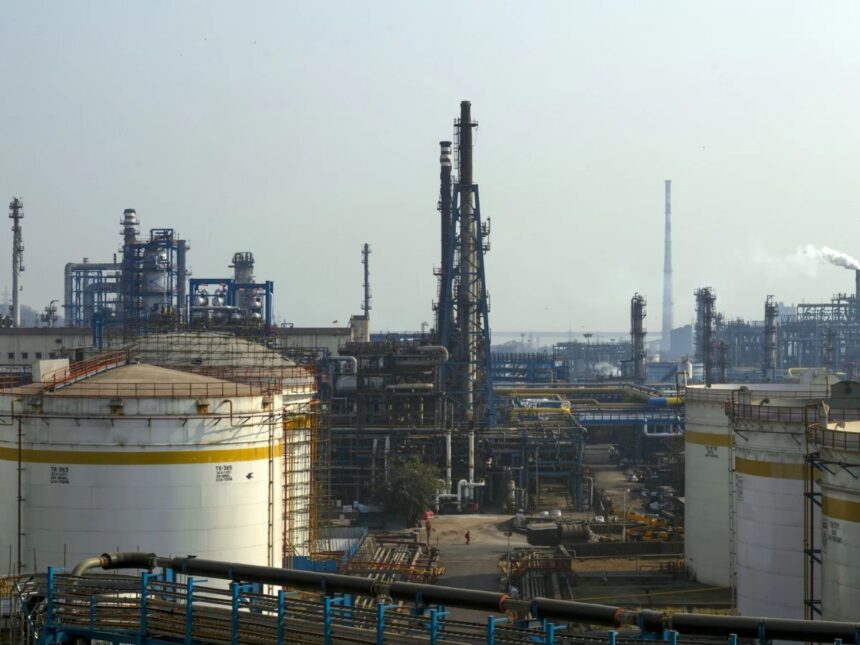
India is set to purchase approximately 30 million barrels (3 crore barrels) of crude oil from Russia, according to a report, as tensions in the Middle East continue to disrupt global energy supply chains. The decision comes amid the ongoing conflict between Iran and Israel and concerns over shipping disruptions through the Strait of Hormuz, one of the most critical oil transport routes in the world.
The report indicates that major Indian companies, including Indian Oil Corporation (IOC) and Reliance Industries, have already finalized agreements with Russian suppliers to secure crude oil shipments. The move highlights India’s efforts to ensure energy security and maintain stable oil supplies despite growing geopolitical uncertainties in the Middle East.
The Strait of Hormuz plays a crucial role in global energy trade. Nearly 20 percent of the world’s crude oil supply passes through this narrow maritime route connecting the Persian Gulf with international markets. However, due to escalating military tensions in the region, oil shipments through this route have been disrupted, forcing countries that rely heavily on imported crude to seek alternative supply channels.
India, which imports around 85–90 percent of its crude oil requirements, has been closely monitoring the situation. To safeguard its energy needs, Indian refiners have increased purchases from Russia, which remains one of the country’s largest oil suppliers.
According to traders familiar with the deals, Indian Oil Corporation has reportedly secured around 10 million barrels of Russian crude, while Reliance Industries has also purchased at least 10 million barrels under recent agreements. The remaining shipments have been acquired by other Indian refining companies to ensure a steady supply of crude oil in the coming weeks.
Interestingly, some of the oil being purchased by India was already floating in Asian waters without buyers. Cargo tankers carrying Russian crude had been waiting near maritime boundaries in Asia after difficulties in securing buyers due to geopolitical restrictions and sanctions-related complications. Indian refiners have taken advantage of this opportunity by securing these shipments to strengthen domestic stock levels.
Shipping data suggests that several large oil tankers originally heading toward Southeast Asian markets have now changed course toward Indian ports. For example, Russian vessels such as Mylo and Sara, which were initially en route to Singapore, reportedly altered their destinations after new agreements were finalized with Indian buyers.
These cargo ships are carrying different grades of Russian crude, including Urals, ESPO and Vorande, which are widely used by Indian refineries for processing into petroleum products such as petrol, diesel and aviation fuel.
The latest deals come at a time when India had been gradually reducing its dependence on Russian oil in recent months. Earlier, Indian refiners increased purchases from countries like Saudi Arabia and Iraq, which traditionally serve as major oil suppliers to India.
According to energy market data, India’s imports of Russian oil had declined to around 1.06 million barrels per day in February, compared with more than 2 million barrels per day in mid-2024. However, the ongoing crisis in the Middle East has once again prompted India to diversify its supply sources and rely more on Russian shipments.
The government has also adjusted its broader strategy to reduce dependence on the Strait of Hormuz. Traditionally, nearly 50 percent of India’s crude oil imports and about 54 percent of liquefied natural gas (LNG) passed through this maritime route. Given the current geopolitical tensions, India has increased imports through alternative shipping routes that bypass the Hormuz corridor.
Energy officials say that earlier around 60 percent of India’s oil imports came through routes outside the Hormuz region, but this share has now been increased to approximately 70 percent. This shift aims to minimize risks to India’s energy supply chain if disruptions in the Gulf region continue.
To further strengthen its energy security, India has also increased crude imports by about 10 percent through alternative routes, ensuring that the country’s refineries continue operating without interruption.
Despite the ongoing tensions, diplomatic signals suggest that the situation around the Strait of Hormuz may gradually stabilize. Sources indicate that Iranian authorities have assured regional governments that they will avoid targeting neighboring countries unless attacks are launched from those territories.
At the same time, several energy-producing nations have expressed willingness to supply oil and liquefied natural gas to India if required. Officials say that India currently has sufficient LNG reserves and that additional supplies can be arranged if disruptions persist.
Government officials have also expressed confidence about India’s overall energy preparedness. Recent internal reviews suggest that the country’s strategic petroleum reserves and commercial oil stocks have improved, providing a stronger buffer against global supply disruptions.
One senior official reportedly said that India’s energy stock levels have improved compared to earlier months and that the government remains confident about maintaining adequate supplies even if the Middle East crisis continues.
Overall, the decision to purchase large volumes of Russian crude reflects India’s pragmatic energy strategy. By diversifying import sources and securing supplies from multiple regions, the country aims to protect its economy from volatile global energy markets and geopolitical uncertainties.