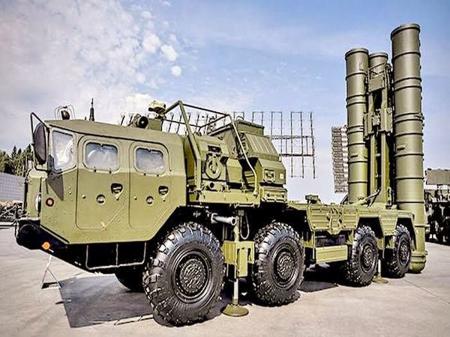
India is set to receive the fourth unit of the advanced S-400 Triumf missile defence system from Russia next month, a development that is expected to significantly strengthen the country’s air defence architecture amid evolving regional security challenges.
The delivery comes as part of a multi-billion dollar defence deal signed between India and Russia in 2018, under which five S-400 systems were to be supplied. With three units already operational and the fourth on its way, India is steadily enhancing its capability to counter a wide spectrum of aerial threats, including fighter aircraft, drones, cruise missiles, and ballistic missiles. Defence sources indicate that the fourth unit has already been dispatched and is expected to arrive in India within weeks, after which it will be deployed strategically to bolster national security.
Strategic Importance of the S-400 System
The S-400 Triumf is widely regarded as one of the most advanced long-range surface-to-air missile systems in the world. Its ability to detect, track, and neutralize multiple targets simultaneously at ranges of up to 400 kilometers makes it a formidable asset in modern warfare. The system is equipped with sophisticated radar technology capable of identifying threats at long distances, allowing for early interception and neutralization.
For India, the acquisition of the S-400 represents a significant leap in air defence capability. The system provides a multi-layered shield that can protect critical infrastructure, military bases, and major cities from aerial attacks. Its deployment is particularly crucial given the evolving nature of warfare, where threats are becoming increasingly complex and technologically advanced.
The system’s effectiveness was reportedly demonstrated during Operation Sindoor, where it played a key role in enhancing surveillance and interception capabilities during a period of heightened military tension. Its performance during the operation has reinforced confidence in its ability to serve as a cornerstone of India’s air defence strategy.
Details of the India–Russia Defence Deal
India signed a $5 billion agreement with Russia in October 2018 for the procurement of five S-400 units. Despite facing international scrutiny and potential sanctions, India proceeded with the deal, emphasizing its commitment to strengthening national security.
So far, three units have been delivered and integrated into the defence network. The fourth unit is expected shortly, while the fifth is likely to be delivered by November under an updated timeline. In addition to completing the original order, India has recently approved the procurement of an additional five S-400 systems, which will double its inventory to ten units.
This expansion reflects India’s long-term strategic planning and its focus on building a robust and comprehensive air defence system. The additional units are expected to be deployed across key regions, enhancing coverage and ensuring rapid response capabilities.
Enhancing the Indian Air Force’s Capabilities
The integration of the S-400 system significantly enhances the operational capabilities of the Indian Air Force. With its advanced radar and missile technology, the system enables the IAF to detect and engage threats at much greater distances than previously possible.
This extended range provides a strategic advantage, allowing India to neutralize threats before they enter its airspace. It also acts as a deterrent, discouraging potential adversaries from engaging in aggressive actions. The system’s ability to track multiple targets simultaneously ensures that it can handle complex attack scenarios involving multiple threats.
Indian personnel have undergone extensive training in Russia to operate the S-400 systems, ensuring that they are fully prepared to handle the advanced technology. The phased deployment of the systems has allowed for smooth integration and operational readiness.
Geopolitical Dimensions and US Concerns
The acquisition of the S-400 system has been a subject of geopolitical debate, particularly with regard to the United States. The US had warned that India could face sanctions under the Countering America’s Adversaries Through Sanctions Act (CAATSA) for engaging in significant defence transactions with Russia.
However, India has consistently maintained that its defence procurement decisions are guided by national security considerations and strategic autonomy. Officials have emphasized that the country will continue to pursue partnerships that best serve its interests, regardless of external pressures.
Sources suggest that the latest procurement of additional S-400 units is being treated as a follow-on order to the original deal, which may reduce the likelihood of sanctions. India does not expect any major obstacles from the US in this regard, although the situation continues to be closely monitored.
The deal also highlights the enduring defence relationship between India and Russia, which has been a cornerstone of India’s military modernization efforts for decades. Despite changing global dynamics, this partnership remains strong, with ongoing cooperation in various defence sectors.
Operational Impact and Future Preparedness
The arrival of the fourth S-400 unit is expected to further strengthen India’s air defence network, particularly in strategically sensitive areas. The system’s advanced capabilities will enhance India’s ability to respond to emerging threats, ensuring greater security for both military and civilian assets.
As warfare continues to evolve, the importance of advanced defence systems like the S-400 cannot be overstated. The increasing use of drones, precision-guided munitions, and advanced missile systems has made it essential for countries to invest in robust air defence solutions.
India’s decision to expand its S-400 inventory reflects a proactive approach to addressing these challenges. By building a comprehensive defence network, the country aims to stay ahead of potential threats and maintain a strong deterrence capability.
Broader Implications for Regional Security
The deployment of additional S-400 systems is likely to have broader implications for regional security dynamics. It enhances India’s defensive posture and contributes to stability by reducing vulnerabilities. At the same time, it may influence the strategic calculations of neighboring countries, potentially prompting them to reassess their own defence strategies.
However, India has consistently maintained that its defence acquisitions are aimed at strengthening its security and are not directed against any specific country. The focus remains on ensuring preparedness and maintaining peace through strength.
Conclusion
The upcoming delivery of the fourth S-400 missile system marks a significant step in India’s journey toward building a robust and modern air defence network. As the country continues to invest in advanced military technologies, the S-400 system stands out as a key component of its defence strategy.
With additional units planned and ongoing efforts to enhance operational capabilities, India is positioning itself to effectively address current and future security challenges. The arrival of the fourth unit next month is not just a routine development but a crucial milestone in strengthening the nation’s defence preparedness.