India’s retail inflation edged higher in April 2026, rising to 3.48% year-on-year compared to 3.40% in March, according to the latest data released by the Ministry of Statistics and Programme Implementation (MoSPI). The marginal increase was primarily driven by a rise in food prices, even as several essential commodities like potatoes and onions continued to record price declines.
The data highlights a mixed inflation trend in the Indian economy, where food items are pushing short-term price pressures upward, while core inflation in several non-food categories remains relatively stable.
Food Inflation Drives Overall Price Rise
A key driver behind the rise in headline inflation was the increase in food inflation, measured by the All India Consumer Food Price Index (CFPI). Food inflation rose to 4.20% in April from 3.87% in March, reflecting renewed pressure on vegetable and essential food prices.
Rural food inflation stood slightly higher at 4.26%, while urban food inflation was recorded at 4.10%. This indicates that rural households continue to face slightly stronger inflationary pressure, primarily due to food dependency and supply chain fluctuations.
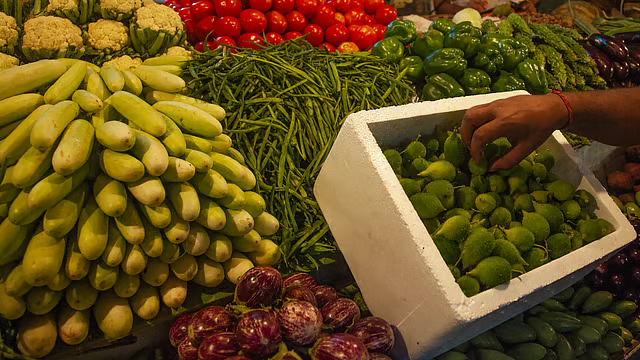
Among key contributors to the rise, tomatoes and cauliflower recorded sharp price increases. Tomato prices surged by 35.28%, while cauliflower prices rose by 25.58%, significantly impacting household budgets across regions.
At the same time, certain commodities helped offset the rise. Potato prices fell by 23.69%, and onion prices declined by 17.67%, continuing their deflationary trend from previous months.
Inflation Pattern Shows Mixed Commodity Trends
The inflation data reflects a highly uneven price trend across categories. While vegetables such as tomatoes and cauliflower saw sharp spikes due to seasonal supply disruptions and weather-related impacts, staple items like potatoes and onions continued to see price corrections.
Other pulses such as peas and chickpeas also recorded lower prices, contributing to some relief in the overall food basket. However, the gains from these declines were not enough to offset the sharp increase in high-consumption vegetables.
Experts suggest that such volatility in vegetable prices is typical in the Indian inflation basket, which has a significant weightage for seasonal agricultural products.
Rural vs Urban Inflation Gap Narrows Slightly
The MoSPI data showed that rural inflation stood at 3.74%, while urban inflation remained lower at 3.16% in April. The gap between rural and urban inflation continues to persist, though it remains moderate.
Rural inflation is largely influenced by food prices, fuel costs, and agricultural input prices. Urban inflation, on the other hand, is driven more by housing, services, and transportation costs.
Food inflation in rural areas stood at 4.26%, slightly higher than the urban food inflation rate of 4.10%. This difference highlights the continued vulnerability of rural households to food price fluctuations.
Sector-wise Inflation Trends
Apart from food prices, several other sectors showed varied inflation patterns. The food and beverages category recorded an inflation rate of 4.01%, reflecting the broader impact of rising vegetable prices.
Education services saw a moderate rise of 3.15%, while restaurant and accommodation services recorded inflation of 4.20%, indicating a steady increase in service-sector pricing.
Housing inflation remained relatively stable at 2.15%, slightly higher than March’s 2.11%. Rural housing inflation stood at 2.65%, while urban housing inflation was recorded at 1.96%, showing more stability in urban rental and housing markets.
Transport inflation remained nearly flat at -0.01%, suggesting that fuel prices and transportation costs have not significantly impacted overall inflation during the month.
However, personal care and miscellaneous goods continued to show elevated inflation at 17.66%, driven largely by high prices of essential personal consumption items.
Sharp Price Spikes in Select Commodities
Some commodities recorded unusually high inflation rates. Silver jewellery inflation surged by 144.34%, while gold, diamond, and platinum jewellery prices rose by 40.72%. These increases reflect both global commodity price movements and domestic demand pressures.
Coconut prices also remained elevated, recording inflation of over 44%, adding to pressure in the edible oils and food processing segments.
These spikes highlight how inflation in India is not uniform but heavily influenced by global commodity cycles and domestic supply-side constraints.
State-wise Inflation Variation Across India
Inflation trends varied significantly across Indian states in April 2026. Among states with populations above 5 million, Telangana recorded the highest inflation at 5.81%, continuing to remain the most inflation-affected state in the country.
Other states such as Tamil Nadu, Andhra Pradesh, and Puducherry also reported elevated inflation levels, indicating regional variations in price pressures.
On the other hand, Delhi recorded relatively low inflation at 1.96%, while Chhattisgarh remained among the lowest at 1.77%, suggesting better price stability in certain regions.
These differences highlight how inflation is influenced by regional supply chains, consumption patterns, and local economic conditions.
RBI Inflation Outlook for FY27
The Reserve Bank of India (RBI) has maintained a cautiously optimistic outlook on inflation for FY27. In its latest monetary policy review, the central bank noted that headline inflation has remained largely below its medium-term target due to soft food prices and stable core inflation trends.
However, recent data indicates a gradual upward movement, particularly driven by food price volatility.
The RBI has projected CPI inflation at 4.6% for FY27, which remains within its target range of 2% to 6%.
Quarterly projections suggest inflation will begin at 4% in Q1 FY27, rise to 4.4% in Q2, peak at 5.2% in Q3, and then moderate to 4.7% in Q4.
These projections indicate that while inflation is expected to remain controlled, short-term volatility—especially in food and commodity prices—may continue.
Economic Implications of Rising Inflation
The slight rise in inflation has both positive and negative implications for the Indian economy. On one hand, moderate inflation is often seen as a sign of steady demand and economic activity. On the other hand, rising food inflation can impact household purchasing power, especially for lower and middle-income groups.
Food inflation remains a key concern because it directly affects consumption patterns. When vegetable prices like tomatoes and cauliflower rise sharply, household budgets are immediately impacted, leading to reduced discretionary spending.
At the macro level, inflation trends also influence monetary policy decisions by the RBI. A stable inflation rate within the target range allows the central bank to maintain a balanced approach toward interest rates and liquidity management.
Outlook for Coming Months
Economists expect inflation to remain moderately volatile in the coming months due to seasonal factors, monsoon dependency, and global commodity trends. Vegetable prices are particularly expected to fluctuate based on supply chain conditions and weather patterns.
However, the presence of deflation in key staples like potatoes and onions may continue to provide partial relief to consumers.
Overall, inflation is expected to remain within the RBI’s comfort zone, though short-term spikes in food prices could create periodic pressure on headline numbers.
Conclusion
India’s retail inflation rising to 3.48% in April 2026 reflects a mild but noticeable upward pressure driven mainly by food prices. While tomatoes and cauliflower have led the surge, declines in potatoes and onions have helped balance overall inflation to some extent.
With rural inflation still higher than urban levels and state-wise disparities continuing, the inflation landscape remains uneven across the country. However, the Reserve Bank of India’s outlook suggests that inflation will remain largely stable within its target range for FY27.
The coming months will be crucial in determining whether food price pressures stabilize or continue to influence headline inflation trends.