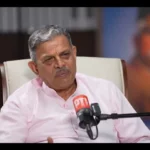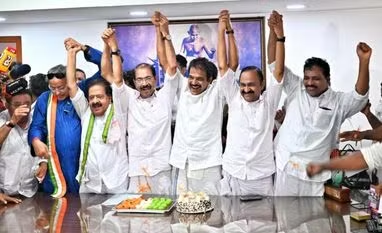
Veteran Congress leader K. C. Venugopal has emerged as the strongest contender for the post of Chief Minister of Kerala following the United Democratic Front (UDF)’s victory in the 2026 state assembly elections. According to party sources and reports cited by PTI, a majority of Congress MLAs in the state are backing Venugopal to take over the top post, setting the stage for a major internal political decision within the party.
The development has triggered intense discussions within the Congress leadership, as the party weighs multiple contenders for the Chief Minister’s position, including senior leaders V. D. Satheesan and Ramesh Chennithala. The decision is now expected to be taken by the party high command after consultations with key stakeholders.
UDF Victory Sets Stage for Leadership Battle
The Congress-led United Democratic Front (UDF) secured a decisive victory in the Kerala Assembly elections, winning a total of 102 seats and ending the Left Democratic Front (LDF)’s rule in the state. Within this tally, the Congress emerged as the single largest party with 63 seats, followed by allies such as the Indian Union Muslim League (IUML) with 22 seats and Kerala Congress with seven seats.
This electoral outcome has positioned the Congress as the central force in forming the new government, but it has also triggered an internal leadership contest over who will occupy the Chief Minister’s chair.
While the party’s victory was clear, the leadership selection process has become politically sensitive due to competing claims from senior leaders and regional power centers within the Kerala unit.
KC Venugopal’s Rise as Leading Contender
K. C. Venugopal, currently serving as the All India Congress Committee (AICC) general secretary, is widely regarded as one of the most influential organisational figures within the party. Known for his close association with senior leadership including Rahul Gandhi and Mallikarjun Kharge, Venugopal has played a key role in managing national-level party coordination and election strategy.
According to reports, a majority of the 63 Congress MLAs in Kerala are in favour of Venugopal being appointed as Chief Minister. His supporters argue that his organisational experience at the national level and his ability to manage internal party coordination make him a strong candidate for leading the state government.
Venugopal also belongs to the influential Nair community in Kerala, which adds a layer of social and electoral consideration to his candidature. Party insiders believe this factor may influence broader political calculations, especially in balancing caste and regional representation.
Competing Claims: Satheesan and Chennithala in Race
Despite Venugopal’s growing support, other senior leaders remain strong contenders for the Chief Minister’s post. V. D. Satheesan, who is considered a prominent public face of the Congress in Kerala, is seen by many within the party as a leader with strong mass appeal and administrative experience.
V. D. Satheesan has reportedly received significant public and organisational support, even though his backing among MLAs is believed to be comparatively lower than Venugopal’s.
Another key contender is Ramesh Chennithala, a veteran Congress leader with long-standing political experience in Kerala. Chennithala has also been mentioned as a possible consensus candidate due to his seniority and political stature.
Ramesh Chennithala has maintained that the decision should be taken through internal consultation and consensus-building, rather than confrontation or factional pressure.
Internal Factionalism and “Poster Politics”
The leadership race has led to visible factional activity within the Kerala Congress unit. Supporters of Venugopal, Satheesan, and Chennithala have reportedly engaged in poster campaigns and social media mobilisation to project their preferred leaders as the next Chief Minister.
This internal competition has created a charged political atmosphere within the party, forcing the leadership to intervene and urge restraint among workers and supporters.
Party officials have reportedly advised cadres to avoid public demonstrations of support for individual leaders, emphasizing the need to maintain unity after the electoral victory.
High Command Intervention and Consultations
The Congress high command has stepped in to manage the leadership selection process. Congress President Mallikarjun Kharge and senior leaders have already held consultations with key stakeholders from the Kerala unit, including Venugopal, Satheesan, Kerala Pradesh Congress Committee (KPCC) president Sunny Joseph, and Deepa Dasmunshi.
The objective of these discussions is to arrive at a consensus decision regarding the leader of the Congress Legislature Party (CLP), who is likely to become the next Chief Minister of Kerala.
The leadership has stressed that the decision will be based on collective agreement and organisational stability rather than individual lobbying or factional pressure.
Democratic Process Within Congress
Senior leaders have emphasized that the Congress party follows a democratic internal process for selecting leadership roles. Ramesh Chennithala has publicly stated that the party does not operate under external directives and that all stakeholders are being consulted before a final decision is made.
He further indicated that the high command will announce a decision soon after completing consultations, aiming to prevent further internal divisions.
This approach reflects the party’s attempt to balance competing interests while maintaining unity after a major electoral victory.
Political and Social Considerations in CM Selection
The selection of the next Chief Minister is not only a matter of internal party dynamics but also involves broader political and social considerations. Kerala’s political landscape is shaped by coalition politics, caste equations, regional representation, and public perception.
Venugopal’s strong organisational background and national-level influence make him a strategic choice for strengthening ties between the state government and the central leadership of the Congress.
At the same time, leaders like Satheesan and Chennithala are seen as strong regional faces with direct voter connect and legislative experience within Kerala politics.
Balancing these factors is expected to be a key challenge for the Congress high command.
Importance of Kerala for Congress Strategy
Kerala remains one of the most politically significant states for the Congress party in southern India. The UDF victory in the 2026 elections has provided a major boost to the party, which has been seeking to strengthen its position against both the Left Front and the Bharatiya Janata Party (BJP) in various states.
The choice of Chief Minister will therefore have long-term implications for the party’s organisational structure, electoral strategy, and governance model in the state.
A stable leadership decision is expected to play a crucial role in ensuring smooth governance and maintaining coalition unity within the UDF.
The emergence of K. C. Venugopal as the leading contender for the Kerala Chief Minister’s post marks the beginning of a crucial leadership decision for the Congress party following its UDF victory in the 2026 Assembly elections.
With strong competition from senior leaders like V. D. Satheesan and Ramesh Chennithala, the final decision now rests with the party high command, which is expected to announce its choice after internal consultations.
As Kerala prepares for a new government formation, the Congress party faces the dual challenge of maintaining internal unity while selecting a leader capable of steering the state through its next phase of governance.