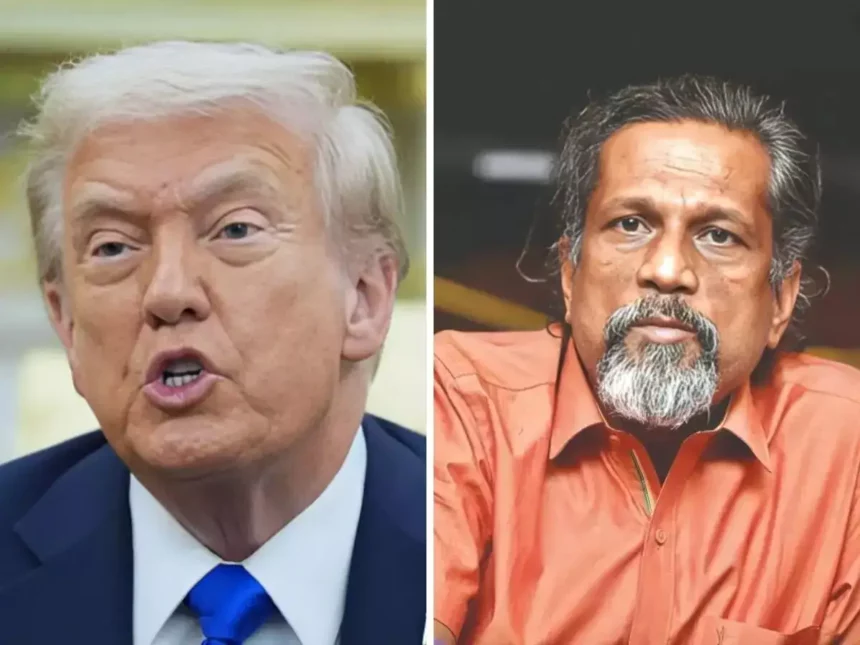
Concerns over India’s heavy dependence on American technology platforms escalated recently after RPG Group Chairman Harsh Goenka warned about a hypothetical ban by former US President Donald Trump on India’s access to major US tech services. Platforms like Google, ChatGPT, X, Instagram, and Facebook, which form the backbone of India’s digital ecosystem, could become inaccessible, raising alarms across the business, education, and innovation sectors. Harsh Goenka highlighted the urgency of exploring alternatives, while Zoho founder Sridhar Vembu emphasized the necessity of a long-term national strategy to ensure India’s tech self-reliance. The debate over digital sovereignty, swadeshi apps, and the country’s preparedness for tech contingencies has once again captured public and corporate attention.
Tech Dependence and the Call for a National Mission
Harsh Goenka’s warning resonated widely on social media when he posted, “Imagine if Trump bans India from using US tech platforms—no X, Google, Instagram, Facebook, or ChatGPT. Frightening, no! Just think about the consequences seriously and what could be Plan B for us.” This hypothetical scenario underscores India’s deep integration into global technology ecosystems, where dependency spans from communication platforms to cloud computing, artificial intelligence tools, and core infrastructure technologies.
Sridhar Vembu, commenting on Harsh Goenka’s post, highlighted that India’s tech dependence goes well beyond consumer-facing apps. According to Vembu, the country’s reliance extends to operating systems, semiconductor chips, fabrication units, and other critical technological infrastructure. He proposed a “10-year National Mission for Tech Resilience” to reduce dependency and build indigenous capabilities across hardware and software. Vembu emphasized that such a mission would not only address immediate vulnerabilities but also strengthen the country’s long-term competitiveness in global technology markets.
India’s current tech ecosystem is heavily influenced by US-based companies. From messaging services like WhatsApp to cloud infrastructure hosted on Google Cloud and Microsoft Azure, the digital backbone of Indian enterprises, government services, and personal communications relies substantially on American platforms. A sudden restriction would disrupt multiple sectors simultaneously, highlighting the importance of preparing a viable contingency plan, which Harsh Goenka referred to as “Plan B.” The discussion has ignited wider conversations about digital sovereignty, national security, and strategic self-reliance in technology.
Push for Swadeshi Apps and Indian Alternatives
The timing of this debate coincides with a growing push for Indian homegrown applications and platforms. Zoho, a pioneer in India’s enterprise software sector, has launched several applications that have gained considerable popularity in recent years. Zoho’s messaging app Arrattai and email platform Zoho Mail are increasingly being positioned as alternatives to WhatsApp and Gmail, respectively. Notably, several government officials, including Union Home Minister Amit Shah, have created Zoho Mail accounts to support domestic technology solutions.
Zoho’s efforts extend beyond these basic platforms. On October 1, 2025, the company unveiled Vani, an intelligent visual collaboration platform designed to rival Google Workspace. Vani allows distributed teams to collaborate and execute tasks in a shared digital space, emphasizing visual coordination and productivity. By fostering adoption of swadeshi platforms, companies like Zoho aim to reduce reliance on foreign technology, while simultaneously showcasing India’s capacity for creating world-class digital solutions.
Public reaction to Harsh Goenka’s warning has reflected a mix of concern, optimism, and skepticism. Several social media users emphasized the importance of building robust Indian alternatives to mitigate the risks of overdependence on foreign tech. One user wrote, “Waiting for the day when US tech companies start worrying about attracting top talent from India. The day it happens we will have real Independence. As you pointed out this problem cannot be looked at in isolation—supply chain dependencies are higher than automotive and pharma.” Another suggested a consortium of private enterprises collaborating with colleges and R&D labs to foster innovation, enabling youth to contribute to domestic technology initiatives while staying connected with local communities.
While the push for self-reliance garners support, there are skeptics who question the immediacy of such a threat. One social media commentator remarked, “I highly doubt this would ever happen, not in the next 10 years. Trump’s a businessman, not a fool to cut off America’s biggest tech market—India. India is the largest or second-largest market for nearly every U.S. tech giant. Tech independence is good, but this reasoning isn’t.” This view highlights the tension between theoretical risks and practical geopolitical realities, emphasizing that while self-reliance is desirable, sudden bans remain unlikely in the near term.
The conversation around tech sovereignty also touches on national security concerns. Heavy reliance on foreign platforms exposes India to vulnerabilities in data privacy, cybersecurity, and potential strategic manipulation. Indian enterprises and government institutions increasingly recognize the importance of data localization, domestic software development, and reducing reliance on foreign cloud and communication services. Advocates argue that a structured national initiative, as suggested by Vembu, would enable India to transition from dependency to resilience, ensuring continuity in the face of geopolitical uncertainties.
Moreover, this debate has catalyzed discussions around supply chain resilience. Beyond apps and digital platforms, India depends on foreign suppliers for semiconductors, operating systems, and specialized IT infrastructure. Vembu’s emphasis on addressing dependencies “beyond the app level” underscores the interconnectedness of the technology ecosystem, where vulnerabilities at one layer—such as chip manufacturing—can cascade into broader operational risks. A national mission would thus need to address multiple levels of the technology stack, from hardware to software, fostering domestic capabilities across the board.
The rise of Indian startups and technology firms presents an opportunity to reduce dependence on global tech giants. Companies like Zoho, Freshworks, Tally, and others have demonstrated India’s capacity to develop competitive alternatives. Government policies promoting domestic innovation, research grants, and financial incentives can further accelerate this transition, ensuring that India not only develops apps but builds entire technology ecosystems.
Educational institutions and research labs play a critical role in this process. By encouraging students and researchers to focus on domestic technology solutions, India can cultivate a skilled workforce capable of designing, developing, and deploying robust alternatives to global platforms. Collaboration between academia, industry, and government is seen as essential to achieving Vembu’s vision of a decade-long National Mission for Tech Resilience.
Another aspect of this discussion is the psychological and cultural impact of technological independence. By promoting swadeshi apps and indigenous platforms, India can foster a sense of pride in domestic innovation. This cultural shift can complement practical initiatives, encouraging wider adoption of Indian technologies and reducing the societal reliance on foreign platforms.
The debate also brings into focus the role of government policy. Strategic support, regulatory frameworks, and incentives are essential to ensure that domestic alternatives gain visibility and traction. Measures such as preferential procurement policies for government and public sector entities, tax benefits for technology startups, and international partnerships for knowledge transfer can accelerate the adoption of homegrown solutions.
In parallel, private sector leadership is crucial. Business leaders like Harsh Goenka and Sridhar Vembu are using their platforms to highlight vulnerabilities and advocate for national strategies. Their engagement underscores the importance of dialogue between corporate leaders, policymakers, and civil society in shaping India’s technological future.
At the consumer level, public awareness campaigns can educate users about the benefits of domestic platforms. By highlighting privacy, security, and cultural alignment, Indian tech firms can encourage citizens to transition from global platforms to local alternatives, gradually building a self-reliant digital ecosystem.
Furthermore, the ongoing debate intersects with global geopolitics. India’s position as a major market for US tech companies gives it leverage, but it also introduces vulnerabilities. By reducing dependency, India can negotiate from a position of strength, ensuring that its interests are safeguarded even in scenarios of international tensions or policy changes in other countries.
The hypothetical scenario of a US-imposed ban, while unlikely, has served as a wake-up call. It emphasizes the need for proactive planning, investment in domestic capabilities, and the creation of resilient technology infrastructure. By addressing dependencies at multiple levels—applications, infrastructure, and supply chains—India can minimize risks and ensure continuity across critical sectors.
Harsh Goenka’s warning and Vembu’s vision for a National Mission for Tech Resilience underscore the urgency of rethinking India’s approach to technological self-reliance. With a combination of government support, private sector leadership, public awareness, and academic collaboration, India has the potential to build a robust domestic ecosystem that can withstand geopolitical uncertainties while fostering innovation and economic growth.