India’s four-day Operation Sindoor against Pakistan in May was not just a bilateral confrontation but involved active backing from China and Turkey for Islamabad, senior Indian Army leadership has revealed, adding crucial details about the challenges India faced, the lessons learned, and the path forward for national defence preparedness.
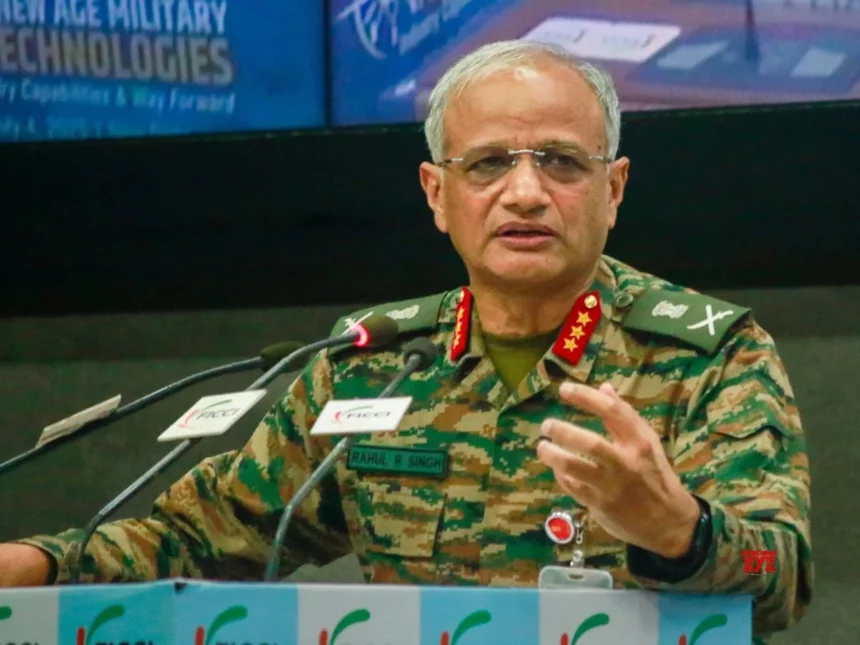
Lieutenant General Rahul R Singh, Deputy Chief of Army Staff (Capability Development and Sustenance), shared that China used the conflict as a “live lab” to test the performance of its weapons supplied to Pakistan while providing real-time intelligence to Islamabad on Indian weapon deployments. Turkey also supported Pakistan during the operation, notably with drone support and trained personnel, underscoring how India faced three adversaries in the confrontation.
China’s Role and Real-Time Intelligence Sharing
Operation Sindoor, launched on May 7, was India’s response to the brutal Pahalgam terror attack, with India targeting nine terror and military installations across Pakistan and Pakistan-occupied Kashmir (PoK). The operation led to four days of intense military exchanges involving fighter jets, drones, missiles, and heavy artillery before a ceasefire was reached on May 10.
Singh explained that China provided comprehensive support to Pakistan, including live intelligence feeds about India’s weapons positions. During Director General of Military Operations (DGMO)-level talks, Pakistani officials explicitly referenced India’s readiness for escalated action, a detail that highlighted China’s active intelligence-sharing role. Singh termed China’s strategy as “killing with a borrowed knife,” using Pakistan to test and challenge India without direct engagement.
The Indian Army observed Chinese-origin equipment in action, including J-10 and JF-17 fighter jets, PL-15 air-to-air missiles, and HQ-9 long-range air defence systems, marking their first known combat use. This allowed India’s air defence systems to gather valuable operational data on these systems, which Singh noted would be crucial for India’s future strategic planning.
Turkey’s Drone Support and Emerging Threats
Singh further detailed Turkey’s significant role in aiding Pakistan, particularly with the supply of Bayraktar drones and other unmanned systems during the conflict. Trained individuals accompanied these drone systems, indicating Turkey’s commitment to supporting Pakistan during the escalation.
While Pakistan did not target India’s population centres during the confrontation, Singh warned that future conflicts may witness such escalations, requiring India to enhance its air defence capabilities, counter-drone measures, and missile defence systems at a rapid pace to protect civilian areas and critical infrastructure.
The clarity of India’s strategic messaging during Operation Sindoor was another key point highlighted by Singh, noting that India made it clear to adversaries that crossing the red line would invite strong military retaliation. Singh indicated that the swift yet calibrated response and timely cessation of hostilities were deliberate choices to maintain escalation control while achieving strategic objectives.
Singh described the decision to end the operation at the right moment as a “masterstroke,” emphasising that while starting a conflict may be easy, controlling its trajectory is complex, and ending the operation after meeting India’s political-military objectives demonstrated strategic maturity.
Political Reactions and Strategic Outlook
Following these revelations, the Congress party demanded a detailed debate in Parliament on India-China relations, accusing the government of avoiding a comprehensive discussion on the geopolitical and economic challenges posed by China, especially in light of its support to Pakistan during Operation Sindoor.
Congress MP Jairam Ramesh highlighted Lt Gen Singh’s statements as evidence of China’s direct involvement in aiding Pakistan against India, reinforcing the opposition’s call for a national consensus on dealing with China’s challenges.
Operation Sindoor has thus emerged not only as a significant military event in the subcontinent but also as a key learning experience for India, underlining the need for continued vigilance, preparedness, and strategic clarity as India navigates the complex regional security environment shaped by the China-Pakistan nexus and emerging threats from supportive actors like Turkey.