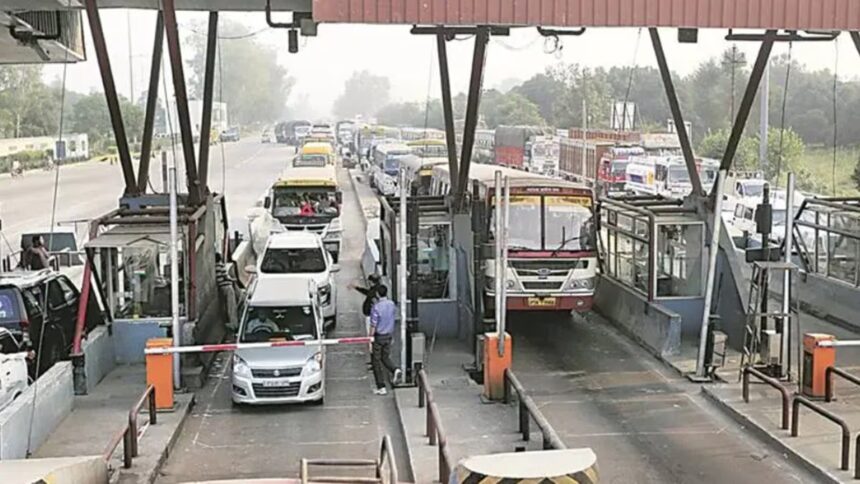
In a move set to ease the financial burden on commuters and encourage the use of national highways, the government has announced a significant reduction of up to 50% in toll rates on highway stretches featuring major structures like tunnels, bridges, flyovers, and elevated corridors. This change, officially notified by the Ministry of Road Transport and Highways on July 2, aims to rationalize toll collection while maintaining a fair balance between infrastructure recovery and affordability for road users.
The Ministry of Road Transport and Highways (MoRTH) has amended the National Highways Fee (Determination of Rates and Collection) Rules, 2008, introducing a revised formula that reduces the calculation of toll rates on stretches with heavy structural components. This long-awaited reform is expected to lower travel costs on key highway stretches across the country where structural complexities had led to high toll rates, often discouraging frequent use.
New Formula Will Halve Toll Costs on Fully Structured Stretches
Under the previous system, motorists were charged at a rate ten times higher per kilometre for sections with bridges, tunnels, or flyovers, due to the increased costs of construction and maintenance associated with these complex structures. However, the new formula has redefined the calculation of tolls, making it more affordable for daily and long-distance travellers.
According to the revised rules, the toll rate will now be calculated based on the lower of the following two:
Ten times the length of the structure(s) added to the rest of the highway section (excluding the structure length), or
Five times the total length of the entire section, including the structure(s).
The ministry illustrated this with an example of a 40-kilometre highway stretch that consists entirely of structures. Under the old system, the toll was calculated on 400 kilometres (10 x 40 km). Under the revised system, the toll will now be calculated on 200 kilometres (5 x 40 km), effectively reducing the cost by half for road users on such stretches.
A senior official from the National Highways Authority of India (NHAI) confirmed that this rationalization is intended to align toll rates with actual travel costs while ensuring that the infrastructure cost recovery remains sustainable.
Move to Encourage Highway Usage and Ease Commuter Burden
The updated rules define “structure” as any independent bridge, tunnel, flyover, or elevated highway, thereby covering a wide range of infrastructures where commuters have previously faced high toll costs. By reducing toll rates on these structures, the government seeks to encourage the greater use of national highways, which often provide safer and faster travel alternatives, while easing the financial burden on frequent travellers.
The ministry’s notification further clarifies that these changes will directly benefit motorists who regularly commute on highways with long flyovers, elevated corridors, and tunnels, which are essential for seamless traffic flow but have led to higher toll rates. The reduced rates are expected to make daily commutes more cost-effective, particularly in areas where such infrastructure is necessary to bypass congested city roads and reduce travel time.
Industry experts have noted that this step could improve traffic distribution across various routes, reducing congestion on alternative roads while making highways a more attractive option for logistics and passenger transport operators. With the lower toll rates, transport costs for essential goods may also see a marginal reduction, positively impacting the supply chain ecosystem.
The government’s decision aligns with its broader goal of promoting efficient, cost-effective road transport in India, ensuring that infrastructure development does not become a deterrent to its use by the common public and businesses relying on timely transportation.