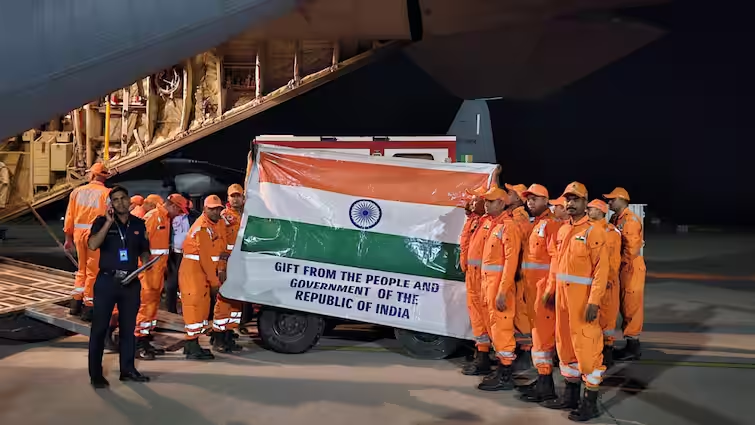
In the aftermath of the devastating earthquakes that struck Myanmar and Thailand on March 28 (Friday), India has swiftly mobilized humanitarian assistance under ‘Operation Brahma.’ The tremors, which caused widespread destruction and loss of life, left nearly 700 people dead and over 1,600 injured in Myanmar alone. In response, India dispatched a 15-tonne consignment of relief materials via an Indian Air Force cargo plane to Yangon.
The consignment includes essential supplies such as tents, blankets, sleeping bags, food packets, hygiene kits, solar lamps, generator sets, and medical supplies. India’s Ministry of External Affairs (MEA) confirmed that this is just the first phase of assistance, with more aid expected in the coming days. MEA spokesperson Randhir Jaiswal emphasized India’s commitment to supporting Myanmar during this difficult time, highlighting that the aid package contains vital medical essentials like paracetamol, antibiotics, syringes, gloves, cotton bandages, and urine bags. Prime Minister Narendra Modi expressed his deep concern for the affected areas and reiterated India’s readiness to offer all possible assistance. He instructed authorities to stay in close coordination with Myanmar and Thailand.
Devastation Across Myanmar and Thailand
The earthquakes, which struck near Sagaing in Myanmar, caused massive devastation, reducing buildings to rubble, cracking roads, and damaging vital infrastructure. The tremors also affected Thailand, where a 30-storey skyscraper under construction in Bangkok collapsed, causing multiple fatalities. Thai authorities confirmed eight deaths, with fears that the toll could rise as many individuals remain unaccounted for.
Myanmar’s military government has declared a state of emergency in the six most affected regions and has appealed for international aid. Reportedly, the death toll has jumped to approximately 700 and more casualties feared. Junta chief Min Aung Hlaing has urged global organizations and foreign governments to support the ongoing relief efforts. Countries, including the United States, have already expressed their readiness to assist Myanmar.
As emergency response teams work relentlessly in both Myanmar and Thailand, hospitals continue to be overwhelmed by the surge in casualties, while rescue teams clear debris and search for survivors. With Communications badly disrupted, the true scale of the disaster is yet to emerge from the isolated military-ruled state. The death toll is also expected to rise significantly.