In a defining moment for Indian cricket, the national women’s team scripted history by clinching their maiden ICC Women’s World Cup title, defeating South Africa by 52 runs in a thrilling final at the DY Patil Stadium in Navi Mumbai. The victory not only marked the team’s first-ever World Cup triumph but also ignited a wave of celebration across the country, symbolizing a new era for women’s cricket in India. Following the win, the Board of Control for Cricket in India (BCCI) announced a monumental cash reward of ₹51 crore for the players and support staff, acknowledging the historic achievement and its far-reaching impact on the sport’s growth and recognition.
BCCI’s Grand Announcement and Nationwide Celebrations
Soon after India’s triumphant finish, BCCI Secretary Devajit Saikia hailed the victory as a “monumental achievement” that would redefine the landscape of women’s cricket in the country. “The courage, consistency, and commitment shown by the team throughout the tournament have inspired millions. This World Cup win will serve as a turning point for Indian women’s cricket,” Saikia said while announcing the ₹51 crore cash prize to be distributed among the squad and support staff. The announcement was met with cheers and applause, as fans across the nation flooded social media with messages celebrating the team’s resilience and brilliance.
IPL Chairman Arun Dhumal also praised the women’s team, likening their accomplishment to India’s legendary 1983 men’s World Cup victory that transformed the nation’s cricketing culture. “It’s a red-letter day for Indian women’s cricket,” Dhumal said. “What the men’s team achieved in 1983, the Indian women have recreated today in Mumbai. This historic triumph will elevate women’s cricket to new heights and inspire countless young girls to dream big.”
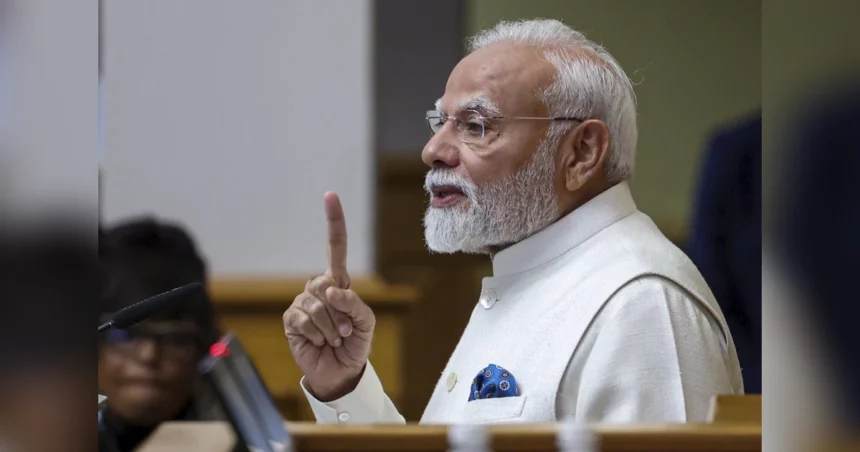
The electrifying scenes at DY Patil Stadium reflected the magnitude of the achievement. Thousands of fans cheered as the Indian players performed a victory lap, proudly carrying the tricolour. The stadium echoed with chants of “India, India” as Shafali Verma lifted the glittering trophy, surrounded by jubilant teammates. Across major cities, from Delhi to Chennai, buildings were lit up in tricolour hues, while congratulatory messages poured in from cricketers, celebrities, and political leaders. Prime Minister Narendra Modi lauded the team’s perseverance and teamwork, calling the win “a source of immense pride for every Indian.”
Dominant Batting Display and Spirited Bowling Seal India’s Triumph
India’s journey to the title was defined by fearless batting, disciplined bowling, and unyielding self-belief. In the final, skipper Harmanpreet Kaur opted to bat first after winning the toss, a decision that paid off handsomely as the team posted a commanding 298/7 on the board. Openers Smriti Mandhana and Shafali Verma provided a perfect start, stitching together a 100-run stand that laid the foundation for India’s innings. Mandhana’s fluent 45 complemented Verma’s aggressive stroke play as the duo dismantled the South African pace attack with precision and intent.
Shafali Verma’s blistering 87 off 91 balls became the centerpiece of India’s innings. The 20-year-old opener showcased maturity beyond her years, combining flair with patience as she pierced the field with exquisite drives and fearless lofted shots. Her innings not only anchored India’s top order but also set the tone for a formidable total. Deepti Sharma’s composed 58 in the middle order steadied the innings after a mini-collapse, while Richa Ghosh’s quickfire 34 added late momentum. Despite a few wickets falling in the final overs, India’s total of 298 was a challenging one on a dry surface offering some turn.
In response, South Africa began strongly, with openers Tazmin Brits and Laura Wolvaardt putting on a brisk 52-run partnership. Their confident start momentarily silenced the Indian supporters before Amanjot Kaur’s sharp direct hit from mid-off changed the course of the match, running out Brits for 28. That breakthrough shifted the momentum decisively in India’s favor.
Young pacer Sree Charani, playing her first World Cup final, made an immediate impact by trapping Anneke Bosch leg-before in her very first over. Her ability to swing the new ball and maintain discipline kept the South African batters under constant pressure. Shafali Verma, who had already starred with the bat, turned the match further in India’s favor with her part-time spin. She dismissed captain Sune Luus and the experienced Marizanne Kapp in quick succession, triggering a dramatic middle-order collapse.
The highlight of the bowling effort, however, was Deepti Sharma’s mesmerizing spell of 5 for 39. The all-rounder showcased her skill and temperament on the biggest stage, dismantling South Africa’s middle order with accuracy and flight. Her wickets of Nadine de Klerk and Chloe Tryon in successive overs virtually ended South Africa’s hopes of recovery. Despite Laura Wolvaardt’s resilient century (101 off 109 balls), the Proteas were eventually bowled out for 246 in 45.3 overs, handing India a memorable 52-run victory.
As the final wicket fell, players sprinted across the field in celebration, embracing each other with tears of joy and disbelief. For Harmanpreet Kaur, it was the culmination of years of effort and leadership. “This win belongs to every woman who has ever dreamed of playing cricket for India,” she said, her voice trembling with emotion during the post-match ceremony. “We wanted to prove that Indian women can achieve anything when given the platform and belief.”
BCCI President Roger Binny, in a congratulatory message, said the victory would mark a new dawn for Indian cricket. “Our women have shown the world that hard work, resilience, and teamwork can make dreams come true. The future of Indian cricket is brighter than ever,” he remarked.
The celebrations extended into the night as the players, support staff, and fans joined in singing the national anthem, with the World Cup trophy gleaming under the floodlights. It was a moment that transcended sport, reflecting decades of struggle, persistence, and eventual triumph for Indian women’s cricket.
The World Cup win was the result of a remarkable journey. Throughout the tournament, India displayed remarkable composure and consistency. They defeated Australia, England, and New Zealand in the group stages before edging out Sri Lanka in the semifinal. Each match revealed the team’s growing confidence and strategic brilliance under coach Amol Muzumdar’s guidance. The combination of youth and experience proved decisive, with young players like Richa Ghosh, Shafali Verma, and Renuka Thakur stepping up at crucial moments, supported by veterans such as Harmanpreet Kaur and Deepti Sharma.
The team’s success also reflected years of investment in women’s cricket by the BCCI. The introduction of the Women’s Premier League (WPL) in 2023 had provided young Indian players exposure to international standards and high-pressure situations. That experience was visible in the players’ calmness and tactical awareness during the World Cup campaign.
As India lifted the trophy, cricket pundits noted that the win could transform the women’s game in India just as the 1983 victory did for the men. Sponsorships, media attention, and grassroots development are expected to surge, creating more opportunities for aspiring female cricketers.
Former India captain Mithali Raj, who was present at the final as a commentator, described the victory as “the realization of a lifelong dream.” She said, “This generation of players has carried forward the foundation we laid and taken it to unimaginable heights. The entire country owes them gratitude for redefining Indian cricket.”
At the post-match presentation, Shafali Verma was named Player of the Match for her all-round brilliance, while Deepti Sharma received the Player of the Tournament award for her consistent performances with both bat and ball. Coach Amol Muzumdar praised the team’s unity and discipline, saying, “We built this victory on trust, preparation, and belief. Every player knew her role and delivered when it mattered most.”
By the time the celebrations reached their peak, it was evident that Indian women’s cricket had turned a historic corner. The victory was more than just a sporting triumph—it was a statement of empowerment and equality. The sight of packed stadiums, roaring crowds, and millions of viewers tuning in nationwide underscored how far women’s cricket had come.
As dawn broke over Mumbai the next morning, the images of the triumphant team holding the trophy were splashed across every newspaper and television screen in the country. For the millions of young girls watching, it was a vision of possibility—a reminder that dreams once deemed impossible were now within reach.
With the ₹51 crore reward serving as both recognition and motivation, India’s women cricketers now stand as torchbearers of a brighter, more inclusive cricketing future. Their World Cup win is not merely a historic achievement—it is the beginning of a new chapter in India’s sporting story, one that will inspire generations to come.