India and China are taking cautious yet deliberate steps towards stabilising their strained ties along the Line of Actual Control (LAC), with both sides reviewing the border situation in eastern Ladakh and preparing for the next Special Representatives (SR) dialogue, signalling a slow but steady effort to restore normalcy.
The discussions were held in New Delhi during a meeting of the Working Mechanism for Consultation and Coordination (WMCC), focusing on reviewing the current status along the LAC and the measures necessary to maintain peace and progress on pending border issues. The Ministry of External Affairs (MEA) highlighted that both countries expressed satisfaction with the “general prevalence of peace and tranquillity” in the border areas, which is seen as crucial for the gradual normalisation of India-China relations.
Groundwork for Next SR Talks
India and China agreed to continue diplomatic and military engagements through established mechanisms to advance effective border management and sustain peace along the sensitive border areas. The MEA stated that discussions were held on various measures previously explored during the 23rd round of SR talks to advance this objective. The Indian delegation was led by Gourangalal Das, Joint Secretary (East Asia) in the MEA, while the Chinese side was led by Hong Liang, Director General of the Boundary and Oceanic Affairs Department in China’s foreign ministry.
Hong Liang also met with Foreign Secretary Vikram Misri during his visit. The upcoming SR dialogue will see National Security Adviser Ajit Doval representing India, while Chinese Foreign Minister Wang Yi is expected to visit India to lead the Chinese delegation. The last SR dialogue was held in Beijing in December, and the next round in India is expected to focus on maintaining stability while addressing unresolved boundary issues.
Context of Easing Tensions and Challenges Ahead
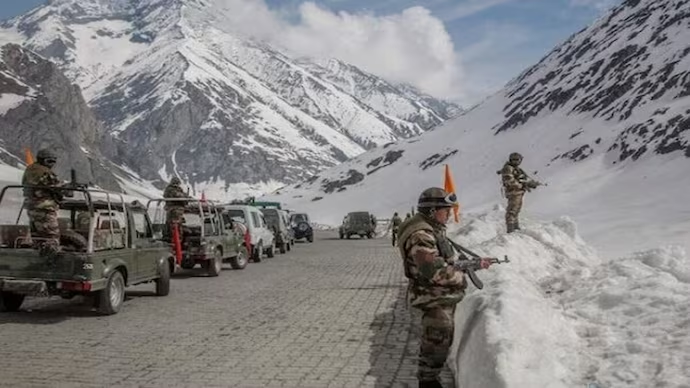
Over the past nine months, India and China have made progress towards normalising ties after ending the military face-off along the LAC, with the October disengagement agreement serving as a turning point. Although troops have disengaged from critical friction points, the de-escalation process, which involves the withdrawal of frontline forces from forward positions, is still pending. Currently, both nations have approximately 50,000 to 60,000 troops stationed along the LAC in eastern Ladakh.
The WMCC meeting followed External Affairs Minister S Jaishankar’s visit to China for the Shanghai Cooperation Organisation (SCO) foreign ministers’ conclave, indicating a multi-layered approach in India-China diplomatic efforts. The military standoff that began in May 2020 led to a deadly clash in the Galwan Valley, significantly straining ties between the two nations. However, the disengagement at Depsang and Demchok under the October 2024 agreement, finalised shortly after a meeting between Prime Minister Narendra Modi and President Xi Jinping in Kazan, Russia, paved the way for the revival of dialogue mechanisms.
The willingness of both sides to engage through structured diplomatic and military channels signals a shared understanding that stability along the LAC is essential for broader bilateral ties and regional stability. As India prepares to host the next SR dialogue, the progress made in recent months will be pivotal in shaping the trajectory of India-China relations, particularly in addressing legacy boundary challenges while managing the complex realities of regional security and economic cooperation.