India’s message of continuity and cooperation followed the sweeping victory of the Bangladesh Nationalist Party in national elections, a result that marked a defining turn for Bangladesh’s domestic politics and its regional relationships after a turbulent period of transition.
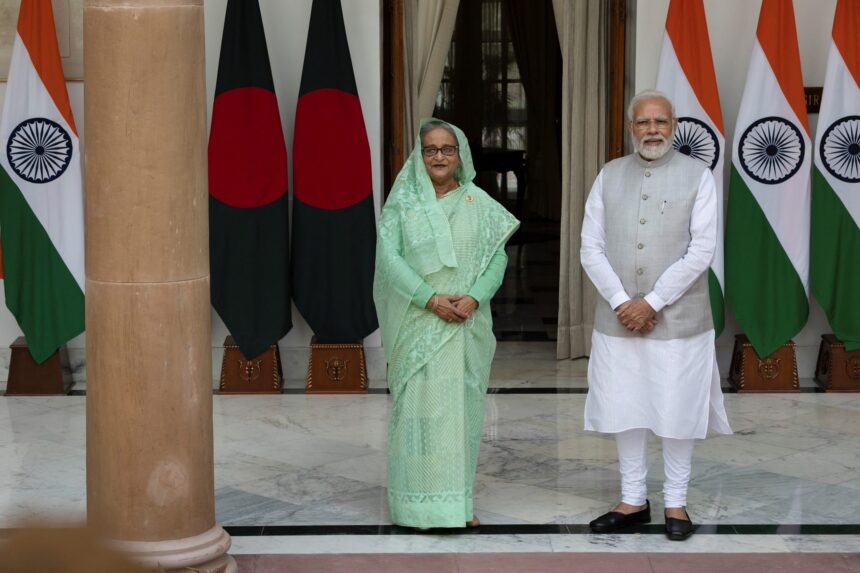
Narendra Modi publicly congratulated Tarique Rahman after the Bangladesh Nationalist Party emerged as the dominant force in the parliamentary polls. In a message shared on X, Modi described the outcome as a clear expression of public trust in Rahman’s leadership and underlined India’s readiness to work with the new dispensation to deepen bilateral cooperation. The statement carried broader significance, reflecting New Delhi’s intent to support institutional stability and democratic legitimacy in its eastern neighborhood at a time when regional geopolitics remain sensitive.
BNP’s Mandate and Bangladesh’s Political Reset
The BNP’s emphatic performance capped a dramatic electoral exercise, the first since the 2024 student-led uprising that brought an end to the long-standing administration of Sheikh Hasina. The vote was widely viewed as a referendum not only on governance and economic management but also on the broader direction of Bangladesh’s democratic institutions after months of uncertainty. As counting neared completion, the BNP and its allies secured a commanding majority, winning 177 seats, with results declared in 237 constituencies and counting still underway in the remaining 62.
This margin of victory provided the Rahman-led party with both numerical strength and political momentum. For BNP supporters, the outcome represented a return to competitive electoral politics and a chance to recalibrate state priorities around economic recovery, institutional accountability, and social cohesion. For critics, it posed questions about how the new leadership would manage polarization and reconcile competing expectations from a diverse electorate.
The elections unfolded against a backdrop of heightened public engagement. Voter participation reflected a population eager to restore political normalcy after the upheaval of 2024. Student groups, civil society organizations, and professional associations had played a prominent role in shaping the discourse leading up to the polls, demanding transparency, jobs, and responsive governance. The BNP campaign capitalized on these sentiments, framing its platform around economic revival, employment generation, and a recommitment to democratic processes.
The presence of other political forces underscored the pluralism of the contest. Jamaat-e-Islami and its allies secured 53 constituencies, emerging as a significant bloc in the new parliament. Their showing highlighted the continued influence of religiously oriented parties and the complexity of coalition arithmetic in Bangladeshi politics. While the BNP’s majority grants it governing authority, the composition of parliament suggests that negotiation and accommodation will remain integral to legislative functioning.
For Tarique Rahman, the victory carries personal and political weight. Long positioned as a central figure within the BNP, his leadership during the campaign emphasized organizational unity and outreach to younger voters. The scale of the win strengthens his hand as he prepares to shape policy and governance priorities. Yet it also raises expectations that the new administration will deliver tangible improvements in livelihoods and uphold democratic norms that voters rallied to defend.
India–Bangladesh Relations After the Vote
India’s prompt and carefully worded response to the election outcome signaled an intention to insulate bilateral relations from political change while endorsing democratic choice. Modi’s message stressed continuity in India’s support for Bangladesh’s democratic journey and expressed optimism about advancing shared development goals. Such language reflects New Delhi’s broader neighborhood policy, which prioritizes stability, economic integration, and people-to-people ties over partisan alignment.
Relations between India and Bangladesh have historically combined deep cultural connections with pragmatic cooperation on trade, connectivity, energy, and security. Over the past decade, cross-border infrastructure projects, power-sharing agreements, and transit arrangements have expanded economic interdependence. The change in political leadership in Dhaka introduces a new dynamic, but India’s outreach suggests confidence that institutional frameworks can sustain collaboration.
From a regional perspective, Bangladesh’s stability holds strategic importance. Its geographic position makes it a linchpin for connectivity between South and Southeast Asia, while its growing economy offers opportunities for trade and investment. India’s emphasis on an “inclusive” Bangladesh resonates with concerns about social harmony and minority rights, issues that attract international attention and can influence diplomatic engagement.
The BNP leadership now faces the task of translating electoral legitimacy into effective governance while navigating complex external relationships. India will be a critical partner in this process, particularly on issues such as border management, water-sharing arrangements, and regional supply chains. Modi’s assurance of cooperation can be read as an invitation to maintain dialogue and avoid disruptions that could unsettle economic and security interests on both sides.
At the same time, the evolving political context in Bangladesh will be closely watched by regional and global actors. The post-election environment offers an opportunity for Dhaka to reassert its role as a stable democratic state after a period of unrest. How the new government balances domestic reform with foreign policy continuity will shape perceptions well beyond South Asia.
India’s response underscores a broader principle that democratic transitions, when grounded in popular mandate, should be supported rather than questioned. By congratulating Rahman and emphasizing shared goals, New Delhi positioned itself as a partner willing to engage constructively with Bangladesh’s new leadership. The coming months will test how this intent translates into policy coordination, economic cooperation, and diplomatic trust as Bangladesh embarks on its next political chapter.