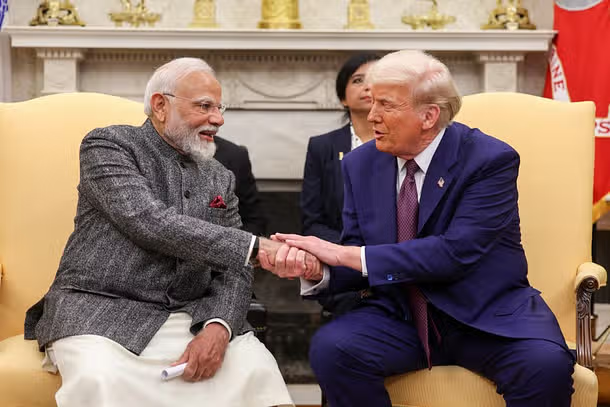
India and the United States have inched closer to finalizing a long-anticipated interim trade deal after a series of high-level closed-door meetings in New Delhi. The talks, which lasted four days and concluded on Tuesday, focused on reducing trade barriers, expanding market access, and laying the groundwork for a broader agreement that could significantly boost bilateral trade—from the current $190 billion to $500 billion by 2030.
Key Areas of Progress
Top American negotiators from the Office of the US Trade Representative met with their Indian counterparts led by Rajesh Agrawal from the Ministry of Commerce. The discussions aimed at improving trade conditions for both countries, with early wins in areas like digital trade and customs facilitation measures. A government source described the talks as “productive,” and said both sides are preparing to finalize the first phase of the trade pact in the coming weeks.
Officials familiar with the matter revealed that India showed resistance to US demands for opening its markets to wheat, dairy, and corn imports. However, India did offer tariff concessions on premium American goods like almonds, pistachios, and walnuts. In return, New Delhi asked Washington to lift the 10% baseline tariff imposed by US President Donald Trump under national emergency provisions—though US negotiators rejected the request, pointing out that the same tariff was applied even to Britain in its bilateral trade pact.
Tariffs, Energy, and Defense on the Table
India also raised concerns over the steep 50% tariff on steel imposed by the US, requesting exemption. On a more cooperative front, India indicated its willingness to increase imports of American energy products, including liquefied natural gas (LNG), crude oil, and coal, and expressed interest in procuring US defense equipment.
The two nations are aiming to sign the interim deal later this month, potentially during the G7 Summit in Canada, where Prime Minister Narendra Modi and US President Donald Trump are expected to meet. Donald Trump, currently facing criticism over his rapid tariff policy shifts, is reportedly eager to finalize a deal with India before the expiration of a 90-day tariff pause that could otherwise affect Indian exports of textiles, shrimp, rice, and footwear.
While Commerce Minister Piyush Goyal was negotiating a separate trade pact with the European Union in Switzerland, officials in New Delhi indicated that India is open to a phased approach—signing an interim deal now and revisiting complex issues for negotiation in September or October.