In a strong signal of diplomatic resilience and long-term partnership, India and Russia have reaffirmed their commitment to deepen bilateral defence cooperation, even as the United States, under President Donald Trump, threatens punitive sanctions against New Delhi for its ongoing oil trade with Moscow. This renewed pledge for stronger military ties underscores both countries’ strategic priorities amid an increasingly polarized global landscape.
Indian Ambassador to Russia Vinay Kumar met with Russia’s Deputy Defence Minister, Colonel-General Alexander Fomin, to discuss the current and future trajectory of defence relations between the two nations. The meeting, held in a characteristically “warm and friendly” environment, reflected the deep-rooted historical ties between India and Russia, particularly in the realm of defence.
Defence Cooperation Steadfast Amid Global Pressures
The conversation between the two leaders centered around detailed discussions on mutual interests in defence, reaffirming the longstanding strategic partnership between the two nations. Both sides reiterated their intent to strengthen cooperation further, reinforcing their shared commitment to technological collaboration, joint production, and capacity building in the defence sector.
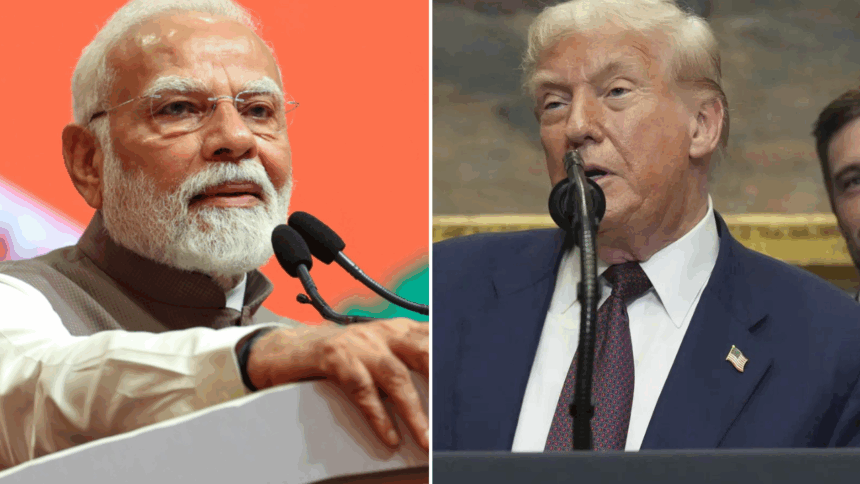
This development comes at a time when global geopolitical alignments are shifting, and countries are being increasingly pressured to choose sides. President Trump’s administration has been vocally critical of India’s crude oil imports from Russia, threatening to impose severe economic sanctions if India continues to engage with Moscow in defiance of Western-led restrictions.
However, India has remained steadfast in defending its energy needs and sovereign decision-making. New Delhi maintains that its trade with Russia, particularly in the oil and defence sectors, is governed by national interest and not external influence. India has consistently emphasized its independent foreign policy, asserting that no country should dictate whom it can or cannot do business with, especially when it comes to crucial national security requirements.
Longstanding Military Partnership with Strategic Depth
Russia has been one of India’s most reliable defence partners for decades. From the supply of advanced fighter jets and submarines to missile systems and joint research ventures, Moscow has played a pivotal role in strengthening India’s military capabilities. This historical relationship was further deepened with landmark agreements on platforms like the S-400 missile defence system and the BrahMos missile project, co-developed by India and Russia.
The current meeting between Kumar and Fomin appears to be an affirmation of that legacy, reiterating a commitment to continue this cooperation despite mounting international pressure. Both nations appear focused on not only preserving past agreements but also expanding into newer areas of strategic and tactical defence cooperation, including cyber security, space defence, and artificial intelligence in military applications.
It is notable that the Russian Ministry of Defence described the meeting as one held in a “warm and friendly atmosphere,” underlining the political will on both sides to rise above temporary diplomatic turbulence. The spirit of “particularly privileged strategic partnership” mentioned in the Russian statement encapsulates the mutual trust that has defined the relationship over the decades.
This episode also reflects India’s broader strategy to maintain a multi-aligned foreign policy, one where strategic autonomy remains at the core. Even while deepening ties with Western nations, especially the US in areas like trade and technology, India continues to nurture historic relationships that align with its national interests.
President Trump’s latest threat to sanction India, aimed at dissuading oil purchases from Russia, stands in stark contrast to the actual trade patterns of many Western countries. Despite publicly denouncing Russia and enforcing economic sanctions, several Western powers, including members of the European Union, continue to engage in multi-billion-dollar energy trade with Moscow. This perceived double standard has not gone unnoticed in Indian diplomatic circles.
In this context, India’s defence collaboration with Russia becomes not just a matter of bilateral cooperation but also a statement of diplomatic independence and global posture. It illustrates India’s ability to balance complex international relationships while securing its strategic interests.
As tensions around Russia and the West continue to mount, India is likely to play an increasingly crucial role as a mediator and a stabilizing force. Its relationships with major powers across ideological divides, including the US, Russia, and European countries, position it uniquely in the global arena. The reaffirmation of defence ties with Russia is another step in this intricate balancing act.
The meeting between Kumar and Fomin is a reminder that despite short-term disruptions and global uncertainty, India-Russia relations remain anchored in mutual respect and shared strategic goals. Both nations are navigating a complex world order, but their partnership continues to evolve with clarity and confidence.