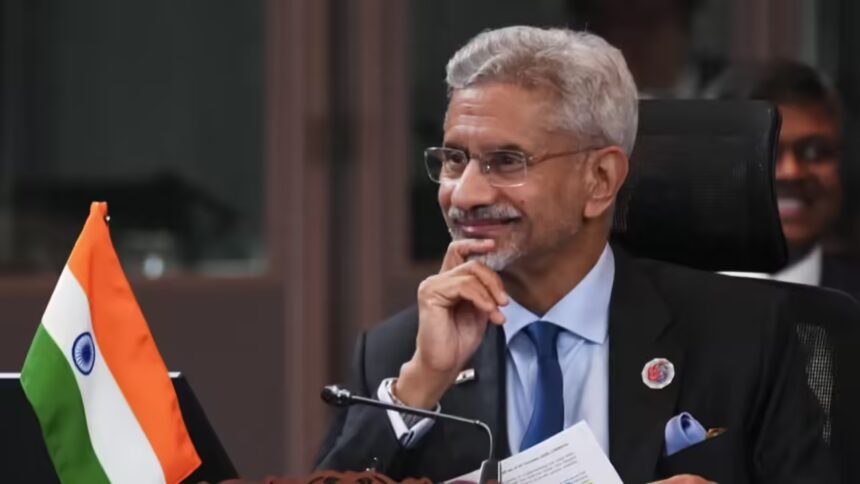
In a significant step toward reinforcing their growing strategic partnership, India and Israel have pledged to deepen bilateral cooperation across multiple sectors, including counterterrorism, trade, and regional connectivity. During talks between India’s External Affairs Minister S. Jaishankar and Israeli Foreign Minister Gideon Sa’ar in New Delhi, both sides reaffirmed their shared commitment to combating terrorism, supporting the Gaza peace process, and expanding collaboration through projects like the India-Middle East-Europe Economic Corridor (IMEC). The meeting underscored the evolving depth of India-Israel relations and the mutual understanding that continues to strengthen diplomatic and strategic ties between the two nations.
India Backs Gaza Peace Plan and Reaffirms Commitment to Lasting Stability
India reiterated its support for the Gaza peace plan, emphasizing the need for a sustainable and enduring resolution to the long-standing conflict in the region. Minister Jaishankar expressed optimism that the plan would lead to stability and humanitarian relief in the war-torn area. Referring to recent developments in West Asia, he noted that India has been closely observing the situation and continues to uphold its stance on dialogue, peace, and respect for human lives.
Jaishankar also welcomed the return of Israeli hostages and the remains of victims killed in Hamas’ attacks in October 2023, underlining India’s firm condemnation of terrorism in all forms. He stated that the peace initiative must pave the way for a durable framework, ensuring that violence does not resurface.
Israel’s foreign minister Gideon Sa’ar, on his first visit to India, echoed these sentiments while describing Israel’s ongoing challenges with “radical terror states” like Hamas in Gaza, Hezbollah in Lebanon, and Houthis in Yemen. He asserted that dismantling these terror networks is essential for regional peace and security. “The eradication of Hamas’ terrorist state is at the heart of our policy. Hamas must be disarmed, Gaza must be demilitarized, and we will not compromise on it,” Sa’ar declared.
The Israeli leader acknowledged India’s consistent position on counterterrorism and appreciated Prime Minister Narendra Modi’s solidarity following the October 7 Hamas attacks. Sa’ar recalled that Modi was the first world leader to reach out to Prime Minister Benjamin Netanyahu after the tragic incident, a gesture that strengthened diplomatic goodwill between the two countries.
The peace efforts gained momentum after Israel and Hamas agreed to the first phase of the US-backed 20-point peace plan, which included a ceasefire and the exchange of captives and prisoners. Although it brought temporary relief, the humanitarian toll of the conflict remained staggering, with over 67,000 Palestinians, including 20,000 children, losing their lives in Israeli offensives over two years. The international community, including India, now looks toward implementing the next phase of the peace plan to restore lasting calm in Gaza and beyond.
Jaishankar emphasized that India stands for a “zero tolerance” approach to terrorism, urging global cooperation to counter extremist ideologies. He noted that both India and Israel have faced the devastating consequences of terrorism and must lead by example in ensuring that no space is given to violent actors. The meeting also included discussions on improving intelligence sharing, border security technologies, and cyber defense collaborations.
Expanding Economic, Technological, and Mobility Cooperation
Beyond counterterrorism and peace initiatives, the meeting between Jaishankar and Sa’ar focused on expanding bilateral cooperation in trade, technology, and connectivity. Both sides reviewed progress under the India-Middle East-Europe Economic Corridor (IMEC), a flagship initiative that aims to enhance regional trade and logistics by linking India to Europe through West Asia. Sa’ar noted that Israel strongly supports regional connectivity projects such as IMEC and I2U2, which could transform the economic landscape of Asia and Europe. “We want to promote connectivity between South Asia, West Asia, and Europe,” he said, describing India as “the future” of global economic growth.
Jaishankar highlighted the significant opportunities for collaboration in innovation, renewable energy, agriculture, semiconductors, and cybersecurity. He pointed out that India’s growing capabilities in rail, road, port infrastructure, and renewable technologies offer immense potential for partnership with Israel’s high-tech expertise. Both ministers agreed to accelerate joint projects in emerging sectors like artificial intelligence, digital security, and water management.
A notable development during the dialogue was the discussion on the increasing number of Indian workers in Israel. Currently, around 40,000 Indians are employed in the country, primarily in caregiving and construction sectors. Jaishankar acknowledged their contribution to Israel’s workforce and mentioned that certain issues affecting them would be addressed through bilateral coordination. He expressed hope that the mobility framework between both nations would be expanded to facilitate smoother employment and residency procedures for Indian workers.
The two sides also reviewed the implementation of the bilateral investment agreement signed in September between India’s finance minister Nirmala Sitharaman and Israeli finance minister Bezalel Smotrich. This agreement is expected to unlock greater capital flow and business collaboration, especially in technology startups, renewable energy, and defense industries. Both countries see innovation as a key driver of their partnership, and initiatives like the India-Israel Innovation Bridge continue to play a pivotal role in connecting entrepreneurs and researchers from both nations.
Sa’ar commended India’s remarkable economic growth and technological advancements, observing that Israel views India as a reliable partner in regional stability and development. He also reaffirmed Israel’s interest in participating in the upcoming AI Impact Summit in India, scheduled for February next year, where the two nations are expected to showcase joint innovations in artificial intelligence and data-driven technology.
The ministers finalized a memorandum of understanding (MoU) between the Sushma Swaraj Institute of Foreign Service and Israel’s Foreign Ministry, aimed at enhancing diplomatic training and professional exchange programs. The MoU is expected to deepen institutional collaboration and strengthen the foundations of people-to-people contact between the two countries.
Jaishankar emphasized that the India-Israel strategic partnership is built on “trust, reliability, and shared democratic values.” He remarked that the two nations have consistently supported each other in challenging times, reflecting a deep sense of mutual respect and understanding. Over the years, India and Israel have transformed their relationship from a primarily defense-oriented cooperation into a comprehensive partnership covering innovation, technology, agriculture, education, and people-to-people ties.
Sa’ar, on his part, reiterated that Israel considers India a crucial partner in shaping the geopolitical and economic future of Asia and the Middle East. He said the collaboration between the two countries extends beyond diplomacy and defense — it represents a vision of shared prosperity, resilience, and peace.
As both nations move forward, the emphasis remains on strengthening their cooperation in counterterrorism, promoting regional stability through peace initiatives, and leveraging technology and innovation to create sustainable development pathways. The meeting in New Delhi thus symbolized not only the continuation of a strong diplomatic alliance but also the growing convergence of two democracies determined to contribute to a more stable and connected world.