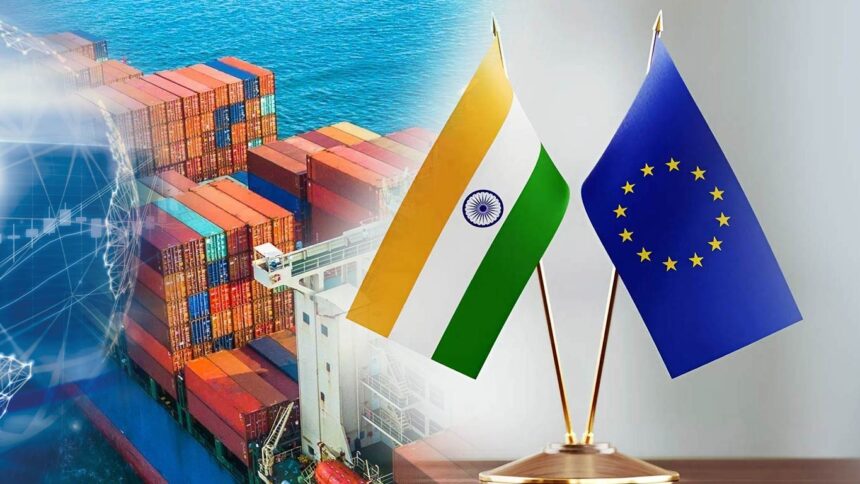
India and the European Union (EU) are set to resume negotiations on a long-awaited Free Trade Agreement (FTA) on Monday as they enter the 10th round of discussions. Both sides are working with a renewed sense of urgency, having received clear directives from their top leadership to finalize the trade pact by the end of this year. The resumption of talks comes at a crucial juncture, as global trade dynamics continue to shift due to rising protectionism and new tariff threats from the United States under the potential return of Donald Trump to the White House.
Despite multiple rounds of discussions over the years, several key issues have hindered progress in finalizing the agreement. These include differences over market access, intellectual property rights, sustainable trade policies, and labor standards. However, trade analysts believe that evolving global trade conditions, India’s changing stance on import duties as reflected in the latest budget, and the EU’s willingness to be flexible on carbon tax policies could pave the way for significant breakthroughs in this round of negotiations.
The urgency surrounding the FTA discussions has been heightened by the broader global economic landscape. With Trump’s potential return to power in the U.S., there are concerns about a more aggressive trade policy that could disrupt international supply chains. The EU, facing economic uncertainties of its own, is keen on securing a strong trade partnership with India to diversify its trade relations and reduce dependency on the U.S. and China. Similarly, India sees the EU as a crucial partner in its efforts to expand export markets, attract investment, and integrate further into global trade networks.
A key point of contention in previous negotiations has been the EU’s proposed carbon border adjustment mechanism (CBAM), which imposes levies on carbon-intensive imports. Indian industries, particularly in steel and aluminum sectors, have raised concerns over the impact of this tax. However, recent signals from the EU suggest a willingness to adopt a more flexible approach in its implementation, potentially easing India’s concerns and helping to advance discussions.
Another major factor influencing the talks is India’s evolving trade policy. The Indian government has adopted a more assertive approach towards import duties, as reflected in its latest budget measures aimed at promoting domestic manufacturing. While this stance has raised concerns among trading partners, it is expected that India will leverage the FTA negotiations to strike a balance between protecting its domestic industries and gaining better access to European markets.
Both sides are expected to engage in intense discussions over the next few days, with negotiators working towards resolving outstanding differences and identifying areas of mutual benefit. If successful, the India-EU FTA would mark a significant milestone in global trade, enhancing economic cooperation between two of the world’s largest economies. A finalized agreement would not only boost trade and investment flows but also strengthen diplomatic and geopolitical ties between India and the EU in an increasingly uncertain global environment.
As talks progress, the outcome of this round will be closely watched by industry leaders, policymakers, and global investors. A breakthrough in negotiations could set the stage for one of the most comprehensive trade agreements in India’s history, shaping its economic trajectory for years to come.