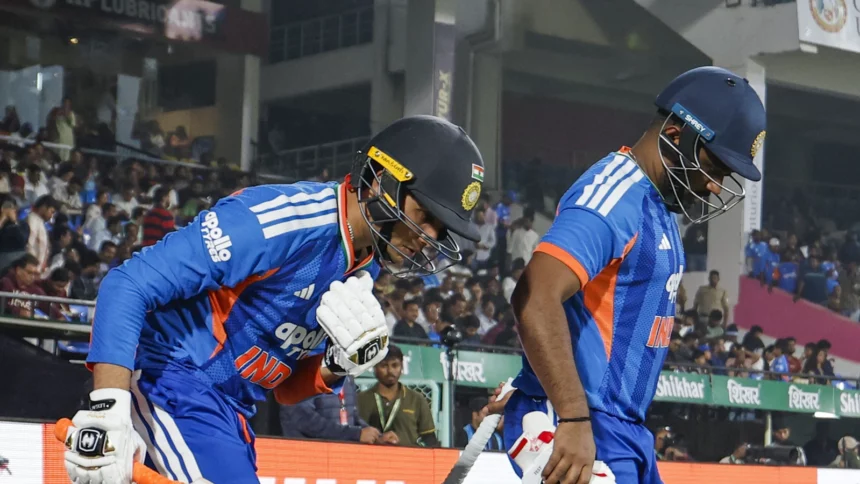
The much-anticipated fifth and final T20I of the ongoing India–New Zealand multi-format series is set to be played at the Greenfield International Stadium in Thiruvananthapuram on Saturday evening. Fans, players, and team management are closely monitoring weather conditions as any disruption could affect the outcome of the series finale. While initial fears of rain threatening the match had circulated, recent forecasts indicate minimal chances of rainfall during match hours, suggesting the possibility of a full 20-over contest. However, other environmental factors such as high humidity and potential dew in the latter part of the evening could still influence match strategies and player performance. This final encounter not only represents a competitive conclusion to the series but also carries immense importance for the Indian team seeking redemption after a disappointing loss in the previous T20I.
Weather Conditions and Impact on Play:
Thiruvananthapuram in January exhibits characteristic coastal weather marked by relatively high humidity levels, even in the absence of significant rainfall. Meteorological data suggests that temperatures during the evening match will likely hover between the mid-20s and low 30s Celsius, with partly cloudy skies adding to the atmospheric conditions. For cricket teams, such conditions carry tactical implications. While rain appears unlikely, humidity and dew present factors that could affect ball handling, pitch behavior, and the pace of the game, especially under floodlights. Historically, matches at the Greenfield International Stadium have demonstrated that dew formation in the second innings can make the ball slippery, giving an advantage to the chasing side. This factor requires teams to adapt their bowling strategies, possibly favoring spin over pace or altering field placements to minimize risks of slipping and misfielding. Additionally, dew can also affect batting, making it challenging for bowlers to grip the ball but potentially easing shot execution for batsmen if timed correctly.
The forecast suggests that while light clouds may linger, rain is unlikely during the scheduled match hours. Weather agencies have indicated that rainfall probabilities are minimal until late evening, with showers expected only after the upcoming week. For fans, this provides reassurance that the spectacle of cricket is unlikely to be interrupted, although the humid conditions typical of Kerala in January may affect stamina and performance. Teams have prepared for these conditions by factoring in hydration breaks, adjusting batting orders, and planning bowling spells to mitigate the challenges posed by moisture-laden air. For captains and coaching staff, understanding the interplay between temperature, humidity, and dew becomes essential to making tactical decisions that could determine the match outcome.
Match Excitement, Home Advantage, and Strategic Considerations:
The final T20I carries heightened excitement in Thiruvananthapuram, as local favorite Sanju Samson takes the field in front of a passionate home crowd. The atmosphere is expected to be electric, with thousands of supporters attending the match to cheer for the Indian team. Following a demoralizing loss in the fourth T20I, India aims to conclude the series on a strong note, making every strategic decision critical. The Greenfield pitch has historically offered assistance to both bowlers and batsmen depending on match conditions, often favoring disciplined bowling in early overs and encouraging stroke play under favorable conditions. With weather conditions indicating minimal rain disruption, teams can focus on utilizing pitch behavior and environmental factors to their advantage.
Dew is expected to play a pivotal role, particularly during the second innings, influencing team tactics. Bowlers may find it challenging to maintain grip and control, while batsmen may benefit from smoother stroke execution if the ball skids off the pitch. Captains must assess these variables when deciding whether to bat or field first. A team choosing to field first may benefit from exploiting early seam movement, knowing that dew will favor batting later on. Conversely, batting first allows teams to set a target before conditions potentially favor the chasing side. Coaches and analysts will likely emphasize strategic adjustments, including bowling variations, defensive field placements, and pacing batting innings to counter environmental challenges. The interplay between local weather, pitch behavior, and team strategy is expected to be a defining factor in the series finale.
The ongoing series has highlighted competitive intensity between India and New Zealand, with both teams exhibiting tactical depth and adaptability in previous matches. While the previous T20I saw India faltering under pressure, the home crowd and familiar conditions offer renewed motivation to recover and assert dominance. New Zealand, on the other hand, will aim to capitalize on momentum from previous games, balancing aggressive batting with controlled bowling strategies to adapt to Thiruvananthapuram’s unique conditions. Both sides will have to carefully manage player fitness and rotation given the humid environment, ensuring key players are able to perform optimally throughout the evening. Coaching staff will monitor pitch and weather developments continuously, ready to make real-time adjustments to field settings, batting orders, and bowling rotations.
Spectators and television audiences alike are eager to witness a competitive showdown, with the low likelihood of rain allowing for uninterrupted cricketing action. While environmental factors such as dew may influence outcomes, the focus remains on team performance, player execution, and tactical decisions. The final T20I serves as an opportunity for emerging players to showcase skill under pressure, for senior players to demonstrate leadership, and for the Indian team to reaffirm resilience following a series setback. Analysts and commentators are likely to emphasize the strategic implications of weather and dew, highlighting how subtle adjustments can determine victories in high-stakes T20 cricket.
The match also carries broader implications for cricket strategy in coastal regions, where temperature, humidity, and late-evening dew can significantly impact play. Teams often adapt by adjusting bowling lengths, rotation patterns, and powerplay tactics. Batsmen are advised to modify shot selection and pace according to ball behavior, particularly under lights. Fielding units are required to remain vigilant, as slippery conditions increase the risk of misfields and dropped catches. Coaches may implement additional drills in training sessions to simulate expected conditions, ensuring players are well-prepared for every possible scenario. The culmination of strategic preparation, combined with fan support and favorable, if humid, weather, sets the stage for a thrilling finale at the Greenfield International Stadium.
As the evening approaches on match day, local organizers are likely to coordinate with meteorologists and stadium officials to ensure that the game proceeds without interruptions, considering dew management, floodlight adjustments, and contingency planning. For fans planning to attend, adherence to stadium guidelines, timely arrival, and awareness of parking and seating arrangements will contribute to a smoother match experience. The city’s transport and law enforcement agencies have also likely prepared for increased traffic and crowd management, reflecting the scale of attention that a high-profile T20I attracts. With preparations in place and weather forecasts indicating low rain risk, all eyes will be on the pitch as India and New Zealand contest the series finale in Thiruvananthapuram.