
• English
  • Hindi
  • Punjabi
  • Marathi
  • German
  • Gujarati
  • Urdu
  • Telugu
  • Bengali
  • Kannada
  • Odia
  • Assamese
  • Nepali
  • Spanish
  • French
  • Japanese
  • Arabic
  • Home
  • Noida
  • National
    • BulletsIn
    • cliQ Explainer
    • Government Policy
    • New India
  • International
    • Middle East
    • Foreign
  • Entertainment
  • Business
    • Tender News
  • Sports
    • IPL2025
  • Services
    • Lifestyle
    • How To
    • Spiritual
      • Festival and Culture
    • Tech
Notification
  • Home
  • Noida
  • National
    • BulletsIn
    • cliQ Explainer
    • Government Policy
    • New India
  • International
    • Middle East
    • Foreign
  • Entertainment
  • Business
    • Tender News
  • Sports
    • IPL2025
  • Services
    • Lifestyle
    • How To
    • Spiritual
      • Festival and Culture
    • Tech
  • Home
  • Noida
  • National
    • BulletsIn
    • cliQ Explainer
    • Government Policy
    • New India
  • International
    • Middle East
    • Foreign
  • Entertainment
  • Business
    • Tender News
  • Sports
    • IPL2025
  • Services
    • Lifestyle
    • How To
    • Spiritual
      • Festival and Culture
    • Tech
  • Noida
  • National
  • International
  • Entertainment
  • Business
  • Sports
CliQ INDIA > National > How India’s underground oil caverns act as a strategic buffer against global crude supply shocks ? | cliQ Latest
National

How India’s underground oil caverns act as a strategic buffer against global crude supply shocks ? | cliQ Latest

As geopolitical tensions rise in the Middle East, particularly around the Strait of Hormuz, India is relying on a multi-layered strategy to protect itself from oil supply disruptions and price shocks.

cliQ India
cliQ India
Share
4 Min Read
SHARE
Highlights
  • Strategic reserves can sustain India during global supply disruptions.
  • India stores crude oil in underground caverns for emergencies.

As geopolitical tensions rise in the Middle East, particularly around the Strait of Hormuz, India is relying on a multi-layered strategy to protect itself from oil supply disruptions and price shocks. Central to this plan are vast underground rock caverns that house India’s Strategic Petroleum Reserves (SPR), functioning as the country’s emergency oil buffer. This infrastructure, combined with diversified crude import sources, places India in a relatively secure position despite global uncertainties.

India’s Dependence on Imports and Global Volatility

India is the world’s third-largest importer and consumer of crude oil, depending on external sources for around 80% of its needs. A large portion of this oil passes through the Strait of Hormuz—a narrow, 33-kilometre-wide chokepoint vital for global energy supply. Rising tensions between Iran, Israel, and the United States have stoked fears of a potential blockage, which could send oil prices soaring and disrupt global supply lines. Already, benchmark prices like Brent crude and West Texas Intermediate (WTI) have reacted to the uncertainty.

However, India has been proactive. Petroleum Minister Hardeep Singh Puri has emphasized the country’s diversified sourcing strategy, which now includes supplies from the US, Brazil, Nigeria, and Angola. India also continues to import from Russia despite Western sanctions. As a result, reliance on West Asian nations like Saudi Arabia and Iraq has reduced slightly, giving India more flexibility.

Strategic Petroleum Reserves: India’s Energy Insurance Policy

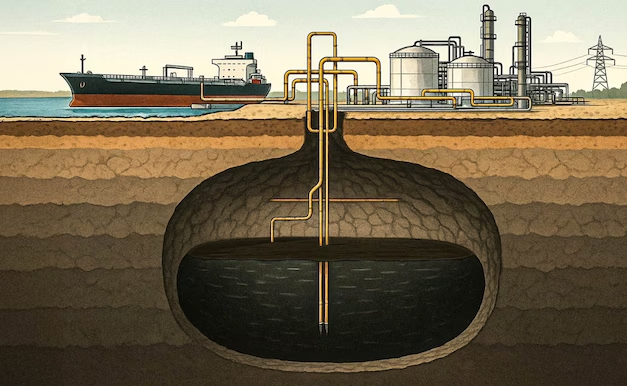
India’s most effective safeguard, however, lies beneath the ground—literally. The Strategic Petroleum Reserves (SPR), managed by Indian Strategic Petroleum Reserves Limited (ISPRL), are stored in massive rock caverns located in Visakhapatnam (Andhra Pradesh), Mangalore (Karnataka), and Padur (Tamil Nadu). Built around 90 meters below the surface, these caverns are nearly a kilometer in length and can store up to 5.33 million metric tonnes (MMT) of crude oil, roughly equivalent to 38 million barrels or about 10 days of national consumption.

Construction of two additional SPR sites is underway in Chandikhol (Odisha) and an expansion site in Padur, with a combined capacity of 6.5 MMT. These new facilities, developed through public-private partnerships, are expected to extend the country’s strategic coverage to about 22 days.

In times of low global prices, such as during the COVID-19 pandemic, India has capitalized by purchasing crude at lower rates and filling these reserves, saving billions in foreign exchange.

Why Caverns Make Strategic Sense ?

Storing oil in underground rock caverns provides several advantages. These structures are naturally insulated from aerial attacks, sabotage, and natural disasters. They also minimize evaporation losses and reduce environmental risks. The caverns are sealed, equipped with leak-detection systems, and have emergency protocols in place. India’s LPG cavern in Visakhapatnam, for instance, is one of the world’s deepest, reaching 196 meters below mean sea level.

Originally inspired by models developed in Sweden and later adopted by countries like Japan and South Korea, India’s SPR project was launched in 1998 under the leadership of then-Prime Minister Atal Bihari Vajpayee, learning from the oil shocks during the 1990 Gulf War.

Alongside the SPR, oil marketing companies in India also maintain commercial reserves. When combined, India’s total oil buffer can stretch up to 74 days, though actual capacity depends on the rate of imports and consumption.

With new sites under evaluation and long-term agreements with supplier nations in place, India’s preparedness for potential global oil crises reflects a deliberate, multi-pronged energy security strategy that balances resilience, innovation, and strategic foresight.

You Might Also Like

"BJP will win record seats in Madhya Pradesh": Union Minister Anurag Thakur
UN Security Council discusses Pahalgam terror attack amid rising tensions | cliQ Latest
Modi condoles death of army personnel in Ladakh Accident
Uttar Pradesh will eradicate encephalitis completely soon: CM Yogi
Thieves should not put allegations on us: WB BJP candidate Raju Bista hits out at Congress over EVM remark
TAGGED:cliqlatestEnergySecurityStrategicOilReserves

Sign Up For Daily Newsletter

Be keep up! Get the latest breaking news delivered straight to your inbox.
By signing up, you agree to our Terms of Use and acknowledge the data practices in our Privacy Policy. You may unsubscribe at any time.
Share This Article
Facebook Whatsapp Whatsapp Telegram Copy Link Print
Share
What do you think?
Love0
Sad0
Happy0
Angry0
Wink0
Previous Article Maharashtra to finalize three-language policy after wide consultations, Hindi not mandatory says Fadnavis | cliQ Latest
Next Article India’s defence strikes signal zero tolerance for terrorism, says PM Modi | cliQ Latest

Stay Connected

FacebookLike
XFollow
InstagramFollow
YoutubeSubscribe
TelegramFollow
- Advertisement -
Ad imageAd image

Latest News

Bengal Falta Repoll 2026: Massive Security Deployment After Election Controversy | Cliq Latest
National
May 21, 2026
Peddi Promotion Event In Bhopal: Ram Charan And AR Rahman Ready For Mega Show | Cliq Latest
Entertainment
May 21, 2026
Junior NTR Dragon Teaser Out: NTR Stuns Fans With Intense Assassin Avatar | Cliq Latest
Entertainment
May 21, 2026
KKR Vs MI IPL 2026: Manish Pandey And Bowlers Revive Kolkata Playoff Dream | Cliq Latest
Sports
May 21, 2026

//

We are rapidly growing digital news startup that is dedicated to providing reliable, unbiased, and real-time news to our audience.

We are rapidly growing digital news startup that is dedicated to providing reliable, unbiased, and real-time news to our audience.

Sign Up for Our Newsletter

Sign Up for Our Newsletter

Subscribe to our newsletter to get our newest articles instantly!

Follow US

Follow US

© 2026 cliQ India. All Rights Reserved.

CliQ INDIA
  • English – अंग्रेज़ी
  • Hindi – हिंदी
  • Punjabi – ਪੰਜਾਬੀ
  • Marathi – मराठी
  • German – Deutsch
  • Gujarati – ગુજરાતી
  • Urdu – اردو
  • Telugu – తెలుగు
  • Bengali – বাংলা
  • Kannada – ಕನ್ನಡ
  • Odia – ଓଡିଆ
  • Assamese – অসমীয়া
  • Nepali – नेपाली
  • Spanish – Española
  • French – Français
  • Japanese – フランス語
  • Arabic – فرنسي
Welcome Back!

Sign in to your account

Username or Email Address
Password

Lost your password?



